
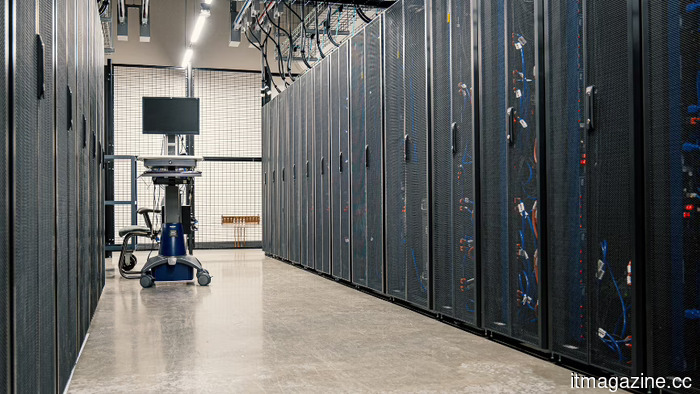
G42's Core42 has leased 20MW in a repurposed office building in Minneapolis as the UAE broadens its AI data center presence in the United States.
Core42, the cloud subsidiary of Abu Dhabi’s G42 Group, has secured a lease for 20 megawatts in a repurposed office building located in downtown Minneapolis. The company, which is developing the Stargate UAE campus, is now occupying American office spaces converted into data centers, highlighting a trend where the same AI technologies that are vacating offices are driving the demand to fill them with servers.
The former office at 1001 Third Avenue South in downtown Minneapolis has been transformed into a data center, with Core42, the cloud and AI infrastructure division of Abu Dhabi’s G42 Group, as its main tenant. This lease, reported by Bloomberg, involves a capacity of 20 megawatts within a facility that was reconfigured from commercial office space by Legacy Investing, a developer based in Virginia that has invested over 70 million dollars to renovate the property. This agreement is a small part of G42's larger strategy: the UAE's leading AI firm is developing a network of American data centers while concurrently building the largest AI computing facility outside the US. The spaces being occupied were once occupied by white-collar workers whose roles AI is intended to replace.
G42, headed by CEO Peng Xiao and supported by Abu Dhabi’s national security adviser Sheikh Tahnoon bin Zayed Al Nahyan, has become a primary vehicle for AI infrastructure investment in the UAE. The company is in the process of establishing the Stargate UAE campus, which will serve as the international flagship of the 500 billion dollar Stargate joint venture involving OpenAI, SoftBank, Oracle, and the Abu Dhabi sovereign investment entity MGX, spanning roughly 19 square kilometers of desert south of Abu Dhabi. The initial phase is set to launch a 200 megawatt computing cluster powered by Nvidia Grace Blackwell GB300 systems by the end of 2026, with full completion aimed at achieving one gigawatt of capacity at a projected cost exceeding 30 billion dollars. The project has already garnered geopolitical threats, with Iran warning of retaliation against Gulf infrastructure, including commercial data centers.
Core42's expansion across the US surpasses Minneapolis. The company has signed a ten-year lease with TeraWulf for over 70 megawatts of data center infrastructure at the Lake Mariner facility in New York, with an option for an additional 135 megawatts. G42 has also revealed a one billion dollar investment in data centers in Vietnam and has set up Core42’s European headquarters in Dublin. Although the Minneapolis lease adds a relatively modest 20 megawatts to the overall portfolio, its importance lies more so in its location: a converted office building in the center of an American city facing increasing downtown vacancy rates, similar to many mid-sized US cities, since the pandemic.
Legacy Investing acquired 1001 Third Avenue South in 2019 and has significantly invested in converting the six-story property for data center use. In 2025 alone, over 70 million dollars were spent on improvements, increasing the building’s capacity from about two megawatts to 21 megawatts. In January 2026, Cloud Capital and the Bahrain-based asset manager Arcapita purchased the property for 235 million dollars through a joint venture, signifying the premium that data center conversions now command compared to traditional office valuations.
The economics of converting offices to data centers have become enticing enough to reshape urban real estate markets. US utilities plan to invest 1.4 trillion dollars by 2030 to support the AI expansion, and the demand for data center capacity has outpaced the supply of purpose-built facilities. Repurposing existing office buildings provides developers a quicker market entry compared to new constructions, as long as the building can be modified to accommodate modern computing density. However, not all office buildings qualify; those that do typically have reinforced concrete structures, fiber network access, and adequate electrical capacity, making them highly desirable in commercial real estate.
G42’s strategy for American data centers showcases a broader transformation in how national AI initiatives are taking shape in the US. The company is not merely constructing computing capacity abroad; it is establishing a tangible presence within the American power grid, fiber network, and commercial real estate markets. The leases in Minneapolis, the deal with TeraWulf in New York, along with facilities in California and Texas, create a distributed infrastructure that positions Core42 as a provider of what they term sovereign cloud and AI infrastructure: computing capacity that supports both G42’s own AI operations and those of its clients, including US-based firms requiring data residency within the country.
The heightened competition for data center capacity has drawn startups, sovereign wealth funds, and hyperscalers into direct contention for limited resources such as power, land, cooling, and fiber connectivity. Legacy Investing’s transformation of an office building into a 21-megawatt facility in Minneapolis illustrates how developers are responding to these limitations by repurposing existing urban infrastructure instead of competing for greenfield sites in suburban areas where most large-scale data centers
Other articles
 Nyobolt secures $60M in funding at a valuation of $1B, with Symbotic leading the round, to develop ultrafast-charging batteries for warehouse robots and AI data centers.
Cambridge-based battery startup Nyobolt has achieved unicorn status following a $60 million Series C funding round led by Symbotic. Their niobium batteries can charge in just seconds and endure over 20,000 cycles, making them suitable for robotics and data centers.
Nyobolt secures $60M in funding at a valuation of $1B, with Symbotic leading the round, to develop ultrafast-charging batteries for warehouse robots and AI data centers.
Cambridge-based battery startup Nyobolt has achieved unicorn status following a $60 million Series C funding round led by Symbotic. Their niobium batteries can charge in just seconds and endure over 20,000 cycles, making them suitable for robotics and data centers.
 Nyobolt secures $60 million at a $1 billion valuation, with Symbotic leading the round, for its ultrafast-charging batteries designed for warehouse robots and AI data centers.
Cambridge-based battery startup Nyobolt has achieved unicorn status following a $60 million Series C funding round led by Symbotic. The company's niobium batteries can charge in mere seconds and endure over 20,000 cycles, making them suitable for robots and data centers.
Snap's Q1 2026 report indicates that the war in Iran results in a $20-25 million monthly loss in advertising revenue, the Perplexity $400 million agreement concludes, and there is a 16% reduction in workforce as the company increases its investment in augmented reality glasses.
Snap's revenue for Q1 increased by 12%, yet its stock dropped by 4%. The conflict in Iran resulted in a $20-25 million loss in March ad revenue. The deal with Perplexity AI has concluded. Additionally, the company has cut 1,000 jobs. The launch of Specs AR glasses represents their final gamble.
Nyobolt secures $60 million at a $1 billion valuation, with Symbotic leading the round, for its ultrafast-charging batteries designed for warehouse robots and AI data centers.
Cambridge-based battery startup Nyobolt has achieved unicorn status following a $60 million Series C funding round led by Symbotic. The company's niobium batteries can charge in mere seconds and endure over 20,000 cycles, making them suitable for robots and data centers.
Snap's Q1 2026 report indicates that the war in Iran results in a $20-25 million monthly loss in advertising revenue, the Perplexity $400 million agreement concludes, and there is a 16% reduction in workforce as the company increases its investment in augmented reality glasses.
Snap's revenue for Q1 increased by 12%, yet its stock dropped by 4%. The conflict in Iran resulted in a $20-25 million loss in March ad revenue. The deal with Perplexity AI has concluded. Additionally, the company has cut 1,000 jobs. The launch of Specs AR glasses represents their final gamble.
 Character.AI is facing a lawsuit for supposedly allowing a chatbot to act as a medical professional in Pennsylvania.
Pennsylvania has filed a lawsuit against Character.AI after investigators reported that a chatbot falsely presented itself as a licensed psychiatrist and provided medical advice to users.
Character.AI is facing a lawsuit for supposedly allowing a chatbot to act as a medical professional in Pennsylvania.
Pennsylvania has filed a lawsuit against Character.AI after investigators reported that a chatbot falsely presented itself as a licensed psychiatrist and provided medical advice to users.
 UFORCE, Ukraine's inaugural defense technology unicorn, has completed 150,000 combat missions as unmanned warfare becomes commercialized.
UFORCE reached a valuation of $1 billion following 150,000 combat missions. Ukraine asserts that robots have captured territory independently, without the need for infantry for the first time. The unmanned warfare sector is expanding.
UFORCE, Ukraine's inaugural defense technology unicorn, has completed 150,000 combat missions as unmanned warfare becomes commercialized.
UFORCE reached a valuation of $1 billion following 150,000 combat missions. Ukraine asserts that robots have captured territory independently, without the need for infantry for the first time. The unmanned warfare sector is expanding.
 Apple TV receives a dozen Tony nominations and is set to achieve an unexpected rare recognition that caught me off guard.
Apple is close to achieving an EGOT after receiving 12 Tony nominations for Schmigadoon!, a theatrical version of its original Apple TV Plus series.
Apple TV receives a dozen Tony nominations and is set to achieve an unexpected rare recognition that caught me off guard.
Apple is close to achieving an EGOT after receiving 12 Tony nominations for Schmigadoon!, a theatrical version of its original Apple TV Plus series.
G42's Core42 has leased 20MW in a repurposed office building in Minneapolis as the UAE broadens its AI data center presence in the United States.
Core42, the G42 division that is developing Stargate UAE, is converting an office space in Minneapolis into a data center with a capacity of 20MW. The surge in AI demand is repopulating the offices that were previously vacated.