
Google is in discussions with Blackstone, KKR, and EQT regarding an omnibus licensing agreement for Gemini AI, while OpenAI and Anthropic are establishing consulting businesses.
**Summary:** Alphabet is in discussions with Blackstone, KKR, and EQT to allow their portfolio companies to access Gemini models via omnibus licensing agreements. This strategy contrasts with OpenAI’s $10 billion Deployment Company and Anthropic’s $1.5 billion venture with Blackstone, both of which involve embedding engineers within client firms. Google believes enterprise AI is primarily a platform issue rather than a service issue.
OpenAI has established a $10 billion consulting entity, while Anthropic has set up a $1.5 billion consulting firm. In contrast, Google is pursuing a licensing agreement. This difference in strategy could determine which AI lab seizes the largest new enterprise distribution channel since the emergence of cloud computing: the portfolio companies belonging to major private equity firms.
According to a Bloomberg report from Monday, Alphabet is negotiating with Blackstone, KKR, and European firm EQT to allow their portfolio companies to access Google's Gemini AI models through omnibus licensing agreements. The discussions are non-exclusive and no agreements have been finalized yet. However, Google's proposed structure is significantly different from that of its two main competitors, indicating a strategic belief in how enterprise AI will be adopted on a large scale.
The competition intensified recently, with leading AI labs viewing buyout firms as potential distribution channels rather than mere customers. OpenAI completed The Deployment Company, a $10 billion joint venture led by TPG with 19 investors including Brookfield, Advent, and Bain Capital, which guarantees a 17.5% annual return over five years and involves embedding teams of OpenAI engineers within client organizations to redesign workflows in various sectors.
On the same day, Anthropic revealed its own $1.5 billion enterprise services firm with Blackstone, Hellman & Friedman, and Goldman Sachs, aiming to embed engineers in portfolio companies to incorporate Claude into their operations, functioning between consulting and deployment.
Google's strategy stands apart. Instead of forming a joint venture or deploying numerous engineers, Alphabet is arranging licensing agreements that will provide entire private equity firm portfolios access to Gemini models and Google Cloud AI infrastructure through one commercial contract. This choice reflects a distinct theory regarding the actual needs of enterprise AI customers.
OpenAI and Anthropic operate on the premise that the challenge in adopting enterprise AI lies in implementation. Their partnerships assume companies require not just access to advanced models but also specialized engineering teams to redesign processes and facilitate the transition from pilot projects to full-scale production. This model is labor-intensive and slow to scale, yet offers high returns and becomes quite entrenched once successful.
Google, however, believes the primary obstacle is procurement. The company has already allocated $750 million to a partner fund for supporting AI implementations through consulting firms like Accenture, Deloitte, KPMG, PwC, and NTT DATA, which serve the portfolio companies of Blackstone and KKR. The omnibus licensing approach builds on this existing framework, allowing Google to leverage established consulting ecosystems for implementation rather than creating its own consulting service. This strategy emphasizes speed of distribution over consulting revenue.
The potential size of this opportunity drives the urgency. Blackstone and KKR manage assets exceeding $2 trillion across numerous portfolio companies in sectors such as healthcare, logistics, technology, and finance. EQT oversees around €130 billion. If Google finalizes omnibus agreements with the three firms, it would establish the largest new customer channel in Alphabet’s history since the inception of Google Cloud.
In the context of Alphabet’s significant market capitalization, which surpassed $4.6 trillion following impressive Q1 2026 earnings, Google Cloud has also reached over $20 billion in quarterly revenue—a 63% increase—with its backlog nearly doubling. The rapid growth in revenue from generative AI products demonstrates that the company is negotiating from a position of strength, having already amassed 750 million Gemini users.
The competitive landscape is complicated, as Blackstone has interests on both sides; it is the founding investor in Anthropic while also considering Google’s licensing solution. Recently, Blackstone established Blackstone N1, a division focused on its AI and technology investments, which include stakes in both OpenAI and Anthropic. Rather than choosing just one AI provider, Blackstone is strategically navigating the competition among labs as a distribution channel.
Recent developments concerning Anthropic’s focus on embedding Claude into enterprises through private equity, along with the rapid launch of both The Deployment Company and the Anthropic-Blackstone venture, signal a belief that future competition among AI models will primarily occur within portfolio companies, rather than via benchmark competition. The private equity channel offers a streamlined commercial relationship encompassing thousands of mid-market firms, compressing sales cycles and facilitating a feedback loop that enhances AI models based on real implementation data.
However, the three strategies pose distinct risks. OpenAI’s Deployment Company has attracted substantial capital and promised high returns, necessitating quick revenue generation to satisfy investors. Anthropic’s venture, while smaller, aligns it with particular financial sponsors whose portfolio might not represent diverse enterprise needs. Conversely, Google’s licensing model is more efficient and scalable but relies on
Other articles
 Google has proposed concessions in the EU regarding the ranking of news in search results.
Google has submitted proposals to the European Commission to modify the way its search engine ranks news content, as part of efforts to resolve the DMA investigation.
Google has proposed concessions in the EU regarding the ranking of news in search results.
Google has submitted proposals to the European Commission to modify the way its search engine ranks news content, as part of efforts to resolve the DMA investigation.
 Google Search updates aim to transform AI responses into a launching pad for you, rather than a cul-de-sac.
Google is introducing five updates to AI Mode and AI Overviews in Search aimed at bringing more links to the forefront and providing users with additional incentives to click on the websites associated with them.
Google is engaged in discussions with Blackstone, KKR, and EQT regarding a comprehensive licensing agreement for its Gemini AI, while OpenAI and Anthropic are establishing consulting businesses.
Alphabet is in discussions for a comprehensive Gemini licensing agreement with Blackstone, KKR, and EQT. This approach differs from OpenAI's $10 billion and Anthropic's $1.5 billion embedded-engineer projects.
Google Search updates aim to transform AI responses into a launching pad for you, rather than a cul-de-sac.
Google is introducing five updates to AI Mode and AI Overviews in Search aimed at bringing more links to the forefront and providing users with additional incentives to click on the websites associated with them.
Google is engaged in discussions with Blackstone, KKR, and EQT regarding a comprehensive licensing agreement for its Gemini AI, while OpenAI and Anthropic are establishing consulting businesses.
Alphabet is in discussions for a comprehensive Gemini licensing agreement with Blackstone, KKR, and EQT. This approach differs from OpenAI's $10 billion and Anthropic's $1.5 billion embedded-engineer projects.
 Nyobolt secures $60M in funding at a valuation of $1B, with Symbotic leading the round, to develop ultrafast-charging batteries for warehouse robots and AI data centers.
Cambridge-based battery startup Nyobolt has achieved unicorn status following a $60 million Series C funding round led by Symbotic. Their niobium batteries can charge in just seconds and endure over 20,000 cycles, making them suitable for robotics and data centers.
Nyobolt secures $60M in funding at a valuation of $1B, with Symbotic leading the round, to develop ultrafast-charging batteries for warehouse robots and AI data centers.
Cambridge-based battery startup Nyobolt has achieved unicorn status following a $60 million Series C funding round led by Symbotic. Their niobium batteries can charge in just seconds and endure over 20,000 cycles, making them suitable for robotics and data centers.
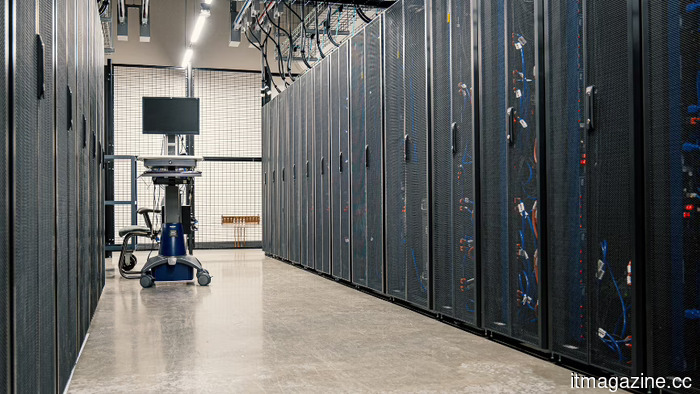 G42's Core42 has leased 20MW in a repurposed office building in Minneapolis as the UAE broadens its AI data center presence in the United States.
Core42, the G42 division that is developing Stargate UAE, is converting an office space in Minneapolis into a data center with a capacity of 20MW. The surge in AI demand is repopulating the offices that were previously vacated.
G42's Core42 has leased 20MW in a repurposed office building in Minneapolis as the UAE broadens its AI data center presence in the United States.
Core42, the G42 division that is developing Stargate UAE, is converting an office space in Minneapolis into a data center with a capacity of 20MW. The surge in AI demand is repopulating the offices that were previously vacated.
 UFORCE, the first defense technology unicorn from Ukraine, has completed 150,000 combat missions as unmanned warfare transitions to a commercial model.
UFORCE reached a valuation of $1 billion following 150,000 combat missions. Ukraine asserts that robots have captured territory autonomously for the first time, without the need for infantry. The unmanned warfare sector is expanding.
UFORCE, the first defense technology unicorn from Ukraine, has completed 150,000 combat missions as unmanned warfare transitions to a commercial model.
UFORCE reached a valuation of $1 billion following 150,000 combat missions. Ukraine asserts that robots have captured territory autonomously for the first time, without the need for infantry. The unmanned warfare sector is expanding.
Google is in discussions with Blackstone, KKR, and EQT regarding an omnibus licensing agreement for Gemini AI, while OpenAI and Anthropic are establishing consulting businesses.
Alphabet is in discussions for an omnibus Gemini licensing agreement with Blackstone, KKR, and EQT. This approach differs from OpenAI's $10 billion and Anthropic's $1.5 billion embedded-engineer initiatives.