
Snap Q1 2026: The war in Iran results in a monthly loss of $20-25 million in advertising revenue, the $400 million deal with Perplexity concludes, and a 16% reduction in the workforce occurs as the company doubles down on its investment in AR glasses.
**Summary:** Snap's revenue for the first quarter rose 12 percent to $1.53 billion, but the stock price dropped by 4 percent after revealing that the Iran conflict resulted in a loss of $20 to $25 million in advertising revenue in March, along with the termination of a $400 million partnership with Perplexity AI. The company is reducing its workforce by 16 percent while protecting its augmented reality glasses subsidiary.
On Tuesday, Snap reported its first-quarter earnings, which were expected to be unremarkable: a 12 percent revenue increase to $1.53 billion, an adjusted EBITDA that more than doubled to $233 million, and nearly tripled free cash flow of $286 million. Despite these positive figures, the stock fell by 4 percent. The underlying concerns weren't in the reported figures but rather in the upcoming projections and lost partnerships. The second-quarter revenue forecast of $1.52 to $1.55 billion met analysts’ expectations, which in Wall Street language, means there were no surprising positives. The geopolitical challenges from the Iran conflict cost Snap between $20 and $25 million in advertising revenue in March alone. Additionally, the company confirmed it has officially ended its partnership with Perplexity AI, initially announced last November, which was anticipated to generate approximately $400 million in revenue. Thus far this year, Snap's stock has decreased by 24 percent, reaching $6.11. Once a leader in mobile social media, Snap is now contending with three significant challenges: an uncontrollable geopolitical conflict, a failed AI strategy, and a hardware venture crucial for its survival beyond being merely a messaging app.
**The Geopolitical Impact**
The ad revenue challenges stemming from the Middle East affect multiple companies, but Snap is particularly vulnerable. The company relies heavily on brand advertising, which is more susceptible to geopolitical uncertainties compared to the direct-response ads that dominate Meta’s and Google’s revenue. During conflict, advertisers often cut brand campaigns first, which seems to be reflected in Snap’s estimate of losing between $20 and $25 million in a single month due to the Iran conflict. If the conflict continues, the annualized financial impact could exceed $200 million, representing about three percent of the expected revenue for 2026 but a much larger portion of operational profits.
Major tech firms released their Q1 2026 earnings, highlighting the growing divide between companies whose advertising fortunes are bolstered by scale and diversification versus those that aren’t. Meta saw its ad revenue soar 33 percent to over $56 billion despite internet disruptions reducing its user base in Iran, while Alphabet's cloud and search divisions surpassed estimates company-wide. Conversely, Snap's advertising revenue growth was a mere three percent. This disparity isn't purely a scale issue but also relates to their product offerings: Meta and Google have invested heavily in AI-driven advertising solutions, enabling advertisers to optimize their campaigns in real-time, thus alleviating the effects of economic challenges. Snap’s AI advertising tools are relatively newer and untested, and the failed partnership with Perplexity, which aimed to enhance its AI capabilities, only exacerbates the situation.
**The Failed Partnership**
The partnership with Perplexity was announced with much excitement in November 2025, aiming to integrate Perplexity’s AI search engine into Snapchat’s chat interface. This would enable the app's 483 million daily active users to pose questions and receive immediate answers without leaving the platform. Perplexity had committed to paying Snap $400 million in cash and equity—a significant amount for a company generating roughly $6 billion in annual revenue. The expected integration was anticipated to bring in $324 million in 2026 alone, positioning Snapchat amongst the first major social platforms to feature a native AI search engine.
However, the partnership never took off. Snap’s leadership revealed that disputes over terms halted the launch, and the company acknowledged in its shareholder letter that it “amicably ended the relationship in Q1” and that its guidance “does not include any contributions from Perplexity.” This development wasn’t entirely unforeseen, as Perplexity itself left the advertising sector in February 2026, believing that ad placements could jeopardize the trust essential for its AI search engine. The disconnect between a company that deemed ads incompatible with its product and a platform that earns 90 percent of its revenue from advertising made the partnership challenging. Snap now lacks a viable AI strategy at a time when its competitors are embedding AI deeply into their offerings.
**The Restructuring Efforts**
Snap has taken proactive measures in response to these challenges. In April, the company laid off approximately 1,000 employees, or about 16 percent of its workforce, and shut down over 300 open positions. CEO Evan Spiegel informed staff that these layoffs, expected to reduce the company's annual expenditure by over $500 million by the latter half of 2026, were made possible by advancements in artificial intelligence that enable smaller teams to accomplish what larger groups would have previously handled. This trend of
Other articles
 Google is developing a "24/7 personal assistant" that closely resembles its response to OpenClaw.
Google is developing an AI agent named Remy within its Gemini app, aiming to compete in a rapidly evolving market that is already dominated by OpenClaw, Meta, and Anthropic.
Google is developing a "24/7 personal assistant" that closely resembles its response to OpenClaw.
Google is developing an AI agent named Remy within its Gemini app, aiming to compete in a rapidly evolving market that is already dominated by OpenClaw, Meta, and Anthropic.
 Uber's Q1 2026 results showed a revenue shortfall, yet the stock soared by 10% due to a tenfold increase in autonomous trips, Uber One reaching 50 million members, and a 25% rise in bookings.
Uber fell short of Q1 revenue expectations by $90 million, yet its stock increased by 10%. Gross bookings reached $53.7 billion, with autonomous vehicle trips expanding tenfold, and Uber One gained 50 million members. The market perceives it as a platform rather than just a taxi application.
Uber's Q1 2026 results showed a revenue shortfall, yet the stock soared by 10% due to a tenfold increase in autonomous trips, Uber One reaching 50 million members, and a 25% rise in bookings.
Uber fell short of Q1 revenue expectations by $90 million, yet its stock increased by 10%. Gross bookings reached $53.7 billion, with autonomous vehicle trips expanding tenfold, and Uber One gained 50 million members. The market perceives it as a platform rather than just a taxi application.
 UFORCE, the first defense technology unicorn from Ukraine, has completed 150,000 combat missions as unmanned warfare transitions to a commercial model.
UFORCE reached a valuation of $1 billion following 150,000 combat missions. Ukraine asserts that robots have captured territory autonomously for the first time, without the need for infantry. The unmanned warfare sector is expanding.
UFORCE, the first defense technology unicorn from Ukraine, has completed 150,000 combat missions as unmanned warfare transitions to a commercial model.
UFORCE reached a valuation of $1 billion following 150,000 combat missions. Ukraine asserts that robots have captured territory autonomously for the first time, without the need for infantry. The unmanned warfare sector is expanding.
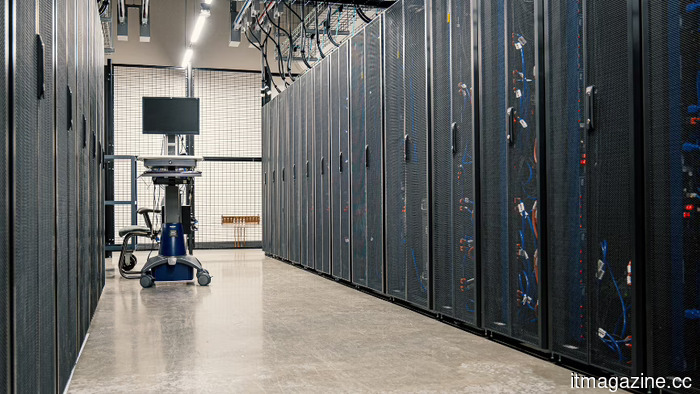 G42's Core42 has leased 20MW in a repurposed office building in Minneapolis as the UAE broadens its AI data center presence in the United States.
Core42, the G42 division that is developing Stargate UAE, is converting an office space in Minneapolis into a data center with a capacity of 20MW. The surge in AI demand is repopulating the offices that were previously vacated.
G42's Core42 has leased 20MW in a repurposed office building in Minneapolis as the UAE broadens its AI data center presence in the United States.
Core42, the G42 division that is developing Stargate UAE, is converting an office space in Minneapolis into a data center with a capacity of 20MW. The surge in AI demand is repopulating the offices that were previously vacated.
 UFORCE, the first defence technology unicorn in Ukraine, has successfully carried out 150,000 combat missions as unmanned warfare becomes a commercial venture.
UFORCE reached a valuation of $1 billion following 150,000 combat missions. Ukraine asserts that robots have taken territory without the need for infantry for the first time. The unmanned warfare sector is expanding.
Google is in discussions with Blackstone, KKR, and EQT regarding an omnibus licensing agreement for its Gemini AI, while OpenAI and Anthropic are developing consulting services.
Alphabet is in discussions for an omnibus Gemini licensing agreement with Blackstone, KKR, and EQT. This approach differs from OpenAI's $10 billion and Anthropic's $1.5 billion initiatives involving embedded engineers.
UFORCE, the first defence technology unicorn in Ukraine, has successfully carried out 150,000 combat missions as unmanned warfare becomes a commercial venture.
UFORCE reached a valuation of $1 billion following 150,000 combat missions. Ukraine asserts that robots have taken territory without the need for infantry for the first time. The unmanned warfare sector is expanding.
Google is in discussions with Blackstone, KKR, and EQT regarding an omnibus licensing agreement for its Gemini AI, while OpenAI and Anthropic are developing consulting services.
Alphabet is in discussions for an omnibus Gemini licensing agreement with Blackstone, KKR, and EQT. This approach differs from OpenAI's $10 billion and Anthropic's $1.5 billion initiatives involving embedded engineers.
Snap Q1 2026: The war in Iran results in a monthly loss of $20-25 million in advertising revenue, the $400 million deal with Perplexity concludes, and a 16% reduction in the workforce occurs as the company doubles down on its investment in AR glasses.
Snap's revenue for Q1 increased by 12%, yet its stock dropped by 4%. The ongoing conflict in Iran resulted in a loss of $20-25 million in advertising revenue for March. The partnership with Perplexity AI has concluded. Additionally, the company has eliminated 1,000 jobs. The launch of Specs AR glasses represents its final wager.