
Snap's Q1 2026 report indicates that the war in Iran results in a $20-25 million monthly loss in advertising revenue, the Perplexity $400 million agreement concludes, and there is a 16% reduction in workforce as the company increases its investment in augmented reality glasses.
Snap's Q1 revenue increased by 12 percent to $1.53 billion; however, the stock dropped by 4 percent after the company revealed that the conflict in Iran had led to losses of $20 to $25 million in advertising revenue just in March. Additionally, it confirmed the termination of its $400 million partnership with Perplexity AI. To address these challenges, Snap is reducing its workforce by 16 percent while ensuring the continuity of its AR glasses subsidiary.
On Tuesday, Snap reported its first-quarter earnings, which, while showing a revenue increase of 12 percent to $1.53 billion, an adjusted EBITDA that more than doubled to $233 million, and free cash flow that nearly tripled to $286 million, still led to a 4 percent decline in stock price. The issue lay not in these numbers, but rather in the company's future projections and the partnerships it has lost. The second-quarter revenue forecast of between $1.52 billion and $1.55 billion matched analysts' expectations—implying there were no unexpected positive developments. Geopolitical issues stemming from the Iran conflict led to a significant loss of $20 to $25 million in advertising revenue for Snap in March. Moreover, Snap has officially ended its AI partnership with Perplexity AI, a deal announced last November that was anticipated to yield about $400 million in revenue. This year, Snap's stock has decreased by 24 percent, now standing at $6.11. Once a leader in mobile social media, Snap now faces challenges on multiple fronts: an uncontrollable geopolitical situation, an ineffective AI strategy, and a crucial hardware initiative that will determine if Snapchat remains relevant beyond being a messaging app.
The advertising impact from the Middle East is a challenge that Snap faces distinctly. The company relies heavily on brand advertising, which tends to be more vulnerable to geopolitical instability than the direct-response advertising that predominates Meta's and Google’s revenue. During times of conflict, advertisers typically cut brand campaigns before performance-based ones. Snap’s announcement regarding the Iran conflict's cost in March suggests that if the situation persists, the annual financial impact could surpass $200 million, accounting for about 3 percent of the company's projected revenue for 2026, but a far more significant portion of its operating profit.
In their Q1 2026 earnings reports, major technology platforms displayed the growing divide between those whose advertising businesses benefit from scale and diversification and those that do not. Despite internet disruptions in Iran affecting its user base, Meta's advertising revenue rose by 33 percent, exceeding $56 billion. Alphabet's cloud and search sectors also outperformed expectations across all divisions. In contrast, Snap's advertising revenue grew by only 3 percent. This discrepancy highlights not just size but product differences: Meta and Google have made significant investments in AI-powered advertising tools that help advertisers optimize campaigns in real time, mitigating the effects of macroeconomic challenges by enhancing returns on spending. Snap's AI advertising tools are relatively new and untested, and the collapse of the Perplexity deal—which was meant to strengthen its AI capabilities—has further complicated matters.
The collaboration with Perplexity was announced in November 2025 with much anticipation. It aimed to integrate Perplexity’s AI search engine directly into Snapchat’s chat interface, enabling the app’s 483 million daily active users to ask questions and receive instant answers without leaving the platform. Perplexity was to provide Snap with $400 million in cash and equity, a significant amount for a company with around $6 billion in annual revenue. It was projected to generate $324 million in revenue in 2026, positioning Snapchat as one of the first major social platforms to offer a native AI search engine.
However, the deal never materialized. Snap's management indicated that disagreements over terms halted the rollout, and in its shareholder letter, the company stated that it “amicably ended the relationship in Q1,” with its guidance “assuming no contribution from Perplexity.” The failure of this deal was not entirely unexpected, as Perplexity had itself ceased its advertising operations in February 2026, determining that sponsored placements could undermine the trust critical to its AI search engine. A company that deemed advertising incompatible with its product was never going to be a good fit for a platform that earns 90 percent of its revenue from advertising. The loss of this partnership leaves Snap with an unclear AI strategy at a time when its competitors are advancing their AI integration.
Snap has taken proactive steps amidst these developments. In April, the company laid off around 1,000 employees, nearly 16 percent of its full-time workforce, and closed over 300 job openings. CEO Evan Spiegel informed employees that these cuts, which aim to lower the company’s annual costs by more than $500 million in the latter half of 2026, were facilitated by advancements in artificial intelligence that enable smaller teams to perform what was once the domain of larger groups. This trend of converting payroll into AI capital expenditures has
Other articles
 Nyobolt secures $60 million in funding at a $1 billion valuation, with Symbotic leading the investment, to develop ultrafast-charging batteries for warehouse robots and AI data centers.
Cambridge-based battery startup Nyobolt has achieved unicorn status following a $60 million Series C funding round led by Symbotic. Their niobium batteries can be charged in seconds and are designed to last over 20,000 cycles, making them suitable for use in robots and data centers.
Snap's Q1 2026 reveals that the ongoing war in Iran is resulting in a monthly loss of $20-25 million in advertising revenue. Additionally, the $400 million deal with Perplexity has concluded, leading to a 16% reduction in workforce as the focus on augmented reality glasses increases.
Snap's revenue for Q1 increased by 12%, yet its stock dropped by 4%. The war in Iran resulted in a loss of $20-25 million in ad revenue for March. The partnership with Perplexity AI has concluded. The company has eliminated 1,000 positions. The launch of Specs AR glasses represents their final gamble.
Nyobolt secures $60 million in funding at a $1 billion valuation, with Symbotic leading the investment, to develop ultrafast-charging batteries for warehouse robots and AI data centers.
Cambridge-based battery startup Nyobolt has achieved unicorn status following a $60 million Series C funding round led by Symbotic. Their niobium batteries can be charged in seconds and are designed to last over 20,000 cycles, making them suitable for use in robots and data centers.
Snap's Q1 2026 reveals that the ongoing war in Iran is resulting in a monthly loss of $20-25 million in advertising revenue. Additionally, the $400 million deal with Perplexity has concluded, leading to a 16% reduction in workforce as the focus on augmented reality glasses increases.
Snap's revenue for Q1 increased by 12%, yet its stock dropped by 4%. The war in Iran resulted in a loss of $20-25 million in ad revenue for March. The partnership with Perplexity AI has concluded. The company has eliminated 1,000 positions. The launch of Specs AR glasses represents their final gamble.
 Nyobolt secures $60 million in funding at a $1 billion valuation, with Symbotic leading the investment, aimed at developing ultrafast-charging batteries for warehouse robots and AI data centres.
Cambridge-based battery startup Nyobolt has achieved unicorn status following a $60 million Series C funding round led by Symbotic. Their niobium batteries can be charged in mere seconds and have a lifespan exceeding 20,000 cycles, making them ideal for use in robots and data centers.
Nyobolt secures $60 million in funding at a $1 billion valuation, with Symbotic leading the investment, aimed at developing ultrafast-charging batteries for warehouse robots and AI data centres.
Cambridge-based battery startup Nyobolt has achieved unicorn status following a $60 million Series C funding round led by Symbotic. Their niobium batteries can be charged in mere seconds and have a lifespan exceeding 20,000 cycles, making them ideal for use in robots and data centers.
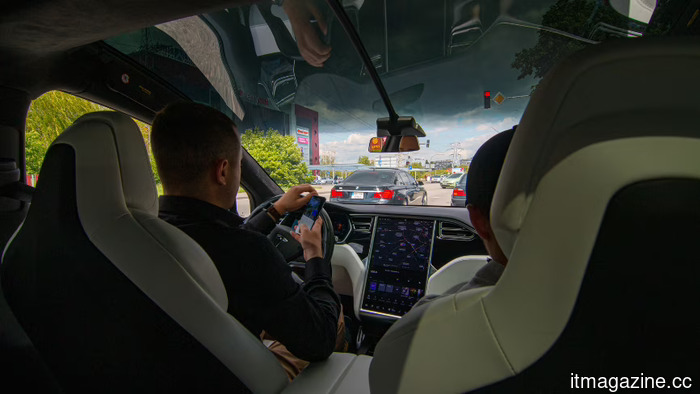 Uber's Q1 2026 report shows a revenue shortfall, yet the stock price rises by 10% as autonomous rides increase tenfold. Additionally, Uber One reaches 50 million members, and bookings experience a 25% rise.
Uber fell short of its Q1 revenue by $90 million, yet its stock jumped 10%. Gross bookings reached $53.7 billion, while autonomous vehicle trips increased tenfold, and Uber One gained 50 million members. The market views Uber as a platform rather than just a taxi service.
Google is in discussions with Blackstone, KKR, and EQT regarding an omnibus licensing agreement for its Gemini AI, while OpenAI and Anthropic are developing consulting services.
Alphabet is in discussions for an omnibus Gemini licensing agreement with Blackstone, KKR, and EQT. This approach differs from OpenAI's $10 billion and Anthropic's $1.5 billion initiatives involving embedded engineers.
Uber's Q1 2026 report shows a revenue shortfall, yet the stock price rises by 10% as autonomous rides increase tenfold. Additionally, Uber One reaches 50 million members, and bookings experience a 25% rise.
Uber fell short of its Q1 revenue by $90 million, yet its stock jumped 10%. Gross bookings reached $53.7 billion, while autonomous vehicle trips increased tenfold, and Uber One gained 50 million members. The market views Uber as a platform rather than just a taxi service.
Google is in discussions with Blackstone, KKR, and EQT regarding an omnibus licensing agreement for its Gemini AI, while OpenAI and Anthropic are developing consulting services.
Alphabet is in discussions for an omnibus Gemini licensing agreement with Blackstone, KKR, and EQT. This approach differs from OpenAI's $10 billion and Anthropic's $1.5 billion initiatives involving embedded engineers.
 Google has enhanced its AI Overviews by adding Further Exploration links and subscription labels, responding to a 58% drop in publisher clicks that has led to antitrust lawsuits.
Google has introduced five new features to AI Overviews in order to increase traffic to publishers following a 58% drop in click-through rates. The EU, DOJ, and Penske Media are closely monitoring the situation.
Google has enhanced its AI Overviews by adding Further Exploration links and subscription labels, responding to a 58% drop in publisher clicks that has led to antitrust lawsuits.
Google has introduced five new features to AI Overviews in order to increase traffic to publishers following a 58% drop in click-through rates. The EU, DOJ, and Penske Media are closely monitoring the situation.
Snap's Q1 2026 report indicates that the war in Iran results in a $20-25 million monthly loss in advertising revenue, the Perplexity $400 million agreement concludes, and there is a 16% reduction in workforce as the company increases its investment in augmented reality glasses.
Snap's revenue for Q1 increased by 12%, yet its stock dropped by 4%. The conflict in Iran resulted in a $20-25 million loss in March ad revenue. The deal with Perplexity AI has concluded. Additionally, the company has cut 1,000 jobs. The launch of Specs AR glasses represents their final gamble.