
Snap's Q1 2026: The ongoing conflict in Iran results in a loss of $20-25 million per month in ad revenue, the $400 million deal with Perplexity concludes, and a 16% reduction in workforce as the focus on AR glasses sharpens.
Snap's Q1 revenue rose 12 percent to $1.53 billion, yet its stock dropped 4 percent after the company revealed that the conflict in Iran led to a $20 to $25 million loss in advertising revenue in March alone. Additionally, Snap confirmed it has terminated its $400 million AI partnership with Perplexity. The company is also laying off 16 percent of its workforce while maintaining its augmented reality glasses subsidiary.
Snap reported its first-quarter earnings on Tuesday, which would typically be considered decent: revenue increased 12 percent to $1.53 billion, adjusted EBITDA more than doubled to $233 million, and free cash flow nearly tripled to $286 million. Nevertheless, the stock fell 4 percent. This decline stems not from the reported numbers but from the projected figures and the lost partnerships. The second-quarter revenue forecast of $1.52 to $1.55 billion met analysts’ expectations, indicating that the company did not provide any positive surprises. The geopolitical challenges arising from the Iran conflict resulted in a loss of $20 to $25 million in advertising revenue for Snap in just one month. Additionally, the termination of its partnership with Perplexity AI, announced last November and expected to generate around $400 million in revenue, adds to its difficulties. Snap's stock has declined by 24 percent this year, now at $6.11. Once a leader in mobile social media, Snap is now grappling with three significant challenges: an uncontrollable geopolitical crisis, a failed AI strategy, and a critical hardware decision that will influence its survival as more than just a messaging app.
The advertising challenges in the Middle East are not exclusive to Snap, but the company is particularly vulnerable. It relies heavily on brand advertising, which is more affected by geopolitical uncertainty compared to the direct-response advertising prevalent for companies like Meta and Google. Advertisers tend to reduce brand campaigns first during conflicts, which can lead to substantial revenue losses. Snap's acknowledgment of a $20 to $25 million loss in one month implies that the ongoing conflict could cost over $200 million annually, a figure representing about three percent of its projected revenue for 2026 and an even greater share of its operating profit.
The major tech firms reported Q1 2026 earnings that highlight the growing divide between those benefiting from scale and diversification in their advertising businesses and those that do not. Despite internet disruptions in Iran limiting its user base, Meta's advertising revenue surged 33 percent to over $56 billion. Alphabet's cloud and search sectors consistently exceeded estimates. In contrast, Snap's advertising revenue increased by only three percent. This disparity is not merely about size but also product investment; Meta and Google have invested billions in AI-driven advertising tools that enhance campaign optimization, mitigating the impacts of broader economic challenges. Snap's AI advertising tools are still in the early stages and the ended partnership with Perplexity, which was supposed to enhance its AI capabilities, creates uncertainty.
The Perplexity partnership, celebrated when announced in November 2025, aimed to integrate Perplexity’s AI search engine within Snapchat, allowing its 483 million daily active users to ask questions and get real-time answers without leaving the app. Perplexity was to provide Snap with $400 million in cash and equity, a significant amount for a company with annual revenue around $6 billion. This integration was projected to generate $324 million in revenue for 2026 and position Snapchat prominently within the social media landscape with its own AI search engine.
However, the partnership did not materialize. Snap management cited term disagreements as the cause for the halted rollout, and their shareholder letter confirmed the amicable end to the relationship with an assumption of no contribution from Perplexity moving forward. This outcome was somewhat anticipated; Perplexity had itself exited the advertising business in February 2026, deeming ads incompatible with trustworthiness for its AI search engine. Thus, a company that found advertisements incompatible with its core product was always going to struggle within Snap’s advertising-dependent model. The termination leaves Snap with an unclear AI strategy at a time when competitors are increasingly embedding AI into their products.
Snap has taken action amidst these challenges. In April, it let go of around 1,000 employees, approximately 16 percent of its total workforce, and canceled over 300 open positions. CEO Evan Spiegel informed staff that these layoffs, projected to reduce costs by more than $500 million annually by the latter half of 2026, were facilitated by advancements in AI, enabling smaller teams to achieve what larger teams previously managed. This trend of reallocating payroll into AI investments has characterized the technology sector's restructuring efforts in 2026, with Meta reducing its workforce by 8,000 and Microsoft initiating buyouts for the first time as companies shift focus from human resources to AI infrastructure.
The job cuts at Snap were strategically implemented to safeguard one specific area of the business: Specs Inc., the wholly-owned subsidiary launched in January 2026 to manage Snap's
Other articles
 Apple TV receives a dozen Tony nominations and is set to achieve an unexpected rare recognition that caught me off guard.
Apple is close to achieving an EGOT after receiving 12 Tony nominations for Schmigadoon!, a theatrical version of its original Apple TV Plus series.
Snap's Q1 2026 report indicates that the war in Iran results in a $20-25 million monthly loss in advertising revenue, the Perplexity $400 million agreement concludes, and there is a 16% reduction in workforce as the company increases its investment in augmented reality glasses.
Snap's revenue for Q1 increased by 12%, yet its stock dropped by 4%. The conflict in Iran resulted in a $20-25 million loss in March ad revenue. The deal with Perplexity AI has concluded. Additionally, the company has cut 1,000 jobs. The launch of Specs AR glasses represents their final gamble.
Apple TV receives a dozen Tony nominations and is set to achieve an unexpected rare recognition that caught me off guard.
Apple is close to achieving an EGOT after receiving 12 Tony nominations for Schmigadoon!, a theatrical version of its original Apple TV Plus series.
Snap's Q1 2026 report indicates that the war in Iran results in a $20-25 million monthly loss in advertising revenue, the Perplexity $400 million agreement concludes, and there is a 16% reduction in workforce as the company increases its investment in augmented reality glasses.
Snap's revenue for Q1 increased by 12%, yet its stock dropped by 4%. The conflict in Iran resulted in a $20-25 million loss in March ad revenue. The deal with Perplexity AI has concluded. Additionally, the company has cut 1,000 jobs. The launch of Specs AR glasses represents their final gamble.
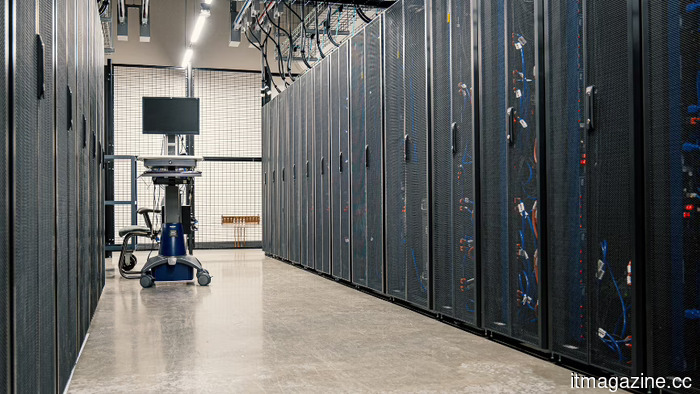 G42's Core42 has leased 20MW in a repurposed office building in Minneapolis as the UAE broadens its AI data center presence in the United States.
Core42, the G42 division that is developing Stargate UAE, is converting an office space in Minneapolis into a data center with a capacity of 20MW. The surge in AI demand is repopulating the offices that were previously vacated.
Snap's Q1 2026 reveals that the ongoing war in Iran is resulting in a monthly loss of $20-25 million in advertising revenue. Additionally, the $400 million deal with Perplexity has concluded, leading to a 16% reduction in workforce as the focus on augmented reality glasses increases.
Snap's revenue for Q1 increased by 12%, yet its stock dropped by 4%. The war in Iran resulted in a loss of $20-25 million in ad revenue for March. The partnership with Perplexity AI has concluded. The company has eliminated 1,000 positions. The launch of Specs AR glasses represents their final gamble.
Google is engaged in discussions with Blackstone, KKR, and EQT regarding a comprehensive licensing agreement for its Gemini AI, while OpenAI and Anthropic are establishing consulting businesses.
Alphabet is in discussions for a comprehensive Gemini licensing agreement with Blackstone, KKR, and EQT. This approach differs from OpenAI's $10 billion and Anthropic's $1.5 billion embedded-engineer projects.
G42's Core42 has leased 20MW in a repurposed office building in Minneapolis as the UAE broadens its AI data center presence in the United States.
Core42, the G42 division that is developing Stargate UAE, is converting an office space in Minneapolis into a data center with a capacity of 20MW. The surge in AI demand is repopulating the offices that were previously vacated.
Snap's Q1 2026 reveals that the ongoing war in Iran is resulting in a monthly loss of $20-25 million in advertising revenue. Additionally, the $400 million deal with Perplexity has concluded, leading to a 16% reduction in workforce as the focus on augmented reality glasses increases.
Snap's revenue for Q1 increased by 12%, yet its stock dropped by 4%. The war in Iran resulted in a loss of $20-25 million in ad revenue for March. The partnership with Perplexity AI has concluded. The company has eliminated 1,000 positions. The launch of Specs AR glasses represents their final gamble.
Google is engaged in discussions with Blackstone, KKR, and EQT regarding a comprehensive licensing agreement for its Gemini AI, while OpenAI and Anthropic are establishing consulting businesses.
Alphabet is in discussions for a comprehensive Gemini licensing agreement with Blackstone, KKR, and EQT. This approach differs from OpenAI's $10 billion and Anthropic's $1.5 billion embedded-engineer projects.
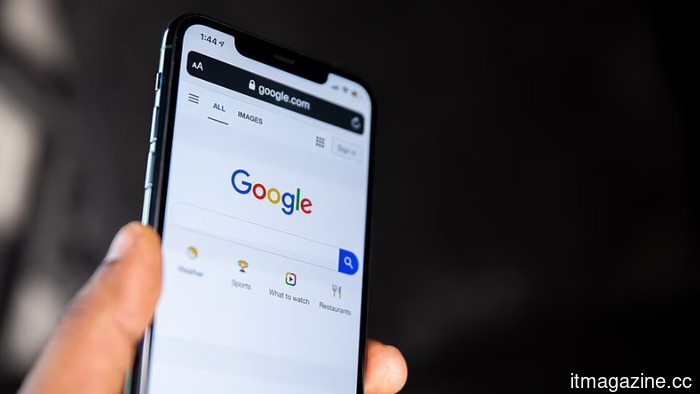 Google enhances AI Overviews with Further Exploration links and subscription labels as a 58% drop in publisher clicks sparks antitrust lawsuits.
Google has introduced five new features to AI Overviews to help increase traffic for publishers following a 58% decline in click-through rates. The EU, DOJ, and Penske Media are closely monitoring the situation.
Google enhances AI Overviews with Further Exploration links and subscription labels as a 58% drop in publisher clicks sparks antitrust lawsuits.
Google has introduced five new features to AI Overviews to help increase traffic for publishers following a 58% decline in click-through rates. The EU, DOJ, and Penske Media are closely monitoring the situation.
Snap's Q1 2026: The ongoing conflict in Iran results in a loss of $20-25 million per month in ad revenue, the $400 million deal with Perplexity concludes, and a 16% reduction in workforce as the focus on AR glasses sharpens.
Snap's revenue for Q1 increased by 12%, yet its stock declined by 4%. The conflict in Iran resulted in a loss of $20-25 million in March ad revenue. The partnership with Perplexity AI has concluded. Additionally, 1,000 positions have been eliminated. The upcoming launch of Specs AR glasses represents their final gamble.