
Google is engaged in discussions with Blackstone, KKR, and EQT regarding a comprehensive licensing agreement for its Gemini AI, while OpenAI and Anthropic are establishing consulting businesses.
Alphabet is currently in discussions with Blackstone, KKR, and EQT to provide their portfolio companies with access to Gemini models through omnibus licensing agreements. This strategy is markedly different from OpenAI’s $10 billion Deployment Company and Anthropic’s $1.5 billion joint venture with Blackstone, both of which involve placing engineers directly within client organizations. Google believes that enterprise AI is primarily a platform challenge rather than a service issue.
OpenAI established a $10 billion consulting firm, while Anthropic created a $1.5 billion consulting company. In contrast, Google is developing a licensing agreement. The divergence in strategies may influence which AI lab secures the most significant new enterprise distribution channel since the advent of cloud computing: the portfolio companies of the world's leading private equity firms.
As per a Bloomberg report from Monday, Alphabet is negotiating with Blackstone, KKR, and European private equity firm EQT to enable their portfolio companies to access Google’s Gemini AI models via omnibus licensing agreements. These talks are non-exclusive, and no agreements have been finalized yet. However, Google’s proposed structure differs significantly from those of its two main competitors, indicating a strategic perspective on the deployment of enterprise AI at scale.
The competition has intensified as leading AI labs view buyout firms not merely as clients, but as critical distribution infrastructure. Recently, OpenAI completed The Deployment Company, a $10 billion joint venture led by TPG with 19 investors, including Brookfield, Advent, and Bain Capital. This arrangement guarantees investors a 17.5% annual return over five years, with OpenAI contributing up to $1.5 billion of its own funds and maintaining strategic control through super-voting shares. The business model mimics Palantir’s approach of deploying engineers into firms to enhance processes across various sectors like healthcare and finance.
On the same day, Anthropic revealed its own $1.5 billion enterprise services company in partnership with Blackstone, Hellman and Friedman, and Goldman Sachs, each contributing around $300 million, with additional backing from firms like General Atlantic and Sequoia. This venture will involve integrating Claude into key operations by embedding engineers within portfolio companies, operating as something akin to both a consulting entity and a deployment facility.
In contrast, Google's method is unique. Rather than forming a joint venture and deploying engineers into portfolio companies, Alphabet is negotiating licensing deals that provide entire private equity firms' portfolios access to Gemini models and Google Cloud AI infrastructure through a single agreement. This distinction goes beyond structure; it highlights a fundamentally different understanding of enterprise AI customers' needs.
OpenAI and Anthropic assume that the main obstacle to enterprise AI adoption is implementation, believing that companies require not only access to advanced models but also specialized teams to redesign workflows and manage the transition to production. This labor-intensive approach is slow to scale but offers substantial sticking power if the implementation is successful.
Google, however, believes the bottleneck lies in procurement. It has already invested $750 million into a partner fund to support AI implementations via consulting firms that serve Blackstone and KKR’s portfolio companies. The omnibus licensing model enhances this existing channel: instead of building a consulting operation, Google offers private equity firms a commercial package granting access to Gemini, relying on its existing consulting ecosystem for implementation. This strategy favors rapid distribution over deep consulting revenues.
The urgency is driven by the significant opportunity at stake. Blackstone and KKR manage over $2 trillion in assets across numerous portfolio companies in various industries, while EQT oversees around 130 billion euros. Securing omnibus agreements with these three firms could create the largest new customer channel in Alphabet’s history since the inception of Google Cloud.
Alphabet’s market cap recently surpassed $4.6 trillion following Q1 2026 earnings that exceeded expectations across all divisions. Google Cloud achieved more than $20 billion in quarterly revenue for the first time, growing 63%, with its cloud backlog nearly doubling. Revenue from generative AI-based products surged nearly 800% year-over-year. Google is negotiating from a position of strength, supported by a user base of 750 million Gemini users and a consulting partner ecosystem that has successfully captured significant returns from Google Cloud expenditure.
Complicating the competitive landscape is Blackstone’s dual role. It is a founding investor in Anthropic’s joint venture while also being a prospective customer for Google’s licensing program. Recently, Blackstone launched Blackstone N1, a division focused on AI and high-growth tech investments, which includes stakes in both OpenAI and Anthropic. Thus, rather than selecting a sole AI provider, Blackstone positions itself as a distribution channel for multiple providers, capitalizing on the competition between them.
The rapid mobilization of Anthropic into enterprise business through private equity, alongside the quick formation of both The Deployment Company and the Anthropic-Blackstone venture, suggests that AI labs anticipate the next battleground will be within portfolio companies rather than across benchmark rankings. Engaging with private equity is attractive because it consolidates thousands of mid-market companies
Other articles
 UFORCE, Ukraine's inaugural defense technology unicorn, has completed 150,000 combat missions as unmanned warfare becomes commercialized.
UFORCE reached a valuation of $1 billion following 150,000 combat missions. Ukraine asserts that robots have captured territory independently, without the need for infantry for the first time. The unmanned warfare sector is expanding.
Google is in discussions with Blackstone, KKR, and EQT regarding an omnibus licensing agreement for its Gemini AI, while OpenAI and Anthropic are developing consulting services.
Alphabet is in discussions for an omnibus Gemini licensing agreement with Blackstone, KKR, and EQT. This approach differs from OpenAI's $10 billion and Anthropic's $1.5 billion initiatives involving embedded engineers.
UFORCE, Ukraine's inaugural defense technology unicorn, has completed 150,000 combat missions as unmanned warfare becomes commercialized.
UFORCE reached a valuation of $1 billion following 150,000 combat missions. Ukraine asserts that robots have captured territory independently, without the need for infantry for the first time. The unmanned warfare sector is expanding.
Google is in discussions with Blackstone, KKR, and EQT regarding an omnibus licensing agreement for its Gemini AI, while OpenAI and Anthropic are developing consulting services.
Alphabet is in discussions for an omnibus Gemini licensing agreement with Blackstone, KKR, and EQT. This approach differs from OpenAI's $10 billion and Anthropic's $1.5 billion initiatives involving embedded engineers.
 Google has proposed concessions regarding the ranking of news in search results for the EU.
Google has submitted proposals to the European Commission aimed at altering the way its search engine ranks news content, as part of an effort to resolve the DMA investigation.
Google has proposed concessions regarding the ranking of news in search results for the EU.
Google has submitted proposals to the European Commission aimed at altering the way its search engine ranks news content, as part of an effort to resolve the DMA investigation.
 UFORCE, the first defence technology unicorn in Ukraine, has successfully carried out 150,000 combat missions as unmanned warfare becomes a commercial venture.
UFORCE reached a valuation of $1 billion following 150,000 combat missions. Ukraine asserts that robots have taken territory without the need for infantry for the first time. The unmanned warfare sector is expanding.
Snap's Q1 2026 reveals that the ongoing war in Iran is resulting in a monthly loss of $20-25 million in advertising revenue. Additionally, the $400 million deal with Perplexity has concluded, leading to a 16% reduction in workforce as the focus on augmented reality glasses increases.
Snap's revenue for Q1 increased by 12%, yet its stock dropped by 4%. The war in Iran resulted in a loss of $20-25 million in ad revenue for March. The partnership with Perplexity AI has concluded. The company has eliminated 1,000 positions. The launch of Specs AR glasses represents their final gamble.
UFORCE, the first defence technology unicorn in Ukraine, has successfully carried out 150,000 combat missions as unmanned warfare becomes a commercial venture.
UFORCE reached a valuation of $1 billion following 150,000 combat missions. Ukraine asserts that robots have taken territory without the need for infantry for the first time. The unmanned warfare sector is expanding.
Snap's Q1 2026 reveals that the ongoing war in Iran is resulting in a monthly loss of $20-25 million in advertising revenue. Additionally, the $400 million deal with Perplexity has concluded, leading to a 16% reduction in workforce as the focus on augmented reality glasses increases.
Snap's revenue for Q1 increased by 12%, yet its stock dropped by 4%. The war in Iran resulted in a loss of $20-25 million in ad revenue for March. The partnership with Perplexity AI has concluded. The company has eliminated 1,000 positions. The launch of Specs AR glasses represents their final gamble.
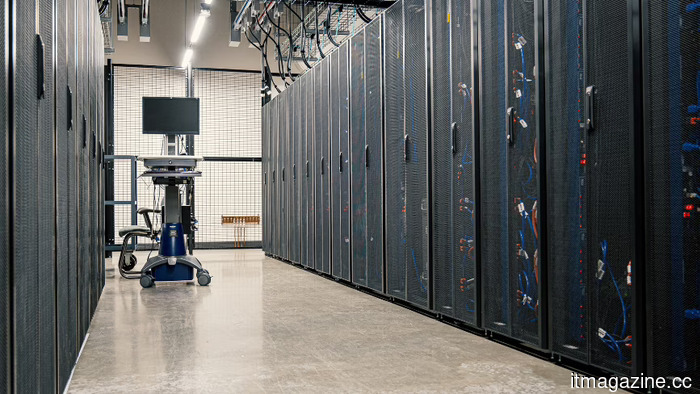 G42's Core42 has signed a lease for 20MW in a repurposed office building in Minneapolis as the UAE broadens its AI data center presence in the US.
Core42, a division of G42 that is developing Stargate UAE, is utilizing 20MW in a conversion of Minneapolis office space into a data center. The rise of AI is now filling the offices that were previously vacated.
G42's Core42 has signed a lease for 20MW in a repurposed office building in Minneapolis as the UAE broadens its AI data center presence in the US.
Core42, a division of G42 that is developing Stargate UAE, is utilizing 20MW in a conversion of Minneapolis office space into a data center. The rise of AI is now filling the offices that were previously vacated.
Google is engaged in discussions with Blackstone, KKR, and EQT regarding a comprehensive licensing agreement for its Gemini AI, while OpenAI and Anthropic are establishing consulting businesses.
Alphabet is in discussions for a comprehensive Gemini licensing agreement with Blackstone, KKR, and EQT. This approach differs from OpenAI's $10 billion and Anthropic's $1.5 billion embedded-engineer projects.