

Nyobolt secures $60 million at a $1 billion valuation, with Symbotic leading the round, for its ultrafast-charging batteries designed for warehouse robots and AI data centers.
Cambridge-based battery startup Nyobolt has secured $60 million in funding at a valuation of $1 billion, led by Symbotic, a robotics firm utilizing Nyobolt’s ultrafast-charging niobium tungsten oxide cells for its warehouse robots. These batteries can charge in under five minutes, endure over 20,000 cycles, and target physical AI and data center power systems rather than electric vehicles.
The breakthrough battery that propelled Nyobolt to unicorn status does not power cars but rather warehouse robots. On Tuesday, the startup announced that it had completed a $60 million Series C funding round at a valuation of $1 billion, with Symbotic leading the investment. This round brings Nyobolt's total funding to around $160 million and values the company, founded in 2019 based on research conducted at the University of Cambridge by Professor Dame Clare Grey, who explored niobium tungsten oxide anodes. Nyobolt's batteries can charge from zero to 80% in under five minutes, last over 20,000 charge cycles without deterioration, and offer 20 times the energy density of supercapacitors. Initially developed for electric vehicles, the technology now caters to the physical AI market.
Nyobolt's innovation involves a niobium tungsten oxide anode with a crystal structure that allows for up to 100 times more lithium-ion mobility than traditional graphite anodes, facilitating much faster charging without the risk of damage to the cell. This is supported by a unique cell design and integrated power electronics to handle the thermal and electrical dynamics involved in ultrafast charging, resulting in batteries that can be fully charged in seconds for small formats and in under five minutes for larger ones.
The critical specification for the markets Nyobolt is targeting is cycle life. While solid-state batteries being developed by automakers for the next generation of electric vehicles offer increased energy density and rapid charging, they are intended for infrequent charging in vehicles. Conversely, Nyobolt's cells are built for frequent usage, such as in warehouse robots requiring quick recharges between tasks, data center UPS systems needing to manage energy rapidly during grid fluctuations, and continuous industrial operations. The goal is to optimize power density for these high-demand applications rather than focusing solely on energy density.
Symbotic's choice to lead the investment round signals the commercial potential of Nyobolt's technology. Symbotic operates fleets of autonomous mobile robots in large distribution centers, notably within Walmart’s logistics network, where its systems are active in over 42 distribution centers. Following the acquisition of Walmart’s Advanced Systems and Robotics division for $200 million in January 2026, Walmart also invested $520 million in Symbotic, resulting in a backlog of over $5 billion. The robots previously relied on ultracapacitors, which, while fast to charge, cannot hold sufficient energy. Nyobolt's batteries provide six times the energy capacity while sustaining the fast charging necessary for continuous operation. For warehouses, where uptime translates to productivity and revenue, the battery is critical in determining operational capacity and efficiency.
Nyobolt's revenue is expanding fivefold annually, reflecting a surge in demand for physical AI and data center infrastructure applications. Cambridge has been increasingly producing unicorns, and Nyobolt is the latest to emerge from a university research pipeline renowned for commercializing advances in materials science and engineering. Co-founded by globally recognized battery researcher Clare Grey and CEO Sai Shivareddy, Nyobolt's Series C funding also included participation from IQ Capital, Latitude, Scania Invest, and CBMM.
Nyobolt is also aiming to penetrate two additional markets that necessitate high-power, high-cycle-life batteries: AI data centers and systems that manage energy during outages. The company is promoting its technology as an alternative to conventional lead-acid and lithium-ion UPS systems, which aren't designed for the frequent cycling that modern grid instability and renewable energy intermittency require. The International Energy Agency anticipates that energy consumption in data centers will double by 2026, highlighting the growing importance of power management infrastructure within these facilities. Nyobolt has signed a deal with the state of Rajasthan in India to supply over 100 megawatts for off-grid AI data centers and power management systems, enabling it to evolve from being a component supplier to an infrastructure provider.
The search for energy solutions to support AI power needs has led numerous startups to compete with established battery manufacturers, grid operators, and energy storage companies. Nyobolt's edge lies in its specific focus: rather than competing on energy density metrics relevant to electric vehicles, it prioritizes power density and cycle life metrics crucial for machines that recharge hundreds of times daily. The global market for physical AI logistics robots was valued at $6.8 billion in 2025 and is projected to reach $38.4 billion by 2034, with a comparable growth rate in the data center energy storage market. Nyobolt doesn't aim to replace lithium-ion batteries in electric vehicles but aspires to provide
Other articles
 UFORCE, the first defense technology unicorn from Ukraine, has completed 150,000 combat missions as unmanned warfare transitions to a commercial model.
UFORCE reached a valuation of $1 billion following 150,000 combat missions. Ukraine asserts that robots have captured territory autonomously for the first time, without the need for infantry. The unmanned warfare sector is expanding.
UFORCE, the first defense technology unicorn from Ukraine, has completed 150,000 combat missions as unmanned warfare transitions to a commercial model.
UFORCE reached a valuation of $1 billion following 150,000 combat missions. Ukraine asserts that robots have captured territory autonomously for the first time, without the need for infantry. The unmanned warfare sector is expanding.
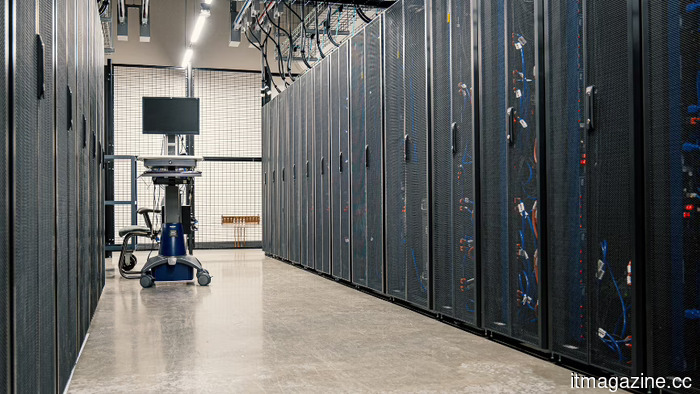 G42's Core42 has leased 20MW in a repurposed office building in Minneapolis as the UAE broadens its AI data center presence in the United States.
Core42, the G42 division that is developing Stargate UAE, is converting an office space in Minneapolis into a data center with a capacity of 20MW. The surge in AI demand is repopulating the offices that were previously vacated.
Snap's Q1 2026: The ongoing conflict in Iran results in a loss of $20-25 million per month in ad revenue, the $400 million deal with Perplexity concludes, and a 16% reduction in workforce as the focus on AR glasses sharpens.
Snap's revenue for Q1 increased by 12%, yet its stock declined by 4%. The conflict in Iran resulted in a loss of $20-25 million in March ad revenue. The partnership with Perplexity AI has concluded. Additionally, 1,000 positions have been eliminated. The upcoming launch of Specs AR glasses represents their final gamble.
G42's Core42 has leased 20MW in a repurposed office building in Minneapolis as the UAE broadens its AI data center presence in the United States.
Core42, the G42 division that is developing Stargate UAE, is converting an office space in Minneapolis into a data center with a capacity of 20MW. The surge in AI demand is repopulating the offices that were previously vacated.
Snap's Q1 2026: The ongoing conflict in Iran results in a loss of $20-25 million per month in ad revenue, the $400 million deal with Perplexity concludes, and a 16% reduction in workforce as the focus on AR glasses sharpens.
Snap's revenue for Q1 increased by 12%, yet its stock declined by 4%. The conflict in Iran resulted in a loss of $20-25 million in March ad revenue. The partnership with Perplexity AI has concluded. Additionally, 1,000 positions have been eliminated. The upcoming launch of Specs AR glasses represents their final gamble.
 UFORCE, Ukraine's inaugural defense technology unicorn, has completed 150,000 combat missions as unmanned warfare becomes commercialized.
UFORCE reached a valuation of $1 billion following 150,000 combat missions. Ukraine asserts that robots have captured territory independently, without the need for infantry for the first time. The unmanned warfare sector is expanding.
UFORCE, Ukraine's inaugural defense technology unicorn, has completed 150,000 combat missions as unmanned warfare becomes commercialized.
UFORCE reached a valuation of $1 billion following 150,000 combat missions. Ukraine asserts that robots have captured territory independently, without the need for infantry for the first time. The unmanned warfare sector is expanding.
 Google has enhanced its AI Overviews by adding Further Exploration links and subscription labels, responding to a 58% drop in publisher clicks that has led to antitrust lawsuits.
Google has introduced five new features to AI Overviews in order to increase traffic to publishers following a 58% drop in click-through rates. The EU, DOJ, and Penske Media are closely monitoring the situation.
Google has enhanced its AI Overviews by adding Further Exploration links and subscription labels, responding to a 58% drop in publisher clicks that has led to antitrust lawsuits.
Google has introduced five new features to AI Overviews in order to increase traffic to publishers following a 58% drop in click-through rates. The EU, DOJ, and Penske Media are closely monitoring the situation.
 Apple TV receives a dozen Tony nominations and is set to achieve an unexpected rare recognition that caught me off guard.
Apple is close to achieving an EGOT after receiving 12 Tony nominations for Schmigadoon!, a theatrical version of its original Apple TV Plus series.
Apple TV receives a dozen Tony nominations and is set to achieve an unexpected rare recognition that caught me off guard.
Apple is close to achieving an EGOT after receiving 12 Tony nominations for Schmigadoon!, a theatrical version of its original Apple TV Plus series.
Nyobolt secures $60 million at a $1 billion valuation, with Symbotic leading the round, for its ultrafast-charging batteries designed for warehouse robots and AI data centers.
Cambridge-based battery startup Nyobolt has achieved unicorn status following a $60 million Series C funding round led by Symbotic. The company's niobium batteries can charge in mere seconds and endure over 20,000 cycles, making them suitable for robots and data centers.