
Uber's Q1 2026 results showed a revenue shortfall, yet the stock soared by 10% due to a tenfold increase in autonomous trips, Uber One reaching 50 million members, and a 25% rise in bookings.
Uber fell short of its Q1 revenue estimates by $90 million, yet its stock rose by 10 percent. Gross bookings increased by 25 percent, reaching $53.7 billion, with autonomous trips growing tenfold. The Uber One membership program, now boasting 50 million members, contributes to over half of all bookings. Wall Street is now valuing Uber as a logistics platform rather than just a ride-hailing service.
On Tuesday, Uber reported revenue of $13.2 billion for the first quarter, which is a 14 percent increase from the previous year, although it was about $90 million below expectations. The strong performance metrics included a 25 percent increase in gross bookings and a 44 percent rise in non-GAAP earnings per share to $0.72. The company provided a positive outlook for Q2, estimating bookings between $56.25 billion and $57.75 billion, prompting the market to respond favorably.
The revenue shortfall was largely attributed to Uber’s mobility segment, where sales climbed 5 percent to $6.8 billion, missing the anticipated $7.11 billion. This discrepancy resulted from a strategic decision to lower ride prices in areas where insurance savings allowed for reduced consumer costs, prioritizing trip volume over immediate revenue. Management highlighted that mobility gross bookings increased by 20 percent, while trips on the platform grew to 3.6 billion, marking a 20 percent year-on-year rise. In Los Angeles, particularly affected by insurance issues, trip growth trends improved significantly compared to the rest of California and the US. Uber expects to see hundreds of millions in insurance savings flowing into US mobility by 2026, with plans to reinvest these savings into further price reductions in other markets.
The delivery segment outperformed, with revenue reaching $5.07 billion, a 34 percent increase, surpassing the $4.89 billion consensus. Delivery bookings rose by 23 percent, boosted by grocery and retail, expanding Uber's market beyond just restaurant food. The advertising segment achieved an annualized run rate of over $2 billion in fiscal 2025, growing more than 50 percent year-on-year, thus positioning Uber as a media platform where brands pay to reach consumers at the purchase point. The Uber One membership program now serves 50 million subscribers who make up over half of all bookings, spending three times more than non-members. The membership model resembles that of Amazon Prime, fostering recurring revenue, increased engagement, reduced churn, and a competitive edge.
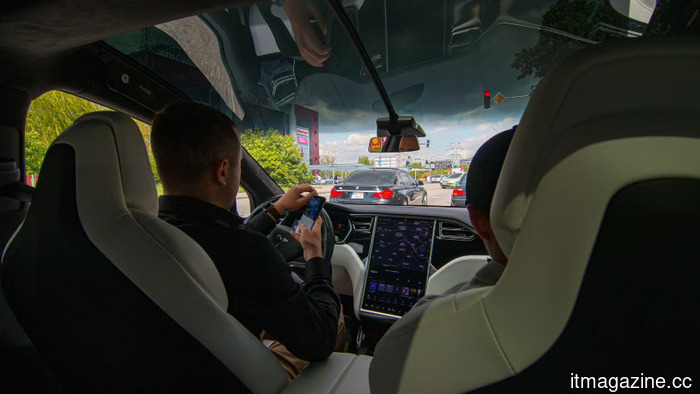
Autonomous vehicle trips on Uber's platform saw more than a tenfold increase year-on-year, with over 30 autonomous partnerships for both mobility and delivery. The company expects to operate in up to 15 cities by the end of 2026. Waymo is providing 250,000 paid rides weekly through its partnership with Uber, while Volkswagen’s MOIA subsidiary is testing self-driving minibuses in Los Angeles, aiming to expand its fleet by year-end. Uber and Nuro are testing a Lucid Gravity robotaxi with plans for commercial production in late 2026. Geographic expansion for autonomous service is moving quickly, with various collaborations set for late 2026 as long as regulatory approvals are secured. The plan is clear: Uber is not manufacturing autonomous vehicles; instead, it's creating the distribution network necessary for these companies to reach customers and is strategically positioning itself as a platform for success among robotaxi providers.
The company's financial profile reveals profitability growing faster than revenue, with adjusted EBITDA rising significantly due to operational efficiencies, insurance savings, and its high-margin advertising and membership sectors. A $1 billion GAAP operating profit was offset by a $1.5 billion charge related to equity holdings, which separated GAAP diluted EPS of $0.13 from the non-GAAP figure of $0.72. Free cash flow and capital returns weren't the primary focus, but the management’s projection of non-GAAP EPS for Q2 between $0.78 and $0.82 indicates confidence in a sustainable profitability trajectory.
Uber is also investing in its technology stack, partnering with Amazon to leverage custom silicon for running its AI and machine learning processes. This investment is crucial as Uber’s competitive edge relies on algorithms for matching riders to drivers, routing deliveries, dynamic pricing, and eventually managing fleets of autonomous vehicles from multiple operators in various locations. The platform capable of optimizing these functions in real time at a global scale will prevail, regardless of whether a human driver or a machine operates the vehicles.
The market's reaction to Tuesday's earnings signified a revaluation of Uber's identity. A ride-hailing company that misses revenue expectations does not typically enjoy a 10 percent stock rise, but a logistics and advertising platform with significant membership, a robust advertising business, numerous autonomous vehicle partners, and increasing trip growth does. The story of insurance savings in US mobility serves as a short-term catalyst while a deeper narrative unfolds around the integration of human-driven rides, autonomous vehicles, delivery, groceries, retail, advertising
Другие статьи
 UFORCE, the inaugural defence technology unicorn of Ukraine, has carried out 150,000 combat missions as unmanned warfare becomes commercialized.
UFORCE achieved a valuation of $1 billion following 150,000 combat missions. Ukraine asserts that robots have captured territory independently, without the need for infantry, for the first time. The unmanned warfare sector is expanding.
Snap's Q1 2026 reveals that the ongoing war in Iran is resulting in a monthly loss of $20-25 million in advertising revenue. Additionally, the $400 million deal with Perplexity has concluded, leading to a 16% reduction in workforce as the focus on augmented reality glasses increases.
Snap's revenue for Q1 increased by 12%, yet its stock dropped by 4%. The war in Iran resulted in a loss of $20-25 million in ad revenue for March. The partnership with Perplexity AI has concluded. The company has eliminated 1,000 positions. The launch of Specs AR glasses represents their final gamble.
Snap's Q1 2026 report indicates that the war in Iran results in a $20-25 million monthly loss in advertising revenue, the Perplexity $400 million agreement concludes, and there is a 16% reduction in workforce as the company increases its investment in augmented reality glasses.
Snap's revenue for Q1 increased by 12%, yet its stock dropped by 4%. The conflict in Iran resulted in a $20-25 million loss in March ad revenue. The deal with Perplexity AI has concluded. Additionally, the company has cut 1,000 jobs. The launch of Specs AR glasses represents their final gamble.
Snap Q1 2026: The war in Iran results in a monthly loss of $20-25 million in advertising revenue, the $400 million deal with Perplexity concludes, and a 16% reduction in the workforce occurs as the company doubles down on its investment in AR glasses.
Snap's revenue for Q1 increased by 12%, yet its stock dropped by 4%. The ongoing conflict in Iran resulted in a loss of $20-25 million in advertising revenue for March. The partnership with Perplexity AI has concluded. Additionally, the company has eliminated 1,000 jobs. The launch of Specs AR glasses represents its final wager.
UFORCE, the inaugural defence technology unicorn of Ukraine, has carried out 150,000 combat missions as unmanned warfare becomes commercialized.
UFORCE achieved a valuation of $1 billion following 150,000 combat missions. Ukraine asserts that robots have captured territory independently, without the need for infantry, for the first time. The unmanned warfare sector is expanding.
Snap's Q1 2026 reveals that the ongoing war in Iran is resulting in a monthly loss of $20-25 million in advertising revenue. Additionally, the $400 million deal with Perplexity has concluded, leading to a 16% reduction in workforce as the focus on augmented reality glasses increases.
Snap's revenue for Q1 increased by 12%, yet its stock dropped by 4%. The war in Iran resulted in a loss of $20-25 million in ad revenue for March. The partnership with Perplexity AI has concluded. The company has eliminated 1,000 positions. The launch of Specs AR glasses represents their final gamble.
Snap's Q1 2026 report indicates that the war in Iran results in a $20-25 million monthly loss in advertising revenue, the Perplexity $400 million agreement concludes, and there is a 16% reduction in workforce as the company increases its investment in augmented reality glasses.
Snap's revenue for Q1 increased by 12%, yet its stock dropped by 4%. The conflict in Iran resulted in a $20-25 million loss in March ad revenue. The deal with Perplexity AI has concluded. Additionally, the company has cut 1,000 jobs. The launch of Specs AR glasses represents their final gamble.
Snap Q1 2026: The war in Iran results in a monthly loss of $20-25 million in advertising revenue, the $400 million deal with Perplexity concludes, and a 16% reduction in the workforce occurs as the company doubles down on its investment in AR glasses.
Snap's revenue for Q1 increased by 12%, yet its stock dropped by 4%. The ongoing conflict in Iran resulted in a loss of $20-25 million in advertising revenue for March. The partnership with Perplexity AI has concluded. Additionally, the company has eliminated 1,000 jobs. The launch of Specs AR glasses represents its final wager.
 Google is developing a "24/7 personal assistant" that closely resembles its response to OpenClaw.
Google is developing an AI agent named Remy within its Gemini app, aiming to compete in a rapidly evolving market that is already dominated by OpenClaw, Meta, and Anthropic.
Google is developing a "24/7 personal assistant" that closely resembles its response to OpenClaw.
Google is developing an AI agent named Remy within its Gemini app, aiming to compete in a rapidly evolving market that is already dominated by OpenClaw, Meta, and Anthropic.
 Google enhances AI Overviews with Further Exploration links and subscription labels as a 58% drop in publisher clicks sparks antitrust lawsuits.
Google has introduced five new features to AI Overviews to help increase traffic for publishers following a 58% decline in click-through rates. The EU, DOJ, and Penske Media are closely monitoring the situation.
Google enhances AI Overviews with Further Exploration links and subscription labels as a 58% drop in publisher clicks sparks antitrust lawsuits.
Google has introduced five new features to AI Overviews to help increase traffic for publishers following a 58% decline in click-through rates. The EU, DOJ, and Penske Media are closely monitoring the situation.
Uber's Q1 2026 results showed a revenue shortfall, yet the stock soared by 10% due to a tenfold increase in autonomous trips, Uber One reaching 50 million members, and a 25% rise in bookings.
Uber fell short of Q1 revenue expectations by $90 million, yet its stock increased by 10%. Gross bookings reached $53.7 billion, with autonomous vehicle trips expanding tenfold, and Uber One gained 50 million members. The market perceives it as a platform rather than just a taxi application.