

Razr Fold versus Galaxy Z Fold 7: I’m tentatively impressed by what Motorola’s inaugural foldable brings to the table while saving $300.
You’ve decided to invest in a premium book-style foldable device that offers a large-screen experience and conveniently folds in half for portability. Sounds great, right? However, here's a noteworthy detail: the Galaxy Z Fold 7 (256GB), released in July 2025, is still priced at $1,999, while the recently launched Moto Razr Fold (512GB) is available for $1,899.
How did Motorola manage this? Did it make any compromises to undercut the Fold 7 by $100 while still providing double the storage? There are a few downsides that might not align with your preferences, particularly if you rely heavily on specifications to make your purchasing decision. I believe it’s more beneficial to look beyond those numbers and consider how you will actually use the device.
My intention isn’t to declare a clear winner based on specifications, but rather to help you determine whether Motorola’s first attempt at the book-fold format deserves your investment, or if the Galaxy Z Fold 7, despite being older, still stands strong in 2026 and suits your needs better.
**Razr Fold vs. Samsung Galaxy Z Fold 7: Specifications Summary**
| Feature | Razr Fold 2026 | Galaxy Z Fold 7 | Difference |
|-----------------------------|------------------------------|-----------------------------|----------------------------------------------|
| Price | $1,899 (16GB/512GB) | $1,999 (12GB/256GB) | $100 cheaper for base, $300 cheaper for equivalent storage |
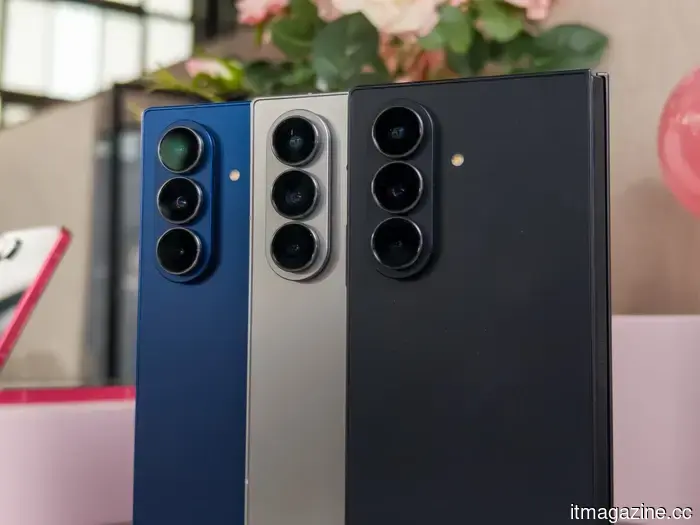
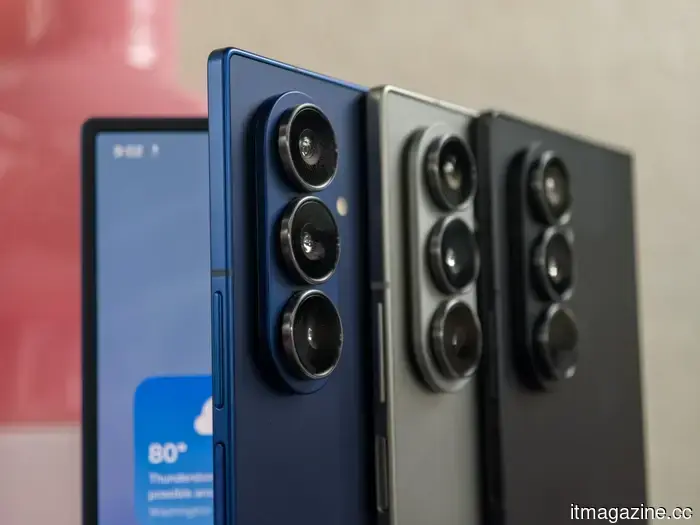
| Dimensions | Unfolded: 144.47 × 160.05 × 4.7mm Folded: 160.05 × 73.6 × 10.04mm (243g) | Unfolded: 158.2 × 143 × 4.2mm Folded: 168.4 × 72.6 × 8.9mm (215g) | Z Fold 7 is 28g lighter and 1.14mm thinner when folded |
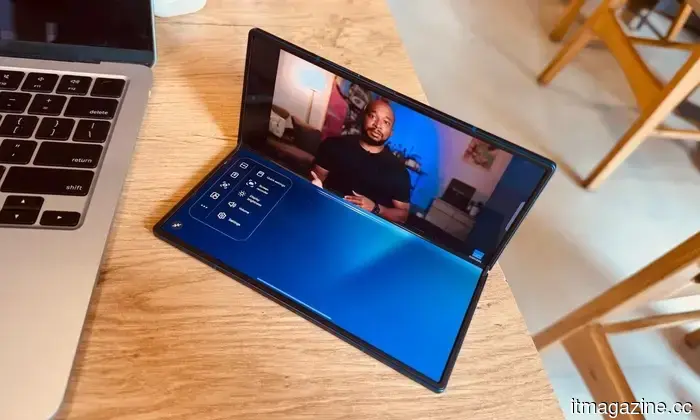
| Inner display | 8.1″ LTPO AMOLED, 120Hz, 6,200 nits, HDR10+ | 8.0″ Dynamic LTPO AMOLED 2X, 120Hz, 2,600 nits, 368ppi | +3,600 nits peak brightness |
| Cover display | 6.6″ LTPO pOLED, 165Hz, 6,000 nits | 6.2″ Dynamic LTPO AMOLED 2X, 120Hz | Brighter and faster refresh |
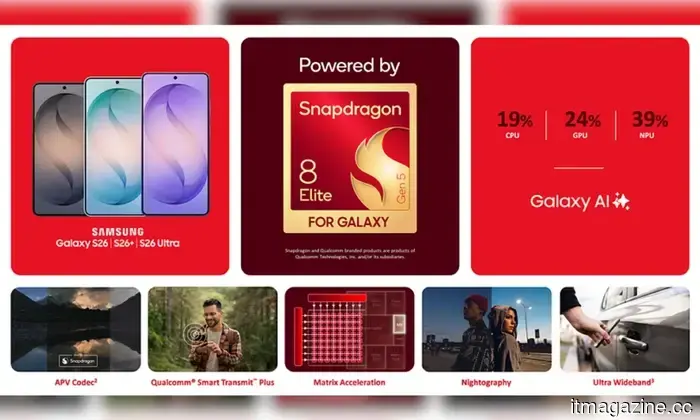
| Processor | Snapdragon 8 Gen 5 (3nm) | Snapdragon 8 Elite for Galaxy (3nm) | Newer but slightly slower chip |
| RAM / Storage | 16GB / 512GB — all variants | 12GB / 256GB and 512GB; 16GB only on 1TB | More RAM at equivalent storage |
| Main camera | 50MP (f/1.6), Sony LYTIA 828, OIS | 200MP (f/1.7), ISOCELL HP2, OIS | Lower resolution sensor |
| Ultrawide | 50MP (f/2.0), 122°, Macro Vision, Sony LYTIA | 12MP (f/2.2), 120°, autofocus | Fold: higher resolution; Z Fold 7: autofocus |
| Telephoto | 50MP (f/2.4), 3x optical, Sony LYTIA | 10MP (f/2.4), 3x optical | Significantly higher resolution |
| Cover selfie | 32MP (f/2.0), punch-hole | 10MP (f/2.2), punch-hole | Higher resolution, wider aperture |
| Inner selfie | 20MP (f/2.0), punch-hole | 10MP (f/2.2), punch-hole | Higher resolution |
| Battery | 6,000mAh silicon-carbon | 4,400mAh Li-Polymer | Larger battery |
| Wired charging | 80W wired, 50W wireless, 5W reverse | 25W wired, 15W wireless, 4.5W reverse | Faster wired and wireless charging |
| Stylus | Moto Pen Ultra ($99 extra) | No S Pen (dropped after Z Fold 5) | Stylus support available |
| Cover glass | Gorilla Glass Ceramic 3 | Gorilla Glass Ceramic 2 | Stronger glass |
| Water resistance | IP48 + IP49 | IP48 only | Adds high-pressure jet resistance






Other articles
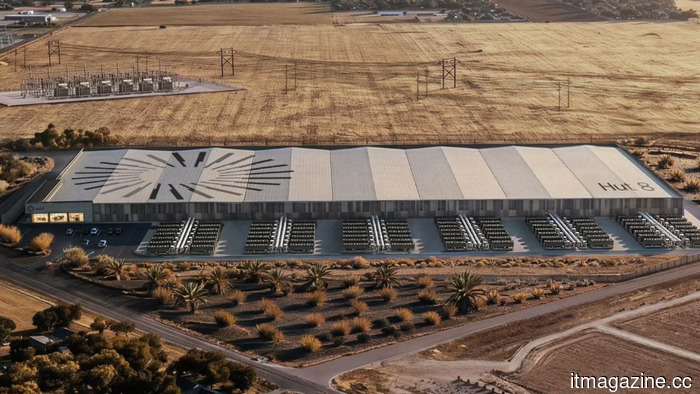 Hut 8 has entered into a 15-year lease worth $9.8 billion for the initial phase of its AI data center in Texas.
Hut 8 has entered into a 15-year lease for 352 MW at its Beacon Point Texas AI data-center campus with an undisclosed investment-grade tenant, valued at $9.8 billion.
Hut 8 has entered into a 15-year lease worth $9.8 billion for the initial phase of its AI data center in Texas.
Hut 8 has entered into a 15-year lease for 352 MW at its Beacon Point Texas AI data-center campus with an undisclosed investment-grade tenant, valued at $9.8 billion.
 Ametek is set to acquire Indicor's instrumentation divisions for $5 billion.
Ametek is set to acquire the test-and-measurement divisions of Indicor, which is part of the Clayton, Dubilier & Rice industrial portfolio, for approximately $5 billion.
Ametek is set to acquire Indicor's instrumentation divisions for $5 billion.
Ametek is set to acquire the test-and-measurement divisions of Indicor, which is part of the Clayton, Dubilier & Rice industrial portfolio, for approximately $5 billion.
 Beijing's lobbying campaign regarding the EU Cybersecurity Act depicted through statistics
A study by KPMG, commissioned by the China Chamber of Commerce to the EU, estimates that the revision of the bloc's proposed Cybersecurity Act would amount to $432.83 billion.
Beijing's lobbying campaign regarding the EU Cybersecurity Act depicted through statistics
A study by KPMG, commissioned by the China Chamber of Commerce to the EU, estimates that the revision of the bloc's proposed Cybersecurity Act would amount to $432.83 billion.
 Beijing's lobbying efforts regarding the EU Cybersecurity Act quantified.
A study by KPMG, commissioned by the China Chamber of Commerce to the EU, estimates that the proposed revision of the Cybersecurity Act in the bloc would incur costs of $432.83 billion.
Beijing's lobbying efforts regarding the EU Cybersecurity Act quantified.
A study by KPMG, commissioned by the China Chamber of Commerce to the EU, estimates that the proposed revision of the Cybersecurity Act in the bloc would incur costs of $432.83 billion.
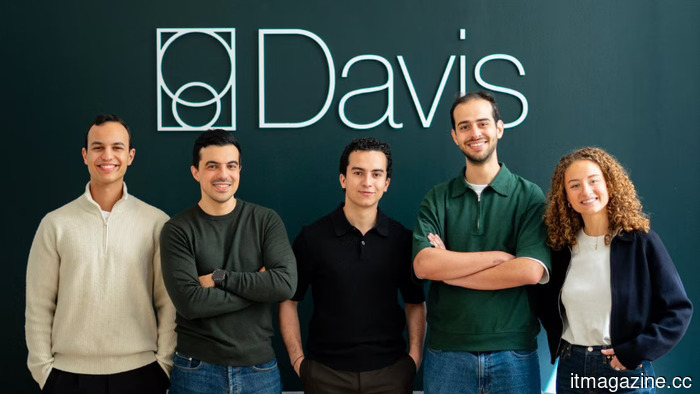 Davis secures $5.5 million in pre-seed funding to streamline real estate development.
Davis, located in Paris, has secured $5.5 million in pre-seed funding to streamline real estate development from months down to days, utilizing a new generative model named Gaudi-1.
Davis secures $5.5 million in pre-seed funding to streamline real estate development.
Davis, located in Paris, has secured $5.5 million in pre-seed funding to streamline real estate development from months down to days, utilizing a new generative model named Gaudi-1.
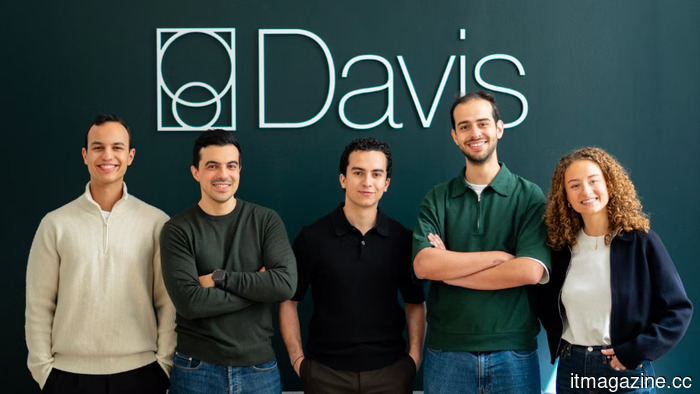 Davis secures $5.5 million in pre-seed funding to streamline real estate development.
Davis, based in Paris, has secured $5.5 million in pre-seed funding to accelerate real estate development from months to days using an innovative generative model named Gaudi-1.
Davis secures $5.5 million in pre-seed funding to streamline real estate development.
Davis, based in Paris, has secured $5.5 million in pre-seed funding to accelerate real estate development from months to days using an innovative generative model named Gaudi-1.
Razr Fold versus Galaxy Z Fold 7: I’m tentatively impressed by what Motorola’s inaugural foldable brings to the table while saving $300.
Motorola focused on creating the most robust hardware in its first generation. Meanwhile, Samsung dedicated seven generations to developing the most reliable daily-use device.