
Samsung Electronics surpasses $1 trillion, joining TSMC.
Samsung's stock has increased more than fourfold in just one year. The KOSPI index surpassed 7,000 for the first time, and two South Korean chip manufacturers now comprise 42% of the index. According to Samsung's own forecasts, the supercycle that has fueled this rally has not yet reached its peak.
A rare moment occurred in the market on Wednesday morning in Seoul, as reported by Reuters, when Samsung Electronics' market capitalization exceeded $1 trillion for the first time in its 57-year history. In early trading, shares rose by approximately 12% before ultimately closing even higher.
Over the last year, Samsung’s stock has more than quadrupled, making it the second Asian company, alongside TSMC, to surpass the $1 trillion mark. During the same trading session, the KOSPI index reached 7,000 for the first time, hitting an intraday peak of 7,338.61.
This represents the largest single re-rating event for Korean equities in the post-pandemic semiconductor cycle. However, despite the significance of this milestone, Samsung has spent less time celebrating it than the occasion might imply, as the company suggests that the operational factors driving the rally are not yet at their highest point.
Two developments over the past two weeks shed light on Wednesday’s stock movement. The first was Samsung's Q1 2026 earnings report released last week, which showed revenues of ₩133.9 trillion (approximately $90 billion) and an operating profit of ₩57.2 trillion, an eightfold year-on-year increase and the highest quarterly profit in the company’s history. Notably, the semiconductor division accounted for ₩53.7 trillion in operating profit, making up about 94% of the total, largely due to high-demand memory products.
The second piece of news was the company's consistent signaling regarding supply outlook. As reported by Tom’s Hardware in late April, both Samsung and SK Hynix indicated that memory shortages driven by AI demand are expected to continue through 2027 and beyond, with clients already booking supply far in advance and overall DRAM market conditions tightening alongside high-bandwidth memory (HBM).
When combining the first quarter earnings with the supply outlook, the equity market's reaction makes sense in hindsight: a company recording record profits on a product with a structurally limited supply and increasing prices each quarter is the kind of asset that public investors tend to re-evaluate significantly. The 12% intraday increase on Wednesday was not an isolated incident; it represented an overarching re-evaluation that crossed a psychological threshold.
Samsung has now joined TSMC as the second Asian company to reach a $1 trillion valuation, after TSMC first hit this milestone in mid-2025 and has since significantly increased its lead, currently valued at around $2 trillion. The notion of "joining the elite club" is less crucial than the structural differences between the two companies. TSMC's $2 trillion valuation is largely based on its near-monopoly in leading-edge logic foundry manufacturing, producing advanced AI accelerators for major tech firms. In contrast, Samsung's $1 trillion valuation is primarily rooted in memory production.
In the context of AI development, these two companies complement rather than compete at the silicon level. AI accelerators require both cutting-edge logic, which TSMC dominates, and high-bandwidth memory, which Samsung provides in partnership with SK Hynix and Micron. Together, the Korean memory producers are essential to the supply chain of AI accelerators, which in turn affects how quickly large tech companies can deploy their projected $725 billion in capital expenditures for 2026.
One critical aspect of Samsung's recent statements is what it hasn’t communicated. The company has not indicated any moderation in pricing power or improvement in customer demand fulfillment. Samsung's chief financial officer informed analysts that the current demand fulfillment rate is at a record low, as customers are increasingly advancing their 2027 demand into 2026 to secure supply. The guidance suggests a tighter supply-demand balance in 2027 compared to 2026.
This guidance is notable since most CFOs in cyclical industries tend to soften forward signals after a year in which their stock has quadrupled. Samsung’s communication has taken the opposite approach, implicitly signaling to investors that the stock's rise reflects a delayed re-rating relative to fundamentals that continue to strengthen.
However, a counter-argument exists. TNW has monitored the wider discussion around AI equity multiples this spring, with the U.S. CAPE ratio reaching dot-com levels and several AI software stocks retracing sharply in April. While memory fundamentals differ from AI software, they are not immune to broader fluctuations in risk appetite. Should hyperscaler capital expenditures fall from the projected $725 billion for 2026, even slightly, Samsung’s pricing power may diminish. The same operational leverage that yielded an eightfold profit increase in Q1 can also decline rapidly.
Three key implications arise from Wednesday’s stock performance
Other articles
 Will Apple’s iOS 27 introduce third-party AI options and assist Chinese iPhones in overcoming their AI challenges?
Apple is said to be preparing to enable users to select third-party AI models for the first time in its forthcoming iOS 27 release, broadening Apple's capabilities.
Will Apple’s iOS 27 introduce third-party AI options and assist Chinese iPhones in overcoming their AI challenges?
Apple is said to be preparing to enable users to select third-party AI models for the first time in its forthcoming iOS 27 release, broadening Apple's capabilities.
-of-PS4-players.jpg) The upcoming Call of Duty installment will challenge the loyalty (and finances) of PS4 gamers.
Activision has officially announced that the upcoming Call of Duty will not be developed for PS4, marking the end of years of cross-generation support and leaving PS4 users in a difficult position as the timeline for PS6 remains uncertain.
The upcoming Call of Duty installment will challenge the loyalty (and finances) of PS4 gamers.
Activision has officially announced that the upcoming Call of Duty will not be developed for PS4, marking the end of years of cross-generation support and leaving PS4 users in a difficult position as the timeline for PS6 remains uncertain.
 Samsung Electronics surpasses $1 trillion, joining TSMC.
On Wednesday, Samsung Electronics surpassed a market capitalization of $1 trillion, becoming only the second Asian company to achieve this milestone, alongside TSMC.
Samsung Electronics surpasses $1 trillion, joining TSMC.
On Wednesday, Samsung Electronics surpassed a market capitalization of $1 trillion, becoming only the second Asian company to achieve this milestone, alongside TSMC.
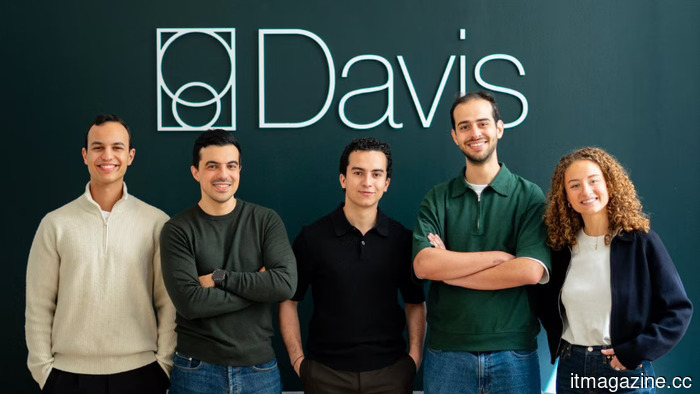 Davis secures $5.5 million in pre-seed funding to streamline real estate development.
Davis, located in Paris, has secured $5.5 million in pre-seed funding to streamline real estate development from months down to days, utilizing a new generative model named Gaudi-1.
Davis secures $5.5 million in pre-seed funding to streamline real estate development.
Davis, located in Paris, has secured $5.5 million in pre-seed funding to streamline real estate development from months down to days, utilizing a new generative model named Gaudi-1.
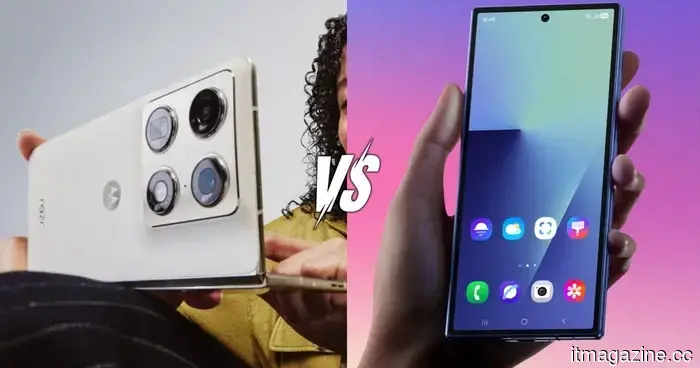 Razr Fold versus Galaxy Z Fold 7: I’m tentatively impressed by what Motorola’s inaugural foldable brings to the table while saving $300.
Motorola focused on creating the most robust hardware in its first generation. Meanwhile, Samsung dedicated seven generations to developing the most reliable daily-use device.
Razr Fold versus Galaxy Z Fold 7: I’m tentatively impressed by what Motorola’s inaugural foldable brings to the table while saving $300.
Motorola focused on creating the most robust hardware in its first generation. Meanwhile, Samsung dedicated seven generations to developing the most reliable daily-use device.
 Apple resolves the consumer lawsuit regarding Siri for $250 million.
Apple has resolved the Landsheft consumer class action regarding Siri AI marketing for $250 million. The related securities fraud case involving shareholders is still ongoing.
Apple resolves the consumer lawsuit regarding Siri for $250 million.
Apple has resolved the Landsheft consumer class action regarding Siri AI marketing for $250 million. The related securities fraud case involving shareholders is still ongoing.
Samsung Electronics surpasses $1 trillion, joining TSMC.
On Wednesday, Samsung Electronics reached a market capitalization of $1 trillion, becoming the second Asian company to achieve this milestone, following TSMC.