

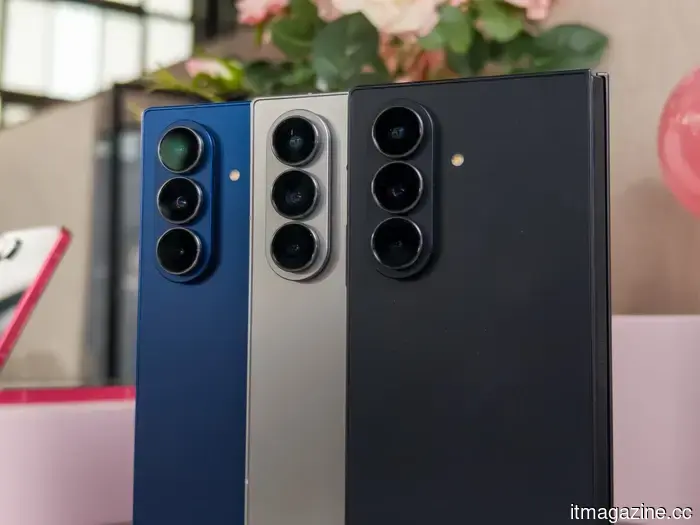
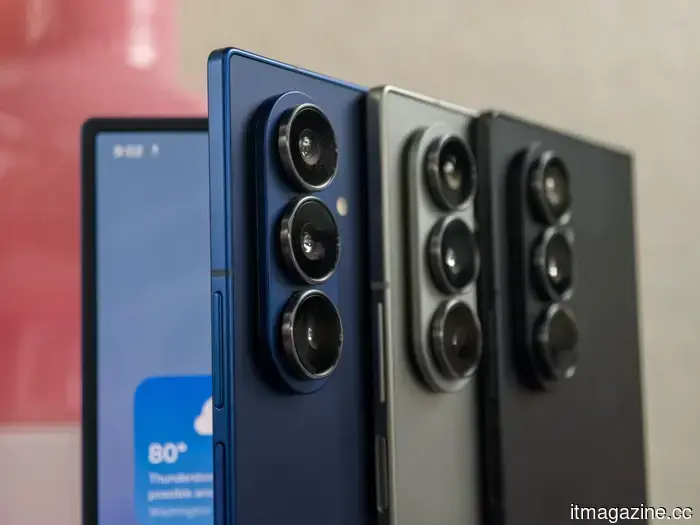
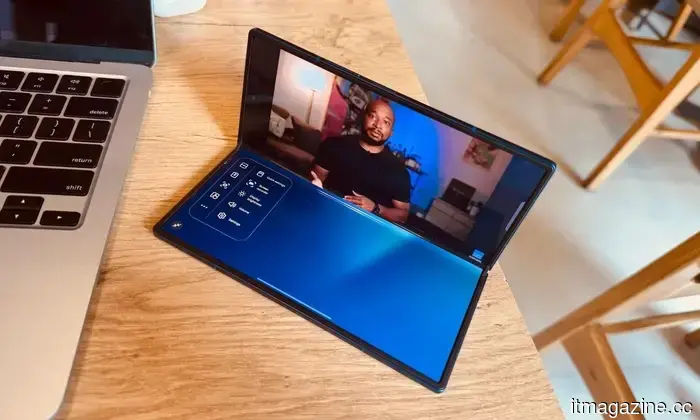
Razr Fold versus Galaxy Z Fold 7: I’m tentatively impressed by what Motorola’s first foldable device brings to the table, all while saving $300.
You've decided to invest a considerable amount in a book-style foldable that delivers a large-screen experience while being portable enough to fold in half. Sounds great, right? However, here's something to consider: the Galaxy Z Fold 7 (256GB), launched in July 2025, still sells for $1,999, whereas the newly announced Moto Razr Fold (512GB) is priced at $1,899.
How did Motorola manage that? Did it make sacrifices while undercutting the Fold 7 by $100 while providing double the storage? There are a few drawbacks that might not sit well with you, especially if your purchasing choice hinges on the specifications. A more beneficial approach, in my view, is to look beyond the numbers and think about how you intend to use the device.
I'm not presenting this comparison to declare a victor based on specs; instead, the goal is to help you determine if Motorola's first attempt at the book-fold format is worth your investment or if the Galaxy Z Fold 7, despite being older, still proves itself in 2026 as a better fit for your needs.
**Razr Fold vs. Samsung Galaxy Z Fold 7: Quick Specifications Overview**
| Feature | Razr Fold 2026 (16GB/512GB) | Galaxy Z Fold 7 (12GB/256GB) | Difference |
|---------------------|-------------------------------|--------------------------------|-------------------------------------|
| **Price** | $1,899 | $1,999 | $100 cheaper at base, $300 cheaper for equivalent storage variant |
| **Dimensions** | Unfolded: 144.47 × 160.05 × 4.7mm Folded: 160.05 × 73.6 × 10.04mm 243g | Unfolded: 158.2 × 143 × 4.2mm Folded: 168.4 × 72.6 × 8.9mm 215g | Z Fold 7 is 28g lighter and 1.14mm thinner when folded |
| **Inner Display** | 8.1″ LTPO AMOLED, 120Hz, 6,200 nits, HDR10+ | 8.0″ Dynamic LTPO AMOLED 2X, 120Hz, 2,600 nits, 368ppi | +3,600 nits peak brightness |
| **Cover Display** | 6.6″ LTPO pOLED, 165Hz, 6,000 nits | 6.2″ Dynamic LTPO AMOLED 2X, 120Hz, 21:9 ratio | Brighter and faster refresh |
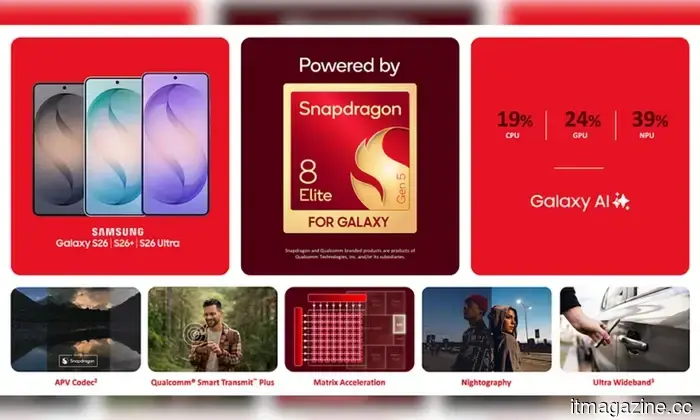
| **Processor** | Snapdragon 8 Gen 5 (3nm) | Snapdragon 8 Elite for Galaxy (3nm) | Newer but slightly slower chip |
| **RAM / Storage** | 16GB / 512GB — all variants | 12GB / 256GB and 512GB; 16GB on 1TB only | More RAM at the equivalent storage variant |
| **Main Camera** | 50MP (f/1.6), Sony LYTIA 828, OIS | 200MP (f/1.7), ISOCELL HP2, OIS | Lower resolution sensor |
| **Ultrawide** | 50MP (f/2.0), 122°, Macro Vision, Sony LYTIA | 12MP (f/2.2), 120°, autofocus | Fold: higher resolution; Z Fold 7: autofocus |
| **Telephoto** | 50MP (f/2.4), 3x optical, Sony LYTIA | 10MP (f/2.4), 3x optical | Significantly higher resolution |
| **Cover Selfie** | 32MP (f/2.0), punch-hole | 10MP (f/2.2), punch-hole | Higher resolution, wider aperture |
| **Inner Selfie** | 20MP (f/2.0), punch-hole | 10MP (f/2.2), punch-hole | Higher resolution |
| **Battery** | 6,000mAh silicon-carbon | 4,400mAh Li-Polymer | Bigger battery |
| **Wired Charging** | 80W wired, 50W wireless, 5W reverse | 25W wired, 15W wireless, 4.5W reverse | Faster wired and wireless charging |
| **Stylus** | Moto Pen Ultra ($99 extra) | No S Pen (dropped after Z Fold 5) | Stylus support available |
| **Cover Glass** | Gorilla Glass Ceramic 3 | Gorilla Glass






Other articles
 Samsung Electronics surpasses $1 trillion, joining TSMC.
On Wednesday, Samsung Electronics reached a market capitalization of $1 trillion, becoming the second Asian company to achieve this milestone, following TSMC.
Samsung Electronics surpasses $1 trillion, joining TSMC.
On Wednesday, Samsung Electronics reached a market capitalization of $1 trillion, becoming the second Asian company to achieve this milestone, following TSMC.
 LiveEO secures €28 million for its satellite technology focused on civil infrastructure.
LiveEO has successfully completed a €28 million first close in its upcoming funding round, as the company diversifies into defence ISR in addition to its civil infrastructure operations.
LiveEO secures €28 million for its satellite technology focused on civil infrastructure.
LiveEO has successfully completed a €28 million first close in its upcoming funding round, as the company diversifies into defence ISR in addition to its civil infrastructure operations.
 Thailand has greenlit $29 billion in projects, which includes the expansion of TikTok's data center.
Thailand's BOI approved $29 billion in foreign investments, which includes a $25 billion expansion of TikTok's data center, positioning Thailand as a leader in Southeast Asia.
Thailand has greenlit $29 billion in projects, which includes the expansion of TikTok's data center.
Thailand's BOI approved $29 billion in foreign investments, which includes a $25 billion expansion of TikTok's data center, positioning Thailand as a leader in Southeast Asia.
 Your ChatGPT history serves as a personality assessment you weren't aware you were undergoing.
Researchers at ETH Zurich gathered 62,090 authentic ChatGPT conversations from 668 users and developed an AI to anticipate personality traits based on these interactions. The findings serve as a significant alert concerning privacy issues.
Your ChatGPT history serves as a personality assessment you weren't aware you were undergoing.
Researchers at ETH Zurich gathered 62,090 authentic ChatGPT conversations from 668 users and developed an AI to anticipate personality traits based on these interactions. The findings serve as a significant alert concerning privacy issues.
 Reasons the EU's anonymization approach might not withstand the GDPR evaluation
Sergei Vassilvitskii, a scientist at Google, has alerted the European Commission that the anonymization technique used for mandatory search-data sharing under the DMA can be compromised in under two hours.
Reasons the EU's anonymization approach might not withstand the GDPR evaluation
Sergei Vassilvitskii, a scientist at Google, has alerted the European Commission that the anonymization technique used for mandatory search-data sharing under the DMA can be compromised in under two hours.
 Reasons why the EU's anonymisation approach might fail to meet GDPR requirements.
Sergei Vassilvitskii, a scientist at Google, has alerted the European Commission that the anonymisation technique used for mandatory search-data sharing under the DMA is vulnerable and can be compromised in under two hours.
Reasons why the EU's anonymisation approach might fail to meet GDPR requirements.
Sergei Vassilvitskii, a scientist at Google, has alerted the European Commission that the anonymisation technique used for mandatory search-data sharing under the DMA is vulnerable and can be compromised in under two hours.
Razr Fold versus Galaxy Z Fold 7: I’m tentatively impressed by what Motorola’s first foldable device brings to the table, all while saving $300.
Motorola focused its first release on creating the most robust hardware case possible. In contrast, Samsung dedicated seven generations to designing the most reliable daily-use case.