
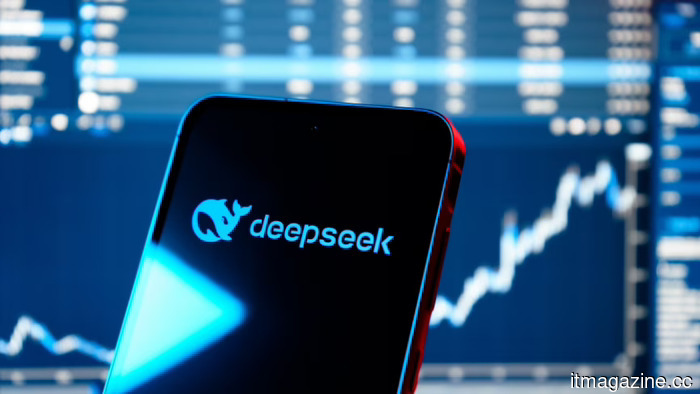
DeepSeek's $45 billion valuation also serves as a strategic statement from Beijing.
What began in mid-April as a $300 million fundraise at a $10 billion valuation, with discussions involving Alibaba and Tencent, has now evolved into a deal reported by the Financial Times at a $45 billion valuation, led by the China Integrated Circuit Industry Investment Fund. The strategic rationale has significantly shifted.
In venture capital, there is a unique kind of valuation rise that typically doesn’t occur for a company that has consistently avoided outside funding. On Wednesday, Bloomberg highlighted, referencing a Financial Times report, that China’s primary state-backed semiconductor investment fund is currently negotiating to lead DeepSeek's first external funding round, valuing the company at around $45 billion.
This figure is more than double what was being discussed merely two weeks earlier. The valuation increase itself is noteworthy, but even more so is the identity of the lead investor.
The China Integrated Circuit Industry Investment Fund, commonly referred to as the “Big Fund,” is the main state mechanism through which Beijing has supported China’s push for semiconductor self-sufficiency since 2014. Over its three phases, the fund has allocated over $50 billion to Chinese companies involved in chip design, manufacturing, packaging, and equipment. Until Wednesday’s news, the fund’s focus primarily revolved around the silicon components of the AI stack, including fabrication plants, foundries, memory producers, and EDA tools. A direct investment in a cutting-edge AI model lab represents a significant broadening of the fund's mandate.
This also indicates Beijing’s perspective on the strategic interplay between AI capabilities and chip capabilities. TNW has been monitoring the broader U.S.-China chip export control situation for several years and has consistently observed that the U.S. has implemented semiconductor export restrictions to limit China’s access to advanced AI computing, while China has sought a response strategy to regain parity. The Big Fund's interest in a DeepSeek funding round suggests that the response strategy is shifting more toward model capabilities instead of solely focusing on chip technology. If China cannot obtain Nvidia's top-tier GPUs in the necessary quantities, it appears that financing model labs capable of delivering advanced results without them has become the alternative.
How did DeepSeek arrive at this point?
DeepSeek’s commercial narrative is now well-known. Founded in July 2023 by Liang Wenfeng, a 40-year-old computer scientist and co-founder of the quantitative hedge fund High-Flyer Capital Management, DeepSeek had been supported solely by High-Flyer's capital until April 2026, without external venture funding or public revenue disclosure. The South China Morning Post posed a pertinent question last month: why is a company that seemingly doesn't need funds seeking them? The response, based on available information, consists of two elements.
The first is operational. DeepSeek-R1, the reasoning model launched in January 2025, ignited a significant equity-market reaction among U.S. technology stocks at that time, reportedly trained for $6 million—substantially less than its U.S. counterparts. DeepSeek V4, the company’s flagship trillion-parameter model, debuted on April 24, 2026, coinciding with the public appearance of funding discussions. Even with High-Flyer's financial backing, training and deploying frontier models at DeepSeek's current scale is not a sustainable long-term funding model.
The second factor is strategic. Yicai Global reported that Liang personally invested fresh capital in April, increasing DeepSeek’s registered capital by 50 percent. His personal stake rose from roughly 1 percent to 34 percent, amounting to a total combined ownership of about 84 percent when both direct and indirect holdings are considered. This capital structure adjustment seems to have been carefully planned ahead of accepting external funds, both to solidify founder control and to create a straightforward framework for incoming institutional investors.
From $10 billion to $20 billion to $45 billion in three weeks.
The valuation increase needs to be outlined clearly. DeepSeek initially began its first funding round with a valuation of $10 billion, aiming for approximately $300 million. By April 22, when Bloomberg confirmed that Tencent and Alibaba were in talks to join, the valuation had risen to above $20 billion. By the Financial Times report on Wednesday, with the Big Fund potentially involved as lead investor, the valuation reached $45 billion—over four times the original starting figure.
Three main factors have influenced this price increase. First, investor demand: the inclusion of each new institutional investor raised the implied valuation that subsequent investors needed to meet. Second, the strategic value associated with the Big Fund's particular involvement—when such a significant state entity indicates interest, both foreign and private investors recalibrate their expectations. Third, the larger context of Chinese AI funding, which has seen considerable tightening during the same period.
Earlier this year, we reported on Tencent's ClawPro launch, along with parallel investments from Alibaba, Tencent, and ByteDance in their respective enterprise AI platforms. Currently, Alibaba holds a 35.8 percent share of the Chinese
Other articles
 This Google Home update focuses on enhanced automation capabilities.
The Google Home update enhances automation by introducing new triggers, conditions, and actions, enabling more intelligent control over devices such as locks, lights, appliances, and sensors.
This Google Home update focuses on enhanced automation capabilities.
The Google Home update enhances automation by introducing new triggers, conditions, and actions, enabling more intelligent control over devices such as locks, lights, appliances, and sensors.
 Apple reaches a $250 million settlement in the consumer Siri lawsuit.
Apple has resolved the Landsheft consumer class action regarding the marketing of Siri AI for $250 million. Meanwhile, the related securities-fraud case involving shareholders is still ongoing.
Apple reaches a $250 million settlement in the consumer Siri lawsuit.
Apple has resolved the Landsheft consumer class action regarding the marketing of Siri AI for $250 million. Meanwhile, the related securities-fraud case involving shareholders is still ongoing.
 Samsung Electronics surpasses $1 trillion, joining TSMC.
On Wednesday, Samsung Electronics reached a market capitalization of $1 trillion, becoming the second Asian company to achieve this milestone, following TSMC.
Samsung Electronics surpasses $1 trillion, joining TSMC.
On Wednesday, Samsung Electronics reached a market capitalization of $1 trillion, becoming the second Asian company to achieve this milestone, following TSMC.
 Reasons why the EU's anonymisation approach might fail to meet GDPR requirements.
Sergei Vassilvitskii, a scientist at Google, has alerted the European Commission that the anonymisation technique used for mandatory search-data sharing under the DMA is vulnerable and can be compromised in under two hours.
Reasons why the EU's anonymisation approach might fail to meet GDPR requirements.
Sergei Vassilvitskii, a scientist at Google, has alerted the European Commission that the anonymisation technique used for mandatory search-data sharing under the DMA is vulnerable and can be compromised in under two hours.
 Peter Sarlin's Qutwo achieves a $380 million valuation in an angel funding round.
Qutwo, the company specializing in quantum-classical orchestration and founded by Peter Sarlin of Silo AI, has achieved a $380 million valuation following an angel investment round.
Peter Sarlin's Qutwo achieves a $380 million valuation in an angel funding round.
Qutwo, the company specializing in quantum-classical orchestration and founded by Peter Sarlin of Silo AI, has achieved a $380 million valuation following an angel investment round.
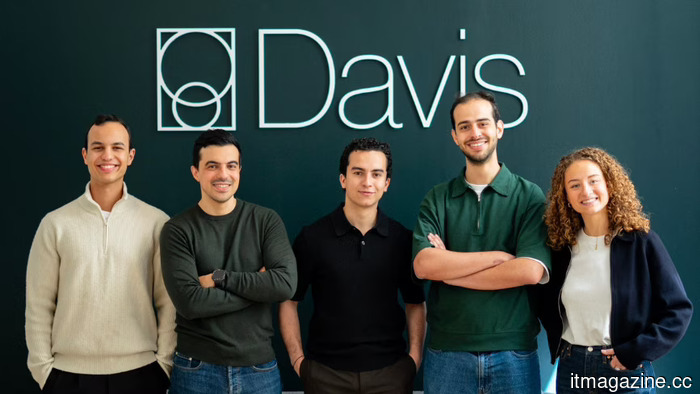 Davis secures $5.5 million in pre-seed funding to streamline real estate development.
Davis, based in Paris, has secured a $5.5 million pre-seed funding to accelerate real estate development from months to days, utilizing a new generative model known as Gaudi-1.
Davis secures $5.5 million in pre-seed funding to streamline real estate development.
Davis, based in Paris, has secured a $5.5 million pre-seed funding to accelerate real estate development from months to days, utilizing a new generative model known as Gaudi-1.
DeepSeek's $45 billion valuation also serves as a strategic statement from Beijing.
China's Big Fund is currently in discussions to take the lead on DeepSeek's initial external funding round, valued at $45 billion, which is more than double the amount that was being considered a fortnight ago.