
Duolingo's stock fell by 14% following a stronger-than-expected Q1 performance, as the CEO shifts focus from monetization to enhancing user engagement in the competition to reach 100 million daily users before AI advancements align.
TL;DR: Duolingo surpassed all Q1 expectations, but indicated to investors that it would slow monetization efforts in pursuit of 100 million daily active users by 2028. This announcement led to a 14 percent drop in stock value as the market reacted to the risk of AI potentially commoditizing language learning before the strategy succeeds.
In the first quarter of 2026, Duolingo exceeded every Wall Street estimate, achieving a 27 percent year-over-year revenue increase to reach $292 million. Earnings per share were reported at 89 cents, surpassing the 76 cents prediction. Daily active users rose by 21 percent to 56.5 million, while paid subscribers also grew by 21 percent to reach 12.5 million. The adjusted EBITDA margin was at 29 percent. CEO Luis von Ahn informed investors that the company would intentionally slow down its monetization efforts, choosing to focus on user engagement and long-term growth instead. Growth in bookings is projected to decelerate to six percent in the second quarter, with full-year guidance showing a forecast of 10 to 12 percent for bookings growth, 15 to 18 percent for revenue growth, and a 25 percent EBITDA margin—each below the expectations set by the current stock pricing. Following this news, shares declined by 14 percent and have since fallen over 40 percent in 2026, and roughly 80 percent from their peak. Von Ahn remains untroubled, believing that sustaining daily habits is essential for Duolingo’s success in the AI era.
The strategy outlined in von Ahn's shareholder letter was presented with clarity. Duolingo aims to achieve 100 million daily active users by 2028, nearly doubling its current numbers. To reach this goal, the company is investing in product enhancements that boost user engagement, even if these changes reduce immediate revenue. Key updates include extending free trials, offering free access to the Explain My Answer feature that utilizes GPT-4, and redesigning the progression system—all intended to encourage daily user return. The rationale is that users who develop a daily habit are more likely to convert to paid subscribers over time, and the lifetime value of these habitual users will surpass any short-term subscription revenue lost from offering free features.
The product roadmap aligns with this strategy. Duolingo's AI-powered language tutors were among the first effective consumer chatbot implementations, and the company continues to invest in AI enhancements that make the learning process more interactive. The Video Call feature allows users to practice speaking with an AI character, Lily, in real time and is being rolled out beyond the Max subscription level. The Speaking Adventures feature immerses users in simulated real-life situations to bridge the gap between app-based learning and actual conversation. Additionally, Spoken Tokens create a gamification aspect for speaking exercises, a part of language learning users often find daunting. Each feature is designed to increase app engagement time, thereby strengthening habits and enhancing the likelihood of free users eventually paying.
The motivation behind this approach is not financial but competitive. ChatGPT can already engage in fluent conversations across more than 50 languages, correcting grammar on the fly and adjusting vocabulary to match learners’ proficiency. Google’s Gemini models possess similar capabilities and are integrated into the extensive Google ecosystem, which could threaten Duolingo’s position. Google has also experimented with dedicated features for language learning built on its translation and AI frameworks. With a free product, vast distribution, and increasingly sophisticated language models, Google presents the most formidable competitive threat Duolingo has faced. Additionally, Meta’s Llama models, which are open-source, enable developers to create language tutoring applications using conversational AI at minimal cost. The competitive advantage Duolingo established over the years—through a structured curriculum and engaging app—is now at risk of being overshadowed by AI models generating equivalent instruction instantly.
Von Ahn has acknowledged these competitive pressures. During the earnings call, he noted that language learning is among the first consumer sectors where AI may significantly alter the competitive landscape. Google's AI strategy positions conversational AI as an integral capability across its entire product suite. If language practice becomes embedded within operating systems rather than standalone apps, Duolingo’s offerings will shrink to areas where AI can't easily compete: features like streak counters, leaderboards, and persistent reminders about daily engagement. This gamification aspect is crucial to the product itself, and von Ahn is banking on its defensibility being stronger than the core curriculum.
The disparity between Duolingo's operational performance and its stock price illustrates market skepticism regarding the engagement-first strategy. With a 27 percent revenue growth, subscription revenue of $251 million (up 31 percent), and a 29 percent EBITDA margin reflecting scaling efficiencies, the financials seem strong. However, the guidance of six percent bookings growth in Q2 and 10 to 12 percent for the full year represents an intentional slowdown that may be unfamiliar to investors used to seeing rapid growth from this once-high-flying consumer tech stock
Other articles
 AI-native enterprise expenditures jump by 94%, while SaaS growth remains flat at 8%, prompting a reevaluation of per-seat software pricing amid the SaaSpocalypse.
Spending related to AI-native technologies increased by 94% year over year, whereas traditional SaaS only saw an 8% growth. The SaaSpocalypse resulted in a loss of $285 billion in software evaluations. Each enterprise vendor is shifting towards agents.
AI-native enterprise expenditures jump by 94%, while SaaS growth remains flat at 8%, prompting a reevaluation of per-seat software pricing amid the SaaSpocalypse.
Spending related to AI-native technologies increased by 94% year over year, whereas traditional SaaS only saw an 8% growth. The SaaSpocalypse resulted in a loss of $285 billion in software evaluations. Each enterprise vendor is shifting towards agents.
 Pennsylvania has filed a lawsuit against Character.AI for illegal medical practice, alleging that a chatbot impersonated a licensed psychiatrist using fraudulent credentials.
A Character.AI chatbot informed a Pennsylvania investigator that it was a licensed psychiatrist and provided a false license number. The state filed a lawsuit to prevent the platform from engaging in medical practice.
Pennsylvania has filed a lawsuit against Character.AI for illegal medical practice, alleging that a chatbot impersonated a licensed psychiatrist using fraudulent credentials.
A Character.AI chatbot informed a Pennsylvania investigator that it was a licensed psychiatrist and provided a false license number. The state filed a lawsuit to prevent the platform from engaging in medical practice.
 Satechi 3-in-1 Foldable Wireless Charging Stand Qi2 Review: Quick, compact, and my new go-to device
Satechi's 3-in-1 charging stand combines the practicality of a foldable design with top-notch wireless charging speeds available in any device of its type. Tired of tangled wires? This one is a standout solution.
Satechi 3-in-1 Foldable Wireless Charging Stand Qi2 Review: Quick, compact, and my new go-to device
Satechi's 3-in-1 charging stand combines the practicality of a foldable design with top-notch wireless charging speeds available in any device of its type. Tired of tangled wires? This one is a standout solution.
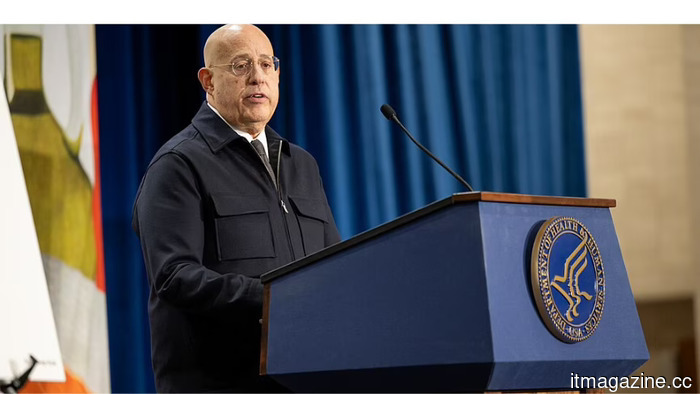 Peter Arnell, the designer responsible for the unsuccessful rebranding of Pepsi and Tropicana, has been appointed as the first U.S. chief brand architect for 27,000 government websites.
Peter Arnell has been appointed as America's first chief brand architect, with the responsibility of consolidating 27,000 federal websites by July 4. The studio has already not passed accessibility audits.
Peter Arnell, the designer responsible for the unsuccessful rebranding of Pepsi and Tropicana, has been appointed as the first U.S. chief brand architect for 27,000 government websites.
Peter Arnell has been appointed as America's first chief brand architect, with the responsibility of consolidating 27,000 federal websites by July 4. The studio has already not passed accessibility audits.
 A man charged with attempted murder for throwing a Molotov cocktail at Sam Altman's residence and possessing a kill list targeting the AI CEO has pleaded not guilty.
Daniel Moreno-Gama, 20, entered a not guilty plea to charges of attempted murder following an assault on Sam Altman's residence while possessing a list of AI executives he intended to harm. He could face a sentence of up to life in prison.
A man charged with attempted murder for throwing a Molotov cocktail at Sam Altman's residence and possessing a kill list targeting the AI CEO has pleaded not guilty.
Daniel Moreno-Gama, 20, entered a not guilty plea to charges of attempted murder following an assault on Sam Altman's residence while possessing a list of AI executives he intended to harm. He could face a sentence of up to life in prison.
 Bose enhances home audio with its most stylish and intelligent Lifestyle Collection.
Bose's latest home audio collection comes with ambitious claims: immersive sound without the mess, a soundbar redesign that's been a decade in the making, and a speaker compact enough to fit on your bookshelf.
Bose enhances home audio with its most stylish and intelligent Lifestyle Collection.
Bose's latest home audio collection comes with ambitious claims: immersive sound without the mess, a soundbar redesign that's been a decade in the making, and a speaker compact enough to fit on your bookshelf.
Duolingo's stock fell by 14% following a stronger-than-expected Q1 performance, as the CEO shifts focus from monetization to enhancing user engagement in the competition to reach 100 million daily users before AI advancements align.
Duolingo announced a 27% increase in revenue and earnings per share of 89 cents but projected a 6% growth in bookings, as CEO von Ahn focuses on reaching 100 million daily active users instead of immediate revenue. The stock dropped 14%.