
Samsung unveils a sleek, flexible display designed for your car's dashboard.
The 3D-style dashboard prototype adapts and evolves according to driving conditions, suggesting that future vehicles may feature even more customizable displays.
Samsung Display has unveiled a more defined stretchable display that could enhance the flexibility of car dashboards while ensuring essential driving information remains legible.
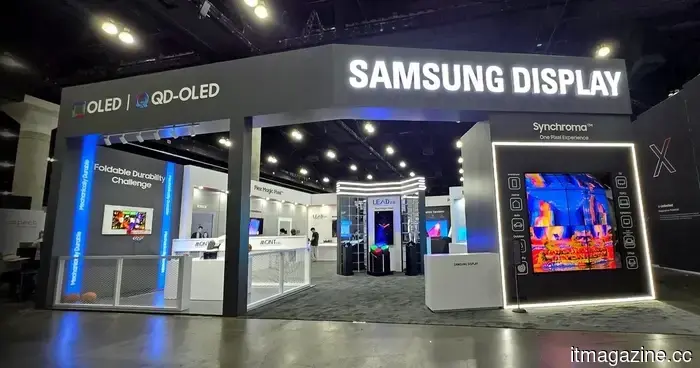
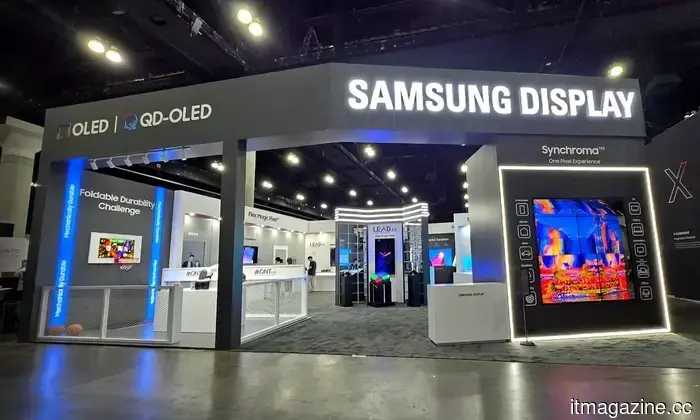
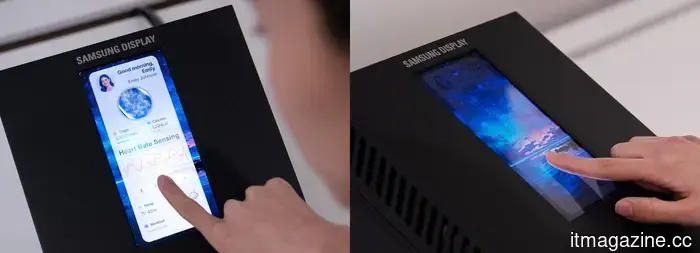
During the SID Display Week 2026 in Los Angeles, the company is showcasing Stretchable Display 2.0 in the form of an automotive instrument cluster. The notable improvement lies in the display's sharpness, with a micro LED panel achieving 200 PPI, up from last year’s 120 PPI, aligning it with current automotive screen standards.
This is significant because a dashboard must not only appear advanced but also remain legible during motion, allowing drivers to quickly access relevant information.
An enhanced adaptive screen
Stretchable Display 2.0 employs a micro LED panel capable of expanding and adjusting without simply bending or folding. In Samsung Display’s demonstration, the speedometer area morphs shape based on driving conditions, providing a more three-dimensional aspect to the instrument cluster.
The innovation lies in the bridge structure that connects the fixed regions containing the pixels and LEDs. Samsung Display reports that they have enhanced pixel density in this structure and developed a new pixel arrangement, allowing the panel to maintain electrical performance while stretching.
This improved configuration enables the demo to present clearer text and graphics while still changing shape.
The significance for vehicles
A stretchable display could allow dashboard information to respond more dynamically to the vehicle's actions. Instead of confining every alert, gauge, or animation within a flat rectangle, the display area could adapt based on the information drivers require most.
Samsung Display is also connecting this concept to software-defined vehicles, where numerous cabin features are managed and updated via software. In this context, a transforming instrument cluster could facilitate quicker visibility of speed, warnings, and navigation indicators without creating additional screen clutter.
The unknown factor is when this technology will be available. Samsung Display has yet to disclose when Stretchable Display 2.0 will be integrated into production vehicles or which manufacturers may adopt it.
Future considerations
The next question is whether this technology can successfully transition from a demonstration to real vehicles. Manufacturers will still require evidence that a stretchable dashboard can withstand heat, vibrations, long-term usage, and rigorous safety standards.
Currently, Samsung Display’s panel boasts the resolution and clarity necessary for a more adaptive dashboard. While it’s not expected to appear in showrooms just yet, it provides manufacturers with a clearer benchmark for the next generation of cabin displays.





Other articles
 Sony's upcoming WH-1000XX headphones have been seen in the wild prior to their official release.
Sony's highest-end headphones to date have been revealed ahead of their launch on May 19. They boast a metal design, 12 microphones for noise cancellation, and AI-driven audio enhancement, priced at $649.
Sony's upcoming WH-1000XX headphones have been seen in the wild prior to their official release.
Sony's highest-end headphones to date have been revealed ahead of their launch on May 19. They boast a metal design, 12 microphones for noise cancellation, and AI-driven audio enhancement, priced at $649.
 Inside QuantWare's €152 million funding round to develop KiloFab
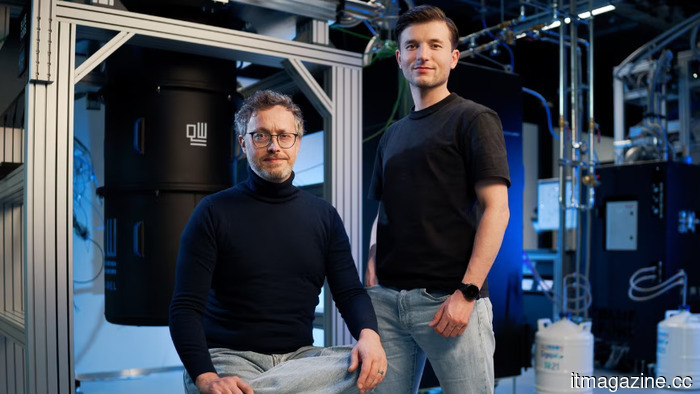
QuantWare has finalized a €152 million Series B funding round, which was led by Intel Capital, In-Q-Tel, and ETF Partners, marking the largest deeptech financing round in the Netherlands to date.
Inside QuantWare's €152 million funding round to develop KiloFab
QuantWare has finalized a €152 million Series B funding round, which was led by Intel Capital, In-Q-Tel, and ETF Partners, marking the largest deeptech financing round in the Netherlands to date.
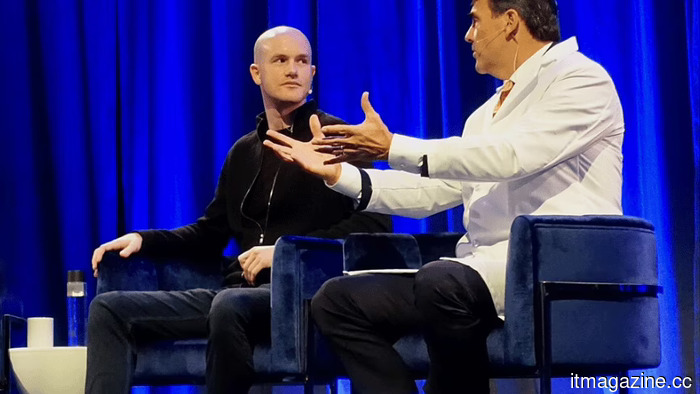 Coinbase reduces its workforce by 14% and reorganizes around AI-focused pods as cryptocurrency revenue declines by 26% and trading volumes reach an 18-month low.
Coinbase is reducing its workforce by 660 employees and reorganizing into AI-focused teams with a maximum of five layers of management. Revenue for Q1 is projected to decline by 26% due to a 48% decrease in cryptocurrency trading volumes.
Coinbase reduces its workforce by 14% and reorganizes around AI-focused pods as cryptocurrency revenue declines by 26% and trading volumes reach an 18-month low.
Coinbase is reducing its workforce by 660 employees and reorganizing into AI-focused teams with a maximum of five layers of management. Revenue for Q1 is projected to decline by 26% due to a 48% decrease in cryptocurrency trading volumes.
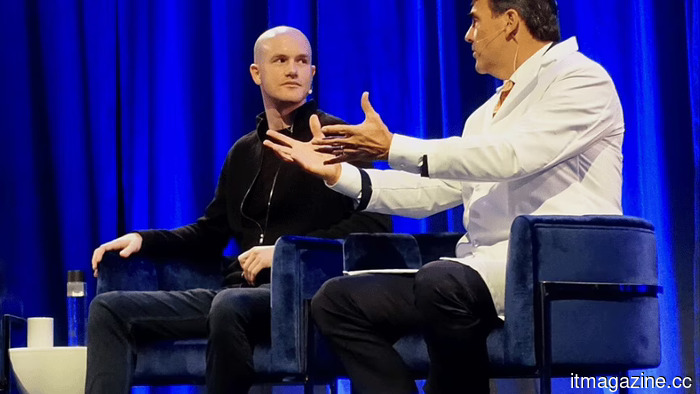 Coinbase reduces its workforce by 14% and restructures to focus on AI-driven pods as cryptocurrency revenue falls 26% and trading volumes reach an 18-month low.
Coinbase is reducing its workforce by 660 employees and reorganizing into AI-focused pods with a limitation of five management layers. Revenue for Q1 is projected to decline by 26% as cryptocurrency trading volumes decrease by 48%.
Coinbase reduces its workforce by 14% and restructures to focus on AI-driven pods as cryptocurrency revenue falls 26% and trading volumes reach an 18-month low.
Coinbase is reducing its workforce by 660 employees and reorganizing into AI-focused pods with a limitation of five management layers. Revenue for Q1 is projected to decline by 26% as cryptocurrency trading volumes decrease by 48%.
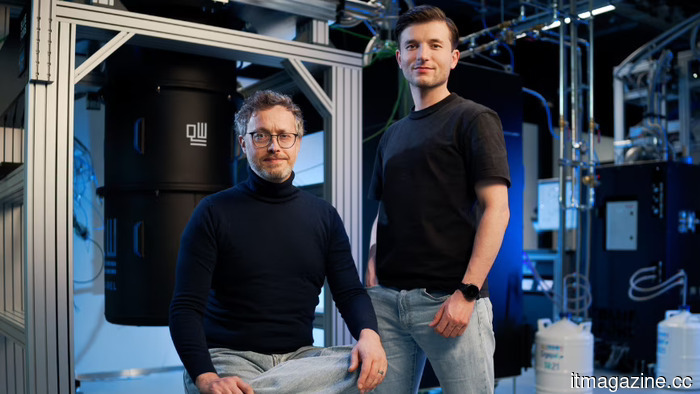 Inside QuantWare's €152 million funding round aimed at developing KiloFab.
QuantWare has completed a €152 million Series B funding round, spearheaded by Intel Capital, In-Q-Tel, and ETF Partners, marking the largest deep tech funding round in the Netherlands to date.
Inside QuantWare's €152 million funding round aimed at developing KiloFab.
QuantWare has completed a €152 million Series B funding round, spearheaded by Intel Capital, In-Q-Tel, and ETF Partners, marking the largest deep tech funding round in the Netherlands to date.
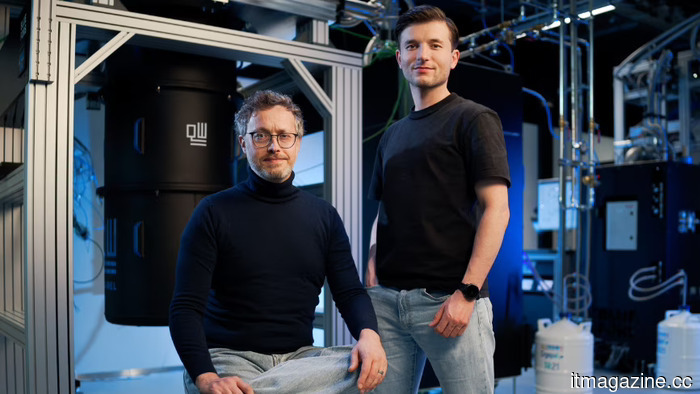 Inside QuantWare's €152 million funding round to develop KiloFab.
QuantWare has secured a €152 million Series B funding round, led by Intel Capital, In-Q-Tel, and ETF Partners, marking the largest deeptech funding round in Dutch history.
Inside QuantWare's €152 million funding round to develop KiloFab.
QuantWare has secured a €152 million Series B funding round, led by Intel Capital, In-Q-Tel, and ETF Partners, marking the largest deeptech funding round in Dutch history.
Samsung unveils a sleek, flexible display designed for your car's dashboard.
Samsung Display's enhanced Stretchable Display 2.0 achieves a resolution of 200 PPI and adapts dashboard visuals based on driving conditions, providing a clearer glimpse into how future vehicle instrument clusters might become more responsive.