

Haun Ventures secures $1 billion for funds targeting cryptocurrency and AI agents following successful stablecoin exits benefiting limited partners.
Katie Haun has secured $1 billion for two new funds at Haun Ventures, dividing the investment evenly between early and later-stage initiatives to be allocated over the next two to three years. The funds will focus on crypto and blockchain companies, which have been the firm's primary interest since Haun departed from Andreessen Horowitz in 2022 to establish her own firm. However, a notable shift is occurring in the investment thesis, moving beyond the original amount raised in her first fund. Haun is venturing into AI agents and financial infrastructure, believing that the next wave of autonomous software will require established financial systems before it can improve its models, and that companies with experience in building stablecoin infrastructure are best suited for this task.
Haun delineates her focus: “We’re not pivoting to be an AI fund,” she explained to Bloomberg. “We want to do AI that is in our lane,” specifically within financial services. Haun Ventures is targeting startups that create AI agents and infrastructure to facilitate consumer and business access to financial products anytime, removing what she identifies as outdated limitations like strict deadlines for transactions. The emphasis is clear: not general-purpose AI, not foundational models, but rather the convergence of autonomous software and regulated finance.
The firm is already making investments aligned with this strategy. Haun Ventures has become one of the largest backers of Erebor, a digital bank established by Palmer Luckey, founder of Anduril Industries, and supported by Peter Thiel’s Founders Fund. Erebor aims to serve tech companies dealing with digital assets, AI, defense, and manufacturing and has received FDIC deposit insurance approval as of late 2025, raising $350 million at a $4.35 billion valuation. This represents a novel type of federally regulated bank built specifically for AI agent developers rather than the end users.
Efforts to create the necessary infrastructure for AI agents within the financial sector are underway. Stripe has initiated a machine payments preview that incorporates stablecoin settlements for transactions between agents. Similarly, Mastercard has introduced its Agent Pay program, while PayPal and Google have partnered on an Agent Payments Protocol. Visa is also working on tokenization infrastructure for autonomous purchases. The consensus among major payment firms is that AI agents will require specialized financial frameworks, creating a value layer that AI labs may not tap into.
Haun’s credibility in this expansion is bolstered by the performance of her first fund, which saw significant exits in the stablecoin space: Stripe's acquisition of Bridge for $1.1 billion represented a substantial increase from Haun Ventures’ initial investment at a $100 million valuation. Furthermore, Mastercard's acquisition of BVNK for $1.8 billion marked the largest stablecoin acquisition to date, with Haun Ventures originally investing at a $678 million valuation. These successes affirmed the belief that stablecoin infrastructure would become a necessary financial component, predominantly driven by established payment companies rather than other crypto entities.
Not every investment has proven fruitful; Haun Ventures invested in OpenSea when it was valued at $13.3 billion, only to see a significant markdown to $1.4 billion by a prominent investor. However, the firm also capitalized on distressed crypto assets during the FTX downturn, later selling them at peak prices in 2025, which returned capital to its limited partners. Joelle Kayden, founder of Accolade Partners and a limited partner in the fund, noted that their staking strategy and token trading significantly contributed to investor returns. The new fund is slightly smaller than its predecessor because the team anticipates less volatility in liquid token prices, indicating a maturation of the crypto-focused aspect of their strategy alongside the expansion into AI.
Haun is not alone in diversifying; Paradigm, a leading crypto-focused venture firm, raised $1.5 billion in February to invest in AI and robotics, proposing to focus on the overlap between AI and crypto. Meanwhile, Sequoia has amassed $7 billion for its largest late-stage fund, Thrive Capital has gathered $10 billion, and Andreessen Horowitz has raised $15 billion. Within this context, Haun’s $1 billion appears modest, but her fund is not chasing the same deals. Instead, it competes for opportunities in the niche between dedicated AI and pure crypto funds, a sector that has emerged over the last two years and now includes prominent crypto investors eager to define this space.
Venture firms with early investments in both AI and alternative assets are yielding impressive returns, and those that maintained their reputations during the crypto winter are now positioned to attract limited partners seeking exposure to both domains without needing multiple managers. Haun's appeal to LPs is that Haun Ventures represents a single allocation capable of understanding tokenized assets, stablecoin infrastructures, and regulatory challenges and can leverage that expertise to build the necessary financial frameworks for AI agents.
A unique advantage Haun possesses is her connections in Washington, D.C. Before her venture capital career, she spent a decade as a federal prosecutor at the
Other articles
 Walmart leak reveals an expanding Onn collection that includes a Gemini-compatible smart speaker.
A certification has revealed that Walmart's Onn lineup is set to expand with a Gemini-powered smart speaker that offers Matter support, Google Cast, and a 10W speaker.
Walmart leak reveals an expanding Onn collection that includes a Gemini-compatible smart speaker.
A certification has revealed that Walmart's Onn lineup is set to expand with a Gemini-powered smart speaker that offers Matter support, Google Cast, and a 10W speaker.
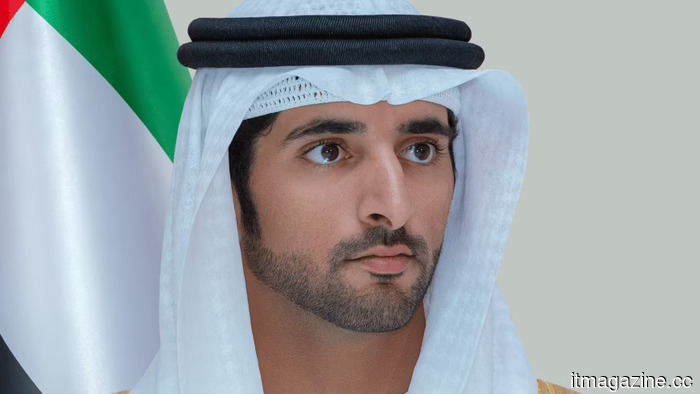 Dubai requires the adoption of agentic AI in the private sector within a two-year timeframe, supported by incubators, training programs, and allocated funds.
Sheikh Hamdan initiates a two-year effort for the private sector in Dubai to embrace agentic AI. Training will be provided for all business councils, incubators, and funds via the Chamber.
Dubai requires the adoption of agentic AI in the private sector within a two-year timeframe, supported by incubators, training programs, and allocated funds.
Sheikh Hamdan initiates a two-year effort for the private sector in Dubai to embrace agentic AI. Training will be provided for all business councils, incubators, and funds via the Chamber.
 A Walmart leak reveals a growing Onn product lineup that includes a smart speaker compatible with Gemini.
A certification listing indicates that Walmart's Onn lineup is set to grow with the introduction of a Gemini-powered smart speaker that includes Matter support, Google Cast, and a 10W speaker.
A Walmart leak reveals a growing Onn product lineup that includes a smart speaker compatible with Gemini.
A certification listing indicates that Walmart's Onn lineup is set to grow with the introduction of a Gemini-powered smart speaker that includes Matter support, Google Cast, and a 10W speaker.
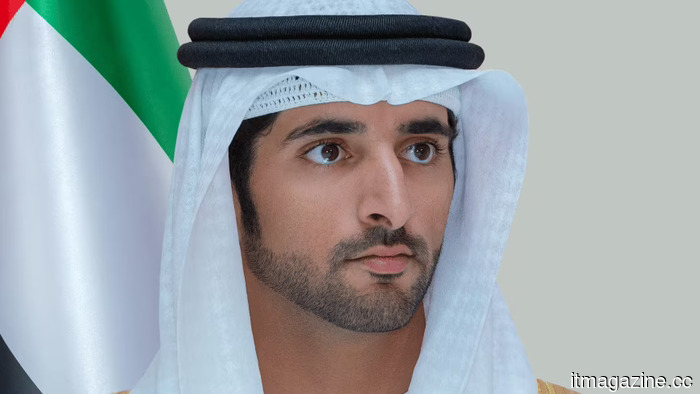 Dubai requires the private sector to adopt generative AI within two years, supported by incubators, training programs, and allocated funds.
Sheikh Hamdan initiates a two-year initiative aimed at encouraging the private sector in Dubai to embrace agentic AI. This will include training for all business councils, incubators, and funds facilitated by the Chamber.
Dubai requires the private sector to adopt generative AI within two years, supported by incubators, training programs, and allocated funds.
Sheikh Hamdan initiates a two-year initiative aimed at encouraging the private sector in Dubai to embrace agentic AI. This will include training for all business councils, incubators, and funds facilitated by the Chamber.
 Denmark halts new grid connections as AI data centers strain the cleanest power grid in Europe.
Energinet has suspended new grid agreements after receiving 60 GW of requests for a grid that can only support 7 GW. The expansion of data centers in Denmark has been propelled by Microsoft, Google, and Apple. As a result, the grid is unable to accommodate the demand.
Denmark halts new grid connections as AI data centers strain the cleanest power grid in Europe.
Energinet has suspended new grid agreements after receiving 60 GW of requests for a grid that can only support 7 GW. The expansion of data centers in Denmark has been propelled by Microsoft, Google, and Apple. As a result, the grid is unable to accommodate the demand.
 YouTube's auto-dubbing lacks one essential feature: a way to turn it off.
I didn't request to hear Marques Brownlee speaking Japanese; YouTube made that choice for me. There's no universal option to disable it.
YouTube's auto-dubbing lacks one essential feature: a way to turn it off.
I didn't request to hear Marques Brownlee speaking Japanese; YouTube made that choice for me. There's no universal option to disable it.
Haun Ventures secures $1 billion for funds targeting cryptocurrency and AI agents following successful stablecoin exits benefiting limited partners.
Katie Haun is branching out from cryptocurrency into AI agents for the financial services sector. Her initial fund yielded exits with Bridge/Stripe and BVNK/Mastercard. Erebor represents her new investment thesis.