

Denmark halts new grid connections as AI data centers strain the cleanest power network in Europe.
TL;DR: Denmark's grid operator, Energinet, has halted all new grid connection agreements due to a backlog of 60 gigawatts—almost nine times the country’s peak demand—overwhelming the system. This surge in demand is largely driven by AI data centres, which were drawn to Denmark's clean grid and cool climate but are now consuming more electricity than the infrastructure can support. Denmark is the first Nordic nation to grapple with the challenge of balancing the development of a clean energy grid with the demands of the power-hungry AI industry.
Denmark generates over 80% of its electricity from renewable sources, utilizing both onshore and offshore wind farms that make it a global leader in clean energy transitions. Energinet has dedicated decades to creating the infrastructure necessary for a decarbonized power system. However, in March, the operator paused all new grid connection agreements—not due to a lack of renewable energy capacity, but because of unprecedented demand from AI data centres that the grid was not designed to handle. Denmark, which has successfully implemented clean energy solutions, is the first Nordic country facing the imminent question that Europe will soon confront: what occurs when the electricity needs of the AI sector outpace a grid that was built for different usage?
The moratorium put in place by Energinet temporarily freezes all new large-scale grid connection agreements, with data centres being the primary contributors to this situation. Approximately 60 gigawatts of projects are currently queuing for grid connections, while the peak electricity demand in Denmark is around 7 gigawatts. This backlog is nearly nine times the peak load, a significant portion of which is attributed to data centre capacity. By early 2026, Denmark had about 398 megawatts of installed data centre capacity, with an additional 208 megawatts under construction and expectations to reach 1.2 gigawatts by 2030. Hyperscale facilities, operated by companies such as Microsoft, Google, and Apple, make up 60% of Denmark’s data centre capacity.
Microsoft has committed $3 billion for data centre construction in Denmark from 2023 to 2027, while Apple runs a facility in Viborg, and Google's operations in Denmark have expanded. The hyperscalers were attracted to Denmark for its stable governance, reliable infrastructure, cool climate that minimizes cooling expenses, and ample wind power. Ironically, the success of Denmark’s clean energy model has drawn in these data centres, which are now surpassing the grid capacity that made Denmark appealing in the first place.
The scale of electricity demand driven by AI has exceeded all previous forecasts. According to the International Energy Agency, electricity consumption from data centres increased by 17% in 2025, with those focused on AI seeing even faster growth. Global data centre electricity demand is expected to double by 2030, and AI-specific data centres could see their demand triple. Startups are striving to reduce energy use in data centres, yet improvements in hardware and cooling efficiencies are being overshadowed by the rapid increase in capacity coming online.
Individual AI tasks can use up to 1,000 times more electricity than typical web searches, and training advanced AI models requires hundreds of megawatts consistently over extended periods. Together, hyperscale companies' capital expenditures are projected to surpass $690 billion in 2026, reflecting a 36% increase from 2025, with a significant portion allocated to data centre construction and the necessary supporting power infrastructure. While there are efforts to decrease AI’s energy consumption through innovative architectural designs, these solutions are still years from widespread implementation. Meanwhile, the sector is building as rapidly as grid operators allow, and Denmark has shown that even grid operators have limitations.
Denmark is not the only Nordic country dealing with this pressure, but it is the first to take action. Sweden, Finland, and Norway have also attracted considerable investment in data centres due to their renewable energy sources, favorable climates, and stable governance. Notably, Sweden’s Lulea, home to a major Facebook data centre, and Finland’s Hamina, where Google operates a facility cooled by Baltic Sea water, are established hyperscale hubs. However, none of these countries have paused grid connections.
The Danish moratorium is set to last three months, during which Energinet will evaluate how to manage the queue and develop new criteria for prioritizing grid connection requests from major energy users. Soren Dupont Kristensen, Chief Operating Officer of Energinet, referred to the moratorium as a “window of opportunity” for regulatory reevaluation. Data centre companies worldwide are hastening capital investments, with Australia's NEXTDC initiating a A$2.2 billion project anchored by a new campus in Western Sydney. Concerns among Danish data centre operators center on the potential that the three-month pause may evolve into a long-term regulatory environment that favors other industrial uses or residential demand instead of their projects.
The structural tension lies between Denmark’s dual policy goals of creating the clean
Other articles
 Pinterest surpasses $1 billion in quarterly revenue as its AI-driven visual search boosts advertising growth beyond what social platforms can achieve.
Pinterest achieved $1.008 billion in revenue in Q1, alongside 631 million monthly active users. Performance+ AI advertisements generated 24% more conversions. The driving force behind growth is 80 billion visual searches each month, rather than social feeds.
Pinterest surpasses $1 billion in quarterly revenue as its AI-driven visual search boosts advertising growth beyond what social platforms can achieve.
Pinterest achieved $1.008 billion in revenue in Q1, alongside 631 million monthly active users. Performance+ AI advertisements generated 24% more conversions. The driving force behind growth is 80 billion visual searches each month, rather than social feeds.
 The removal of humans from caregiving could potentially jeopardize outcomes.
AI has the potential to enhance healthcare on a larger scale, but the lack of human interaction can lead to a decline in patient engagement. This is what a particular unsuccessful experiment in digital health demonstrates.
The removal of humans from caregiving could potentially jeopardize outcomes.
AI has the potential to enhance healthcare on a larger scale, but the lack of human interaction can lead to a decline in patient engagement. This is what a particular unsuccessful experiment in digital health demonstrates.
 Walmart leak reveals an expanding Onn collection that includes a Gemini-compatible smart speaker.
A certification has revealed that Walmart's Onn lineup is set to expand with a Gemini-powered smart speaker that offers Matter support, Google Cast, and a 10W speaker.
Walmart leak reveals an expanding Onn collection that includes a Gemini-compatible smart speaker.
A certification has revealed that Walmart's Onn lineup is set to expand with a Gemini-powered smart speaker that offers Matter support, Google Cast, and a 10W speaker.
 Why eliminating human involvement in care could weaken results.
AI has the potential to enhance healthcare, but without the participation of humans, patient engagement diminishes. This is what a certain unsuccessful experiment shows about digital health.
Why eliminating human involvement in care could weaken results.
AI has the potential to enhance healthcare, but without the participation of humans, patient engagement diminishes. This is what a certain unsuccessful experiment shows about digital health.
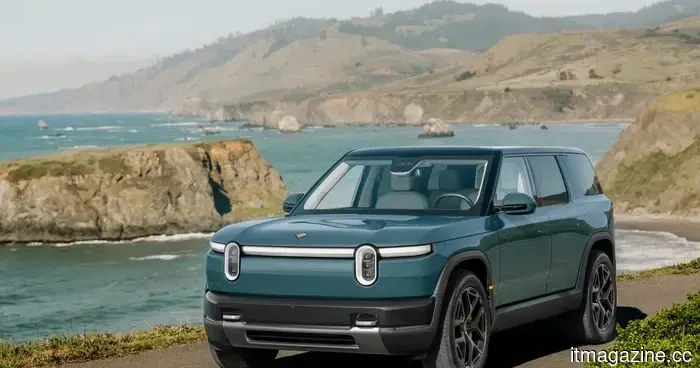 Rivian lowered the production cost of the R2 EVs by 50%. Let's wish that these savings are passed on to consumers.
Rivian claims that the R2 is more than 50% cheaper to produce than its R1 models, marking a significant move towards more affordable electric vehicles, assuming consumers recognize the advantages.
Rivian lowered the production cost of the R2 EVs by 50%. Let's wish that these savings are passed on to consumers.
Rivian claims that the R2 is more than 50% cheaper to produce than its R1 models, marking a significant move towards more affordable electric vehicles, assuming consumers recognize the advantages.
 Pinterest surpasses $1 billion in quarterly revenue as AI-driven visual search stimulates advertising growth that social media platforms are unable to replicate.
In Q1, Pinterest reached $1.008 billion in revenue with 631 million monthly active users. The Performance+ AI advertising produced 24% greater conversions. The key driver of growth is 80 billion monthly visual searches, rather than social feeds.
Pinterest surpasses $1 billion in quarterly revenue as AI-driven visual search stimulates advertising growth that social media platforms are unable to replicate.
In Q1, Pinterest reached $1.008 billion in revenue with 631 million monthly active users. The Performance+ AI advertising produced 24% greater conversions. The key driver of growth is 80 billion monthly visual searches, rather than social feeds.
Denmark halts new grid connections as AI data centers strain the cleanest power network in Europe.
Energinet has paused new grid agreements after receiving 60 GW of requests for a grid that only supports 7 GW. The growth of data centers in Denmark has been propelled by Microsoft, Google, and Apple. However, the grid is unable to accommodate this demand.