

Haun Ventures has secured $1 billion for funds focused on crypto and AI agents following successful stablecoin exits that benefited LPs.
**TL;DR** Katie Haun has secured $1 billion for two new funds at Haun Ventures, branching out from cryptocurrency into AI agents and financial infrastructure. Her thesis posits that AI agents will require regulated financial systems, and companies that established stablecoin frameworks are ideally positioned to develop them. Her first fund achieved notable exits, including Stripe’s $1.1 billion acquisition of Bridge and Mastercard’s $1.8 billion buyout of BVNK. The largest investment in the new fund so far is Erebor, a $4.35 billion digital bank founded by Palmer Luckey.
Katie Haun has raised $1 billion for two new venture funds through Haun Ventures, allocating the funds equally between early and later-stage investments to be utilized over the upcoming two to three years. These funds will target crypto and blockchain companies, maintaining focus since Haun departed from Andreessen Horowitz in 2022 to establish her own firm. However, the most significant change lies not in the fund's size, which is less than the initial $1.5 billion raised, but in its thesis. Haun is venturing into AI agents and financial infrastructure, wagering that the next generation of autonomous software will require financial systems before improved models and that firms already familiar with regulated money transfers are best equipped to build that infrastructure.
**The Thesis**
Haun explicitly clarifies her direction: “We’re not pivoting to be an AI fund,” she mentioned to Bloomberg. “We want to do AI that is in our lane.” This lane pertains to financial services. Haun Ventures is focusing on startups that create AI agents and infrastructure enabling round-the-clock access to financial products for consumers and businesses, removing what Haun deems outdated limitations like money wiring deadlines. The emphasis is clear: it’s not about general-purpose AI, foundation models, or the application layers appealing to others in Silicon Valley, but about the convergence where autonomous software meets regulated finance.
Haun Ventures has begun investing based on this thesis, positioning itself as a major backer of Erebor, a digital bank initiated by Palmer Luckey of Anduril Industries and supported by Peter Thiel’s Founders Fund. Erebor, which obtained FDIC deposit insurance approval in late 2025 and raised $350 million at a $4.35 billion valuation, is tailored for technology firms engaged with digital assets, AI, defense, and manufacturing. It represents a new type of institution: a federally regulated bank designed for the companies developing AI agents rather than the consumers utilizing them.
**The Infrastructure**
The necessary infrastructure for AI agents to interact with the financial system is actively under construction. Stripe has introduced a machine payments preview that includes stablecoin settlements for agent-to-agent transactions. Mastercard has launched its Agent Pay program, while PayPal and Google have revealed a collaborative Agent Payments Protocol. Visa is working on tokenization infrastructure for automated purchasing. A common theme emerges where all significant payment companies acknowledge that AI agents will need specific financial infrastructures, and those building the necessary frameworks will capture a layer of value that the AI labs themselves won't.
**The Track Record**
Haun's credibility for this expansion is strengthened by the returns from her first fund. Notable exits include stablecoins: Stripe's acquisition of Bridge for $1.1 billion marked a considerable increase from the $100 million valuation at which Haun Ventures invested. A year later, Mastercard bought BVNK for $1.8 billion, setting a record for stablecoin acquisitions. Haun Ventures initially invested in BVNK at a $678 million valuation. Both exits validated the fundamental idea that stablecoin infrastructure would become crucial financial plumbing, with acquirers being established payment companies rather than other crypto firms.
Not every investment was successful; Haun Ventures invested in OpenSea when it was valued at $13.3 billion, but it was later marked down to $1.4 billion by a major investor. Nonetheless, the firm also acquired distressed crypto assets during the downturn following the FTX collapse and subsequently sold them at peak values in 2025, generating returns for its limited partners. Joelle Kayden, founder of Accolade Partners and a limited partner in the fund, highlighted the importance of the staking strategy and token trading in contributing to investor returns. The new fund is slightly smaller than its predecessor as the team anticipates less dramatic fluctuations in liquid token prices, indicating maturation in the crypto-native aspect of the strategy while the AI-related part expands.
**The Landscape**
Haun is not the only crypto-focused investor broadening its horizons. Paradigm, a major crypto-oriented venture firm, raised $1.5 billion in February for a new fund that will include investments in AI and robotics in tandem with its core blockchain interests. Co-founder Matt Huang remarked that “developments in AI are too interesting to ignore,” emphasizing the firm’s intention to focus on the intersection of AI and crypto rather than competing for general-purpose AI investments. Meanwhile, Sequoia secured $
Other articles
 STMicroelectronics aims to generate over $3 billion from the space sector.
STMicroelectronics aims for over $3 billion in total revenue from space chips from 2026 to 2028, driven by the growth of Starlink.
STMicroelectronics aims to generate over $3 billion from the space sector.
STMicroelectronics aims for over $3 billion in total revenue from space chips from 2026 to 2028, driven by the growth of Starlink.
 A Walmart leak reveals a growing Onn product lineup that includes a smart speaker compatible with Gemini.
A certification listing indicates that Walmart's Onn lineup is set to grow with the introduction of a Gemini-powered smart speaker that includes Matter support, Google Cast, and a 10W speaker.
A Walmart leak reveals a growing Onn product lineup that includes a smart speaker compatible with Gemini.
A certification listing indicates that Walmart's Onn lineup is set to grow with the introduction of a Gemini-powered smart speaker that includes Matter support, Google Cast, and a 10W speaker.
 Haun Ventures secures $1 billion for funds targeting cryptocurrency and AI agents following successful stablecoin exits benefiting limited partners.
Katie Haun is branching out from cryptocurrency into AI agents for the financial services sector. Her initial fund yielded exits with Bridge/Stripe and BVNK/Mastercard. Erebor represents her new investment thesis.
Haun Ventures secures $1 billion for funds targeting cryptocurrency and AI agents following successful stablecoin exits benefiting limited partners.
Katie Haun is branching out from cryptocurrency into AI agents for the financial services sector. Her initial fund yielded exits with Bridge/Stripe and BVNK/Mastercard. Erebor represents her new investment thesis.
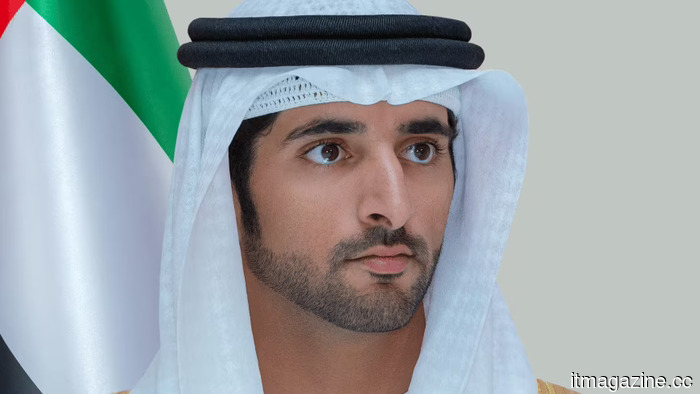 Dubai requires the private sector to adopt generative AI within two years, supported by incubators, training programs, and allocated funds.
Sheikh Hamdan initiates a two-year initiative aimed at encouraging the private sector in Dubai to embrace agentic AI. This will include training for all business councils, incubators, and funds facilitated by the Chamber.
Dubai requires the private sector to adopt generative AI within two years, supported by incubators, training programs, and allocated funds.
Sheikh Hamdan initiates a two-year initiative aimed at encouraging the private sector in Dubai to embrace agentic AI. This will include training for all business councils, incubators, and funds facilitated by the Chamber.
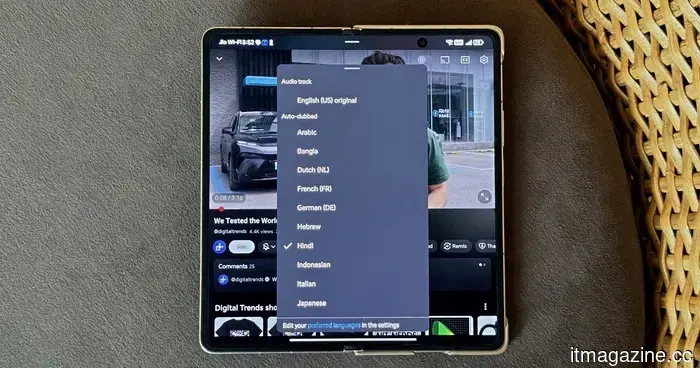 YouTube's auto-dubbing lacks one essential feature: a way to turn it off.
I didn't request to hear Marques Brownlee speaking Japanese; YouTube made that choice for me. There's no universal option to disable it.
YouTube's auto-dubbing lacks one essential feature: a way to turn it off.
I didn't request to hear Marques Brownlee speaking Japanese; YouTube made that choice for me. There's no universal option to disable it.
 Mission Space launches the fourth ZOHAR payload on HEX20's Maya-V1 as the space weather market reaches $1.4 billion.
Mission Space incorporates a fourth orbital sensor on HEX20's Maya-V1 rideshare, progressing towards a 24-satellite constellation aimed at real-time space weather forecasting.
Mission Space launches the fourth ZOHAR payload on HEX20's Maya-V1 as the space weather market reaches $1.4 billion.
Mission Space incorporates a fourth orbital sensor on HEX20's Maya-V1 rideshare, progressing towards a 24-satellite constellation aimed at real-time space weather forecasting.
Haun Ventures has secured $1 billion for funds focused on crypto and AI agents following successful stablecoin exits that benefited LPs.
Katie Haun is moving from cryptocurrency into AI agents for financial services. Her first fund achieved exits with Bridge/Stripe and BVNK/Mastercard. Erebor represents the new investment thesis.