

GameStop offers $55.5 billion for eBay, backed by a $9 billion cash reserve, a $20 billion letter of credit from TD Bank, and a dwindling retail sector.
**Summary**
GameStop has made an unsolicited $55.5 billion offer to acquire eBay at $125 per share. The bid is financed through $9 billion in cash from convertible debt, a $20 billion non-binding financing letter from TD Bank, and about $28 billion in new GameStop stock. Market reactions have been skeptical, with eBay shares trading at $110, lower than the offer, GameStop’s stock declining, and investor Michael Burry criticizing the plan as “pedestrian” before announcing his intent to sell. CEO Ryan Cohen argues that the merger would create a legitimate competitor to Amazon, despite GameStop’s significant revenue drop in the past two years and the decline of its core retail business.
Ryan Cohen revealed on Saturday that GameStop has proposed a non-binding bid to buy eBay for $125 per share, a cash-and-stock deal valuing eBay at roughly $55.5 billion. At the time of the bid, GameStop's market cap was $11.9 billion, while eBay's was $46.2 billion. The acquiring company is around a quarter the size of the target, with its core retail operations seeing a significant revenue decrease, having shut down over 700 stores since 2024. GameStop’s recent financial activities include issuing $4.2 billion in zero-coupon convertible debt and investing in Bitcoin. In an interview with CNBC on Monday, Cohen claimed the combined entity would serve as a legitimate competitor to Amazon. However, the market responded by raising eBay's shares by 6 percent to $110, still below the proposed price, while GameStop’s shares fell.
**The Proposal**
GameStop’s bid consists of 50 percent cash and 50 percent stock, allowing eBay shareholders to choose their preferred combination subject to pro-rata allocation. TD Bank has issued a non-binding "highly confident letter" to back up to $20 billion in debt financing. The difference between this financing commitment, GameStop’s $9 billion cash reserves, and the $55.5 billion acquisition price would be covered by issuing new shares of GameStop, which means eBay shareholders would need to accept equity in a company whose stock price is influenced significantly by market sentiment rather than underlying fundamentals.
The strategic plan has three main points. First, GameStop’s 1,600 US retail locations could function as logistical support for eBay, serving as drop-off points, authentication sites, fulfillment centers, and venues for live sales broadcasts of eBay products. Live selling is rapidly gaining traction in Europe, and Cohen believes GameStop's physical stores could anchor that trend in the US. Second, GameStop’s expertise in collectibles and used goods aligns with eBay's primary categories. Third, $2 billion in cost savings is anticipated within a year of the deal's closure.
**Financial Overview**
GameStop's revenue for the fiscal year ending January 2026 was $3.63 billion, down from $5.27 billion two years earlier, with hardware sales dropping 28 percent and software sales declining 15 percent. The company closed 590 stores in fiscal 2024 and an additional 400 in January 2025. The primary revenue-generating business—selling physical video games and consoles—faces structural challenges due to a shift to digital distribution. Profitability has been preserved through rigorous cost cuts, as evidenced by a net income of $127.9 million on declining revenue.
In comparison, eBay generated $11.1 billion in revenue for 2025, an 8 percent year-over-year increase, with gross merchandise volume nearing $80 billion and a revenue growth rate of 12.5 percent over the year ending March 2026. eBay holds $4.8 billion in cash and investments and authorized a $2 billion share repurchase in February, operating with a market capitalization indicative of a profitable, expanding business. eBay is not distressed or seeking a savior; rather, it is a flourishing company being courted by a smaller and contracting entity.
GameStop's $9 billion cash position, which Cohen cites as evidence of the company's ability to execute the deal, was not derived from its retail operations but was instead accumulated through issuing convertible debt—$4.2 billion in zero-coupon notes from two offerings in 2025 along with earlier dilutive share sales during the meme stock highs of 2021 and 2024. While the cash reserve is substantial, the question remains whether a fund built on financial maneuvers and retail investor excitement can serve as legitimate acquisition currency for a company that is significantly larger.
**Market Skepticism**
Market skepticism is evident in eBay's stock price. Shares opened at $110 on Monday, 12 percent below the $125 offer price. When an acquirer presents a 20 percent premium while the target’s shares trade at a 12 percent discount, it signals to investors a strong likelihood that the deal will not materialize.
Other articles
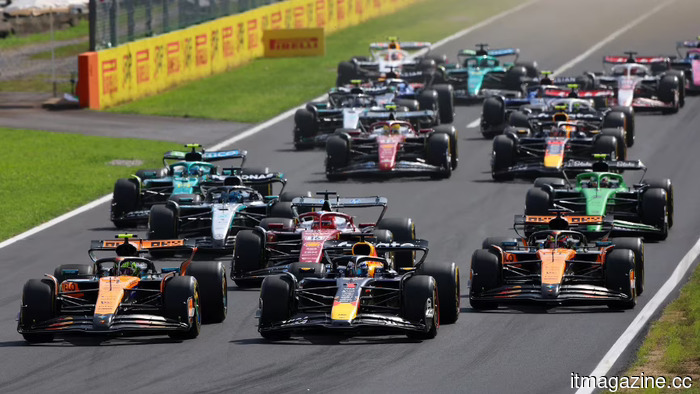 AI is now a sponsor in F1, as well as serving as a strategist and a technical director.
In a span of six months, Formula One has seen the introduction of eight new AI partnerships, including Williams utilizing Claude, McLaren employing Gemini, and Red Bull collaborating with Oracle.
AI is now a sponsor in F1, as well as serving as a strategist and a technical director.
In a span of six months, Formula One has seen the introduction of eight new AI partnerships, including Williams utilizing Claude, McLaren employing Gemini, and Red Bull collaborating with Oracle.
 Walmart leak reveals an expanding Onn collection that includes a Gemini-compatible smart speaker.
A certification has revealed that Walmart's Onn lineup is set to expand with a Gemini-powered smart speaker that offers Matter support, Google Cast, and a 10W speaker.
Walmart leak reveals an expanding Onn collection that includes a Gemini-compatible smart speaker.
A certification has revealed that Walmart's Onn lineup is set to expand with a Gemini-powered smart speaker that offers Matter support, Google Cast, and a 10W speaker.
 Why eliminating human involvement in care could weaken results.
AI has the potential to enhance healthcare, but without the participation of humans, patient engagement diminishes. This is what a certain unsuccessful experiment shows about digital health.
Why eliminating human involvement in care could weaken results.
AI has the potential to enhance healthcare, but without the participation of humans, patient engagement diminishes. This is what a certain unsuccessful experiment shows about digital health.
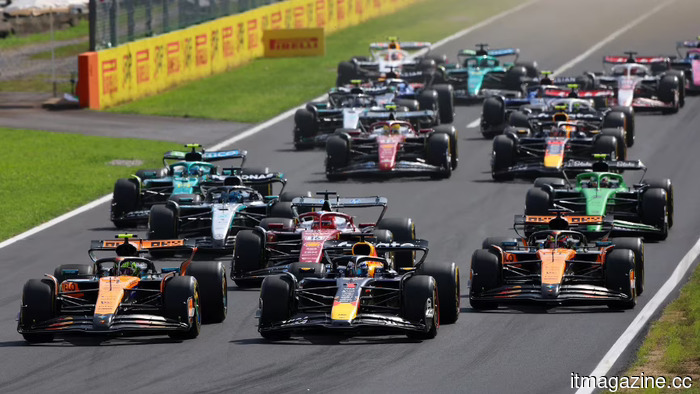 AI has now become a sponsor, strategist, and technical director in F1.
In the past six months, Formula One has welcomed eight new AI partnerships, with Williams utilizing Claude, McLaren employing Gemini, and Red Bull partnering with Oracle.
AI has now become a sponsor, strategist, and technical director in F1.
In the past six months, Formula One has welcomed eight new AI partnerships, with Williams utilizing Claude, McLaren employing Gemini, and Red Bull partnering with Oracle.
 Microsoft announced that it is working on a solution for an Outlook issue that caused documents to appear blank.
Microsoft is implementing a server-side solution for a longstanding Outlook issue that caused shared Word, Excel, and PowerPoint files to open with a blank screen. In the meantime, browser-based alternatives are available until the fix is fully deployed.
Microsoft announced that it is working on a solution for an Outlook issue that caused documents to appear blank.
Microsoft is implementing a server-side solution for a longstanding Outlook issue that caused shared Word, Excel, and PowerPoint files to open with a blank screen. In the meantime, browser-based alternatives are available until the fix is fully deployed.
 This PC is spacious enough to reside in and features its own air conditioning system to cool its large components.
A Chinese creator constructed a room-sized RGB PC that includes a desk, oversized fake components, and a 12kW air conditioner, transforming desktop cooling into an immersive experience focused on heat and airflow.
This PC is spacious enough to reside in and features its own air conditioning system to cool its large components.
A Chinese creator constructed a room-sized RGB PC that includes a desk, oversized fake components, and a 12kW air conditioner, transforming desktop cooling into an immersive experience focused on heat and airflow.
GameStop offers $55.5 billion for eBay, backed by a $9 billion cash reserve, a $20 billion letter of credit from TD Bank, and a dwindling retail sector.
Ryan Cohen's GameStop proposes a $125 per share acquisition of eBay through cash and stock. The market views this as improbable, with eBay trading at $110, while GameStop's shares decline. Michael Burry is divesting his holdings.