
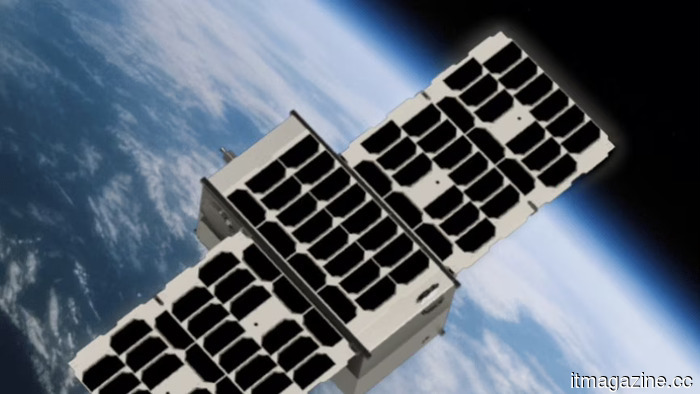
Mission Space launches the fourth ZOHAR payload on HEX20's Maya-V1 as the space weather market reaches $1.4 billion.
There are currently over 8,000 active satellites in orbit, and this number is expected to exceed 25,000 by 2030. A single geomagnetic storm, which the sun produces several hundred times during a solar maximum, could potentially cost the satellite industry around $40 billion. For instance, in February 2022, a moderate storm caused 40 new Starlink satellites to lose their orbit, resulting in a $50 million loss for SpaceX on hardware that had been in space for less than a day. A more recent storm in 2025 led to nearly 5,000 simultaneous satellite maneuvers. Consequently, the companies operating these satellites require forecasts, but government agencies like NOAA and ESA, which have traditionally provided space weather data, were not designed to accommodate the demands of a commercial satellite economy of this magnitude. Mission Space, a startup with 15 employees and offices in Miami, Israel, Luxembourg, and New York, aims to bridge this gap.
**The Payload**
On Monday, Mission Space announced that it will send its fourth space weather payload on HEX20’s Maya-V1 mission, a rideshare satellite created by the Indian SmallSat firm HEX20, situated at Technopark in Kerala. HEX20 previously launched India’s first private payload hosting satellite, Nila, on SpaceX’s Transporter-13 rideshare in March 2025 and has been expanding its mission-as-a-service offerings for international clients. The Maya-V1 mission will carry Mission Space’s ZOHAR sensors alongside other payloads, contributing a fourth data point to the company’s expanding orbital network.
The ZOHAR sensor platform, which won the 2025 Global Tech Award in space technology, samples up to 1,000 times per second across 15 parameters using spectrometers and Cherenkov detectors that monitor high-energy particles in real time. The initial ZOHAR payload was launched in March 2025 on an EnduroSat platform. The second payload, developed in collaboration with Rogue Space Systems, incorporated neutral-density tracking, which is vital for forecasting atmospheric drag, orbital changes, and maneuver uncertainties during geomagnetic events. Low Earth orbit has emerged as the launch site for a new generation of space tech startups, with Mission Space’s constellation being among the most operationally focused: each new sensor not only duplicates the previous ones but also enhances the measurement capabilities targeted at achieving multi-point, high-temporal-resolution coverage across radiation, neutral density, and surface-charging intelligence.
**The Market**
The market for space weather forecasting is valued at $1.4 billion in 2026, with expectations to rise to $2 billion by 2030, reflecting an annual growth rate of approximately 10 percent. The market for monitoring satellites focused on space weather is even larger, estimated at $2.2 billion and projected to grow to $3.2 billion in the same timeframe. This growth is fueled by the same factor that created demand: the increasing number of commercial satellites in low Earth orbit, where spacecraft are most vulnerable to radiation, atmospheric drag variation, and surface charging from geomagnetic storms.
The economics are clear. Satellite operators who have access to high-resolution, real-time space weather data can perform automated attitude adjustments, initiate safe-mode procedures, and mitigate drag before the storm's impact becomes irreversible. On the other hand, operators lacking such data depend on NOAA’s Space Weather Prediction Center, which offers public forecasts designed for wide geographic areas and extended time frames, rather than the specific orbital parameters and rapid decision-making that commercial constellations necessitate. Space startups are increasingly shifting towards defense and security applications, and space weather intelligence lies at the intersection of both: the data that aids a commercial satellite operator in avoiding a drag anomaly can also help a military constellation maintain its formation during a geomagnetic event.
**The Constellation**
Mission Space’s planned architecture consists of a constellation of 24 ZOHAR sensors, sufficient for multi-point monitoring that no single sensor can achieve. Space weather is not consistent; a geomagnetic storm impacts various orbital altitudes, inclinations, and local times in differing ways. The current generation of government monitoring assets, most of which are located at the L1 Lagrange point or in geostationary orbit, cannot differentiate these effects at the frequency required by commercial operators. Mission Space’s strategy is to distribute sensors throughout low Earth orbit via rideshare missions, incrementally building coverage as each host satellite reaches its designated orbit.
The fourth payload on HEX20’s Maya-V1 mission brings the company closer to achieving a minimum viable constellation, but 24 sensors remain a considerable distance from just four. The rideshare model helps maintain low launch costs, with SpaceX’s Transporter missions currently pricing 50 kilograms at $350,000. Additionally, Mission Space’s payloads are designed to be compact enough to function as hosted instruments on other companies' satellites rather than as standalone spacecraft. The collaboration model, partnering with
Other articles
 YouTube's auto-dubbing lacks a vital option: a way to turn it off.
I didn't request to listen to Marques Brownlee speaking Japanese. YouTube made that choice for me, and there's no universal way to disable it.
YouTube's auto-dubbing lacks a vital option: a way to turn it off.
I didn't request to listen to Marques Brownlee speaking Japanese. YouTube made that choice for me, and there's no universal way to disable it.
 Do you believe music has been most negatively affected by slop? Podcasts have also been significantly impacted by AI.
A surge of AI-generated podcasts is rapidly spreading across audio platforms, with a Bloomberg report indicating that approximately 39% of new podcast feeds established in about nine days might have been created by machines.
Do you believe music has been most negatively affected by slop? Podcasts have also been significantly impacted by AI.
A surge of AI-generated podcasts is rapidly spreading across audio platforms, with a Bloomberg report indicating that approximately 39% of new podcast feeds established in about nine days might have been created by machines.
 iOS 27 enables users to generate personalized Wallet passes from any QR code, as Apple decides to stop waiting for developers.
Apple's iOS 27 introduces a "Create a Pass" feature that includes three templates. Following 14 years of anticipation for PassKit's adoption, Apple is now allowing users to create their own passes.
iOS 27 enables users to generate personalized Wallet passes from any QR code, as Apple decides to stop waiting for developers.
Apple's iOS 27 introduces a "Create a Pass" feature that includes three templates. Following 14 years of anticipation for PassKit's adoption, Apple is now allowing users to create their own passes.
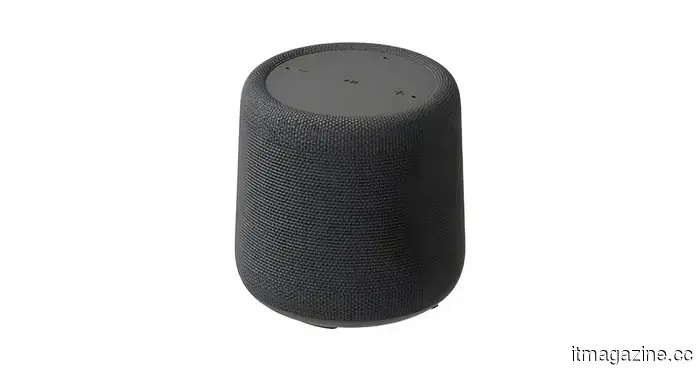 Walmart leak reveals an expanding Onn collection that includes a Gemini-compatible smart speaker.
A certification has revealed that Walmart's Onn lineup is set to expand with a Gemini-powered smart speaker that offers Matter support, Google Cast, and a 10W speaker.
Walmart leak reveals an expanding Onn collection that includes a Gemini-compatible smart speaker.
A certification has revealed that Walmart's Onn lineup is set to expand with a Gemini-powered smart speaker that offers Matter support, Google Cast, and a 10W speaker.
 STMicroelectronics aims to generate over $3 billion from the space sector.
STMicroelectronics aims to achieve over $3 billion in total revenue from space chips between 2026 and 2028, boosted by the growth of Starlink.
STMicroelectronics aims to generate over $3 billion from the space sector.
STMicroelectronics aims to achieve over $3 billion in total revenue from space chips between 2026 and 2028, boosted by the growth of Starlink.
 The removal of humans from caregiving could potentially jeopardize outcomes.
AI has the potential to enhance healthcare on a larger scale, but the lack of human interaction can lead to a decline in patient engagement. This is what a particular unsuccessful experiment in digital health demonstrates.
The removal of humans from caregiving could potentially jeopardize outcomes.
AI has the potential to enhance healthcare on a larger scale, but the lack of human interaction can lead to a decline in patient engagement. This is what a particular unsuccessful experiment in digital health demonstrates.
Mission Space launches the fourth ZOHAR payload on HEX20's Maya-V1 as the space weather market reaches $1.4 billion.
Mission Space incorporates a fourth orbital sensor on HEX20's Maya-V1 rideshare, progressing towards a 24-satellite constellation aimed at real-time space weather forecasting.