
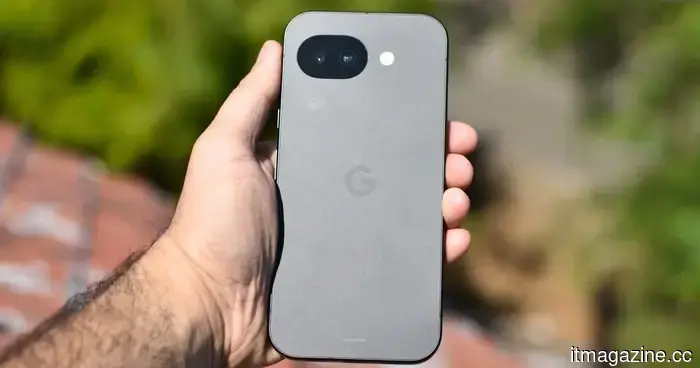
Google has finally clarified why Android AICore consumes so much of your storage, and it truly makes a lot of sense.
Shikhar Mehrotra / Digital Trends
If you've taken a moment to review your Android phone’s storage and were surprised by how much space AICore is using, you're not the only one. It's an aspect that's easy to notice yet difficult to clarify, and for a time, Google provided little information about it. However, that has changed, and the explanation is more logical than the surrounding confusion suggested.
AICore serves as the on-device AI infrastructure that supports an increasing array of features on Android 14 and later — including smart replies on WhatsApp, message scam detection, real-time transcription, grammar correction, audio summarization, among others. It operates Gemini Nano locally on compatible devices, meaning your data remains on your device, the features function without internet access, and there's no delay from sending a request to a distant server. The downside, as anyone who has installed a model requiring multiple gigabytes knows, is the storage cost.
The reason for the storage increase is straightforward
Google has released a support article explaining the primary concern that puzzled users: why AICore’s storage use can unexpectedly increase. The answer is that when a new version of Gemini Nano is released, AICore retains both the former and the new versions at the same time for up to three days before eliminating the older version.
This is a precautionary step. If the updated model faces issues after installation, your device can quickly revert to the previous version without needing to re-download several gigabytes of model data. It’s a logical engineering choice that seems obvious in hindsight, but Google likely should have communicated this earlier, considering the confusion it has created.
On-device AI justifies the storage usage — but Google should be transparent about it
The overall argument for on-device AI is quite convincing. Keeping sensitive data on your device is an important privacy advantage in a time when a lot seems to be stored in the cloud. Features that function offline are more valuable than they may appear, especially in areas with poor connectivity. Additionally, local processing generally feels faster than waiting for a server's response.
However, the goodwill only extends so far when users are faced with an unexplained storage increase without any context. Addressing this now is the right move — it simply shouldn't have taken this long.
Shimul is a contributor at Digital Trends, bringing over five years of experience in the technology sector.
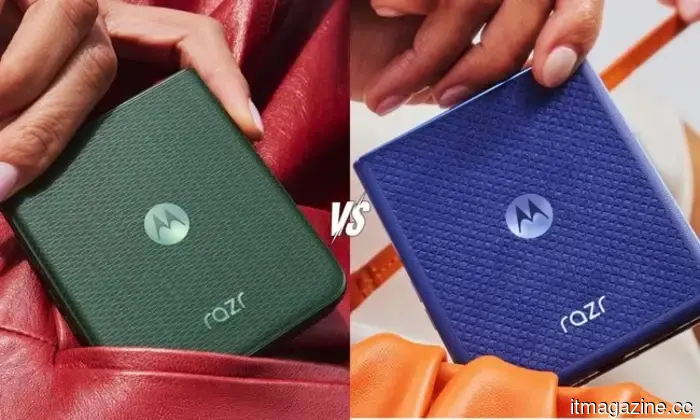
Motorola Razr+ 2026 vs. Razr Ultra: Is the $400 price difference really justified, and which one should you choose?
The $400 disparity isn't due to a single major difference. It's made up of multiple smaller distinctions that accumulate, including availability from carriers.
Four hundred dollars is a considerable sum: it could fund a weekend getaway, buy a decent mirrorless lens, or even a capable budget Motorola smartphone. Yet here we are, comparing two Razr phones that appear quite similar, operate on the same Android version, share the same rear camera configuration, and fold the same way into your pocket — the $1,099 Razr+ and the $1,499 Razr Ultra.
While the standard Razr (2026) belongs to a completely different category, the real confusion arises between the Razr+ (2026) and the Razr Ultra (2026). To assist you with that, I have dedicated hours comparing the specifications and scrutinizing every detail. For me, the goal isn’t to declare a clear winner, but rather to help determine which Motorola flip phone suits you best.
Read more
I'm using an old Pixel 8a in 2026, and I'm grateful for it during my recent vacation
A week in Camiguin transformed Google’s budget phone into my guide, camera, music player, payment method, and one less worry.
I didn't take the Pixel 8a to Camiguin to make a statement. I brought it along because it remains my phone two years after I initially purchased it as a temporary replacement when my OnePlus 7 Pro failed. It’s frustrating because I wasn't expected to like this device for this long.
A week on the island provided ample opportunities for it to fail. I used it for navigation, capturing island photos, playing music via Bluetooth, handling online payments, and the standard checks when no one recalls where the booking screenshot was saved.
You can now view a product's price history for an entire year on Amazon
The 365-day feature being rolled out in the US, UK, and India offers a complete year of pricing context for every purchase decision, rather than just the last 90 days.
Amazon's AI shopping assistant, Rufus, can now display a comprehensive 365-day price history for a given product. This means you can access an entire year’s worth of pricing information, including when a product was listed at higher or lower prices, and when the last price alteration occurred, before making a purchase.
Previously, the available price history was limited to 90 days, which was adequate for catching up on




Other articles
 Grok is set to be integrated with CarPlay as iOS 26.4 transforms the car dashboard into the next battleground for AI platforms.
Grok has been added to CarPlay alongside ChatGPT, Perplexity, Claude, and Gemini following the release of iOS 26.4, which allowed AI chatbots on the platform. The car dashboard has become the most competitive interface in technology.
Grok is set to be integrated with CarPlay as iOS 26.4 transforms the car dashboard into the next battleground for AI platforms.
Grok has been added to CarPlay alongside ChatGPT, Perplexity, Claude, and Gemini following the release of iOS 26.4, which allowed AI chatbots on the platform. The car dashboard has become the most competitive interface in technology.
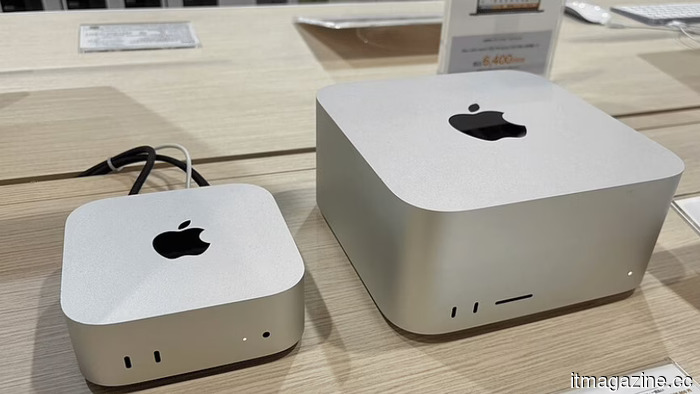 Apple discontinues the $599 Mac Mini as the demand for DRAM in AI data centers leads to an unprecedented 90% increase in memory prices and a worldwide shortage.
Apple has stopped producing the 256GB Mac Mini due to a 90% increase in DRAM prices in the first quarter of 2026. AI servers currently account for 23% of worldwide memory wafer production, resulting in a 10-20% rise in PC prices.
Apple discontinues the $599 Mac Mini as the demand for DRAM in AI data centers leads to an unprecedented 90% increase in memory prices and a worldwide shortage.
Apple has stopped producing the 256GB Mac Mini due to a 90% increase in DRAM prices in the first quarter of 2026. AI servers currently account for 23% of worldwide memory wafer production, resulting in a 10-20% rise in PC prices.
 Grok is set to arrive on CarPlay as iOS 26.4 transforms the car dashboard into a battleground for AI platforms.
Grok has joined ChatGPT, Perplexity, Claude, and Gemini on CarPlay following the release of iOS 26.4, which allowed AI chatbots on the platform. The car dashboard has now become the most competitive interface in technology.
Grok is set to arrive on CarPlay as iOS 26.4 transforms the car dashboard into a battleground for AI platforms.
Grok has joined ChatGPT, Perplexity, Claude, and Gemini on CarPlay following the release of iOS 26.4, which allowed AI chatbots on the platform. The car dashboard has now become the most competitive interface in technology.
 LG's newest luxurious gaming monitor features a 45-inch OLED display that achieves 330Hz at 5K resolution.
The LG UltraGear 45GX950B incorporates AI functionalities such as upscaling and scene optimization, while maintaining the same OLED panel and key specifications as its previous model.
LG's newest luxurious gaming monitor features a 45-inch OLED display that achieves 330Hz at 5K resolution.
The LG UltraGear 45GX950B incorporates AI functionalities such as upscaling and scene optimization, while maintaining the same OLED panel and key specifications as its previous model.
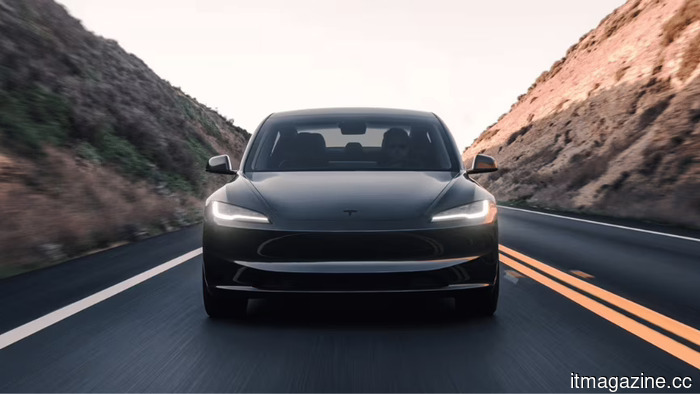 Tesla offers the Shanghai-manufactured Model 3 in Canada for C$39,490 following the Carney-Beijing agreement that reduces the Chinese EV tariff to 6.1%.
The Model 3 produced in Shanghai by Tesla is priced at C$39,490 in Canada, thanks to Carney's trade agreement with Beijing. The quota of 49,000 vehicles allows for the import of Chinese electric vehicles to Canada with a tariff of 6.1%.
Tesla offers the Shanghai-manufactured Model 3 in Canada for C$39,490 following the Carney-Beijing agreement that reduces the Chinese EV tariff to 6.1%.
The Model 3 produced in Shanghai by Tesla is priced at C$39,490 in Canada, thanks to Carney's trade agreement with Beijing. The quota of 49,000 vehicles allows for the import of Chinese electric vehicles to Canada with a tariff of 6.1%.
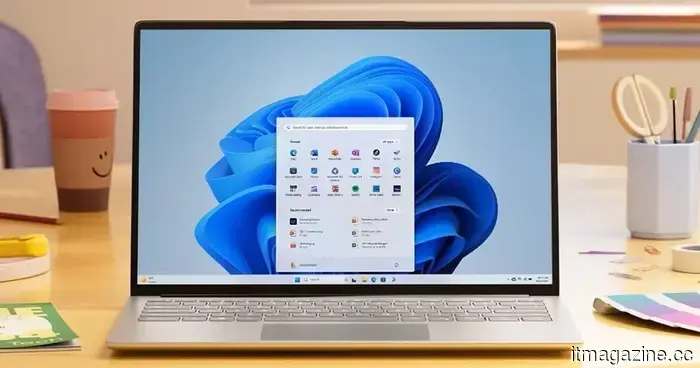 How to verify if your Windows PC is prepared for the secure boot certificate expiration in June 2026.
Not all Windows PCs will automatically receive the new Secure Boot certificates ahead of the June 2026 deadline. Here's how to verify yours and address any issues before they arise.
How to verify if your Windows PC is prepared for the secure boot certificate expiration in June 2026.
Not all Windows PCs will automatically receive the new Secure Boot certificates ahead of the June 2026 deadline. Here's how to verify yours and address any issues before they arise.
Google has finally clarified why Android AICore consumes so much of your storage, and it truly makes a lot of sense.
If you've ever observed that Android AICore is consuming more storage than anticipated, Google has now provided an explanation — and it turns out that the reason is a completely sensible fail-safe that you'd likely want to have.