
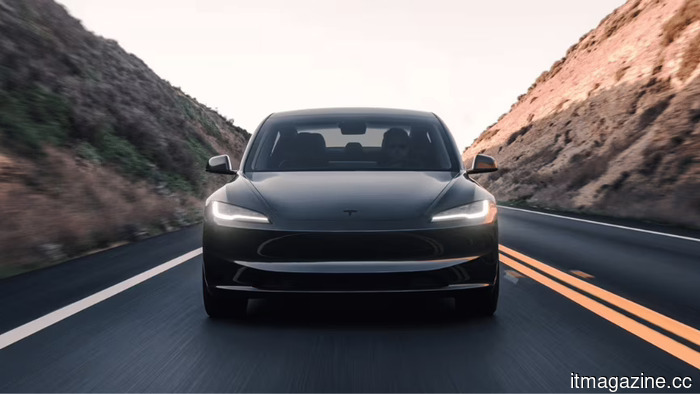
Tesla offers the Shanghai-manufactured Model 3 in Canada for C$39,490 following the Carney-Beijing agreement that reduces the Chinese EV tariff to 6.1%.
Tesla is now offering Shanghai-made Model 3 sedans in Canada for C$39,490, which is nearly half the price of the C$79,990 Fremont-produced model, following Prime Minister Mark Carney's January 2026 trade agreement with Beijing that reduced Chinese electric vehicle tariffs from 100 percent to 6.1 percent within a quota of 49,000 vehicles. Tesla is the first to benefit from this deal, which also allows access for BYD and other Chinese EV manufacturers to the Canadian market.
The Shanghai-made Model 3 Premium RWD is now available at the lowest price ever seen in Canada, starting at C$39,490, or approximately US$29,000. Just two months prior, the least expensive Model 3 in Canada was the Long Range AWD from Fremont, priced at C$79,990, representing a nearly 50% price decrease, with the vehicle now sourced from a different continent. This shift isn't due to redesigns or production advancements but stems from a tariff agreement made by Mark Carney with Beijing in early 2026, with Tesla being the first to take advantage of it, particularly because the company is led by someone closely aligned to the U.S. president who instigated the trade conflict that made this deal essential.
In 2024, Canada imposed a 100 percent surcharge on electric vehicles from China, aiming to reflect similar tariffs from the United States. This was part of a broader response to protect domestic firms from the competitive edge held by Chinese manufacturers due to their integrated supply chains and lower labor costs. Although Tesla was previously shipping vehicles made in Shanghai to Canada, it shifted production back to Fremont amid these changing trade conditions.
By early 2025, Canada responded to U.S. tariffs on its goods with a 25 percent counter-surcharge on American vehicles, making the Fremont-sourced Model 3 Long Range AWD, already expensive by Canadian standards, unsustainable at C$79,990. Tesla found itself with a 100 percent tariff on Chinese imports and a 25 percent tariff on American exports, making both supply routes economically unfeasible.
In January 2026, Carney visited Beijing and penned a "preliminary but landmark" trade agreement, reducing the tariff on Chinese electric vehicles to 6.1 percent, the most-favored-nation rate, under a quota of 49,000 vehicles for the first half of 2026, with a later allocation of 24,500 vehicles extending until February 2027, and increasing to 70,000 annually by 2030. In return, China reduced tariffs on Canadian canola seed from about 85 percent to 15 percent and lifted anti-discrimination tariffs on Canadian seafood. This agreement represents a traditional trade exchange: agricultural products for manufactured goods, negotiated bilaterally while the former mediator was focused on imposing tariffs on both sides.
Tesla acted quickly, introducing the Shanghai-made Model 3 Premium RWD with an import duty of 6.1 percent at C$39,490 on May 1. The Model 3 Performance from Shanghai was also repriced to C$74,990, reflecting a 17 percent decrease. Initial deliveries are expected soon. However, the Shanghai-built models are ineligible for Canada’s C$5,000 EV Affordability Program rebate, as they are not manufactured in a free-trade partner country, which is a hurdle unlikely to deter buyers given the low price.
The Giga Shanghai factory delivered 851,000 electric vehicles in 2025, accounting for more than half of Tesla's global production, and has produced over four million cars since opening. Its structural cost advantages over Fremont include lower labor costs, a more efficient supply chain, and proximity to battery material suppliers. When the tariff differences between Chinese and American vehicles decrease enough, as seen in Canada, Shanghai emerges as the preferred production site. Tesla's choice of the Shanghai factory over the U.S. is based on cost efficiency, not ideological differences.
The 49,000 vehicle quota is not exclusive to Tesla; it allows other Chinese manufacturers like BYD, Geely, and SAIC to seek import permits under the same conditions. Models from BYD such as the Atto 3, Dolphin, and Seal may enter Canada at competitively lower prices than current grey market options. While the quota is limited, accounting for around 3 percent of the Canadian auto market, it creates a previously non-existent pathway for these vehicles.
Tesla's competitiveness lies in its ability to act swiftly. It possesses the necessary factory capacity, logistics infrastructure, and regulatory certifications to commence shipping right away. Other Chinese manufacturers need to build service networks, secure Canadian safety certifications, and develop sales channels before they can compete effectively for quota allocations. Therefore, Tesla is likely to dominate the initial quota simply due to being ready to sell from the outset.
Elon Musk had a significant role in the Trump administration’s Department of Government Efficiency throughout 2025,
Other articles
 Grok is set to arrive on CarPlay as iOS 26.4 transforms the car dashboard into the next battleground for AI platforms.
Grok has joined ChatGPT, Perplexity, Claude, and Gemini on CarPlay following the opening of the platform to AI chatbots with iOS 26.4. The car dashboard has now become the most competitive display in the tech industry.
Grok is set to arrive on CarPlay as iOS 26.4 transforms the car dashboard into the next battleground for AI platforms.
Grok has joined ChatGPT, Perplexity, Claude, and Gemini on CarPlay following the opening of the platform to AI chatbots with iOS 26.4. The car dashboard has now become the most competitive display in the tech industry.
 The Secure Boot certificates for Windows will expire in June — here’s what actions you should take.
The Secure Boot certificates that support one of Windows' key security features will expire in June 2026, and not all PCs will receive the update automatically.
The Secure Boot certificates for Windows will expire in June — here’s what actions you should take.
The Secure Boot certificates that support one of Windows' key security features will expire in June 2026, and not all PCs will receive the update automatically.
 OpenAI has made ChatGPT subscriptions available to OpenClaw's 3.2 million users, while Anthropic restricts Claude access to the AI agent platform.
ChatGPT subscribers now have the ability to utilize OpenClaw's AI agents through GPT-5.4 for a monthly fee of $23. Anthropic has restricted access to Claude. OpenAI and Anthropic have taken opposing approaches on the same product.
OpenAI has made ChatGPT subscriptions available to OpenClaw's 3.2 million users, while Anthropic restricts Claude access to the AI agent platform.
ChatGPT subscribers now have the ability to utilize OpenClaw's AI agents through GPT-5.4 for a monthly fee of $23. Anthropic has restricted access to Claude. OpenAI and Anthropic have taken opposing approaches on the same product.
 Grok is set to arrive on CarPlay as iOS 26.4 transforms the car dashboard into a battleground for AI platforms.
Grok has joined ChatGPT, Perplexity, Claude, and Gemini on CarPlay following the release of iOS 26.4, which allowed AI chatbots on the platform. The car dashboard has now become the most competitive interface in technology.
Grok is set to arrive on CarPlay as iOS 26.4 transforms the car dashboard into a battleground for AI platforms.
Grok has joined ChatGPT, Perplexity, Claude, and Gemini on CarPlay following the release of iOS 26.4, which allowed AI chatbots on the platform. The car dashboard has now become the most competitive interface in technology.
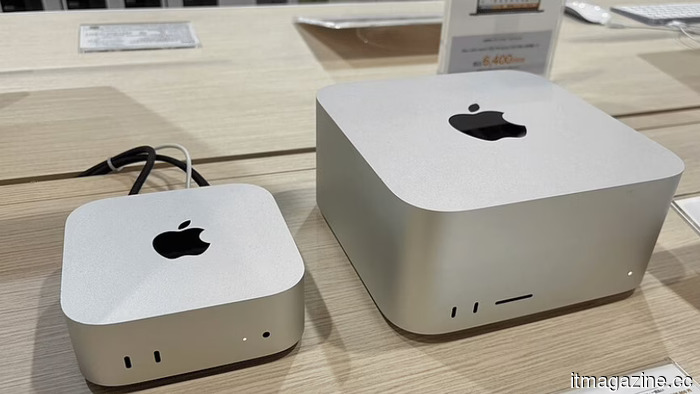 Apple discontinues the $599 Mac Mini as the demand for DRAM in AI data centers leads to an unprecedented 90% increase in memory prices and a worldwide shortage.
Apple has stopped producing the 256GB Mac Mini due to a 90% increase in DRAM prices in the first quarter of 2026. AI servers currently account for 23% of worldwide memory wafer production, resulting in a 10-20% rise in PC prices.
Apple discontinues the $599 Mac Mini as the demand for DRAM in AI data centers leads to an unprecedented 90% increase in memory prices and a worldwide shortage.
Apple has stopped producing the 256GB Mac Mini due to a 90% increase in DRAM prices in the first quarter of 2026. AI servers currently account for 23% of worldwide memory wafer production, resulting in a 10-20% rise in PC prices.
 LG's newest luxurious gaming monitor features a 45-inch OLED display that achieves 330Hz at 5K resolution.
The LG UltraGear 45GX950B incorporates AI functionalities such as upscaling and scene optimization, while maintaining the same OLED panel and key specifications as its previous model.
LG's newest luxurious gaming monitor features a 45-inch OLED display that achieves 330Hz at 5K resolution.
The LG UltraGear 45GX950B incorporates AI functionalities such as upscaling and scene optimization, while maintaining the same OLED panel and key specifications as its previous model.
Tesla offers the Shanghai-manufactured Model 3 in Canada for C$39,490 following the Carney-Beijing agreement that reduces the Chinese EV tariff to 6.1%.
The Model 3 produced in Shanghai by Tesla is priced at C$39,490 in Canada, thanks to Carney's trade agreement with Beijing. The quota of 49,000 vehicles allows for the import of Chinese electric vehicles to Canada with a tariff of 6.1%.