
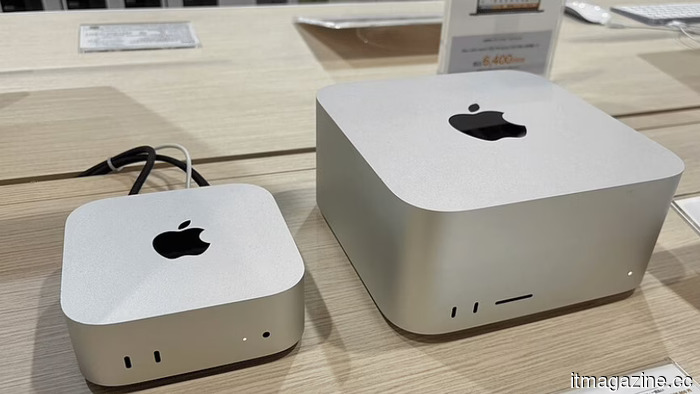
Apple discontinues the $599 Mac Mini as the demand for DRAM in AI data centers leads to an unprecedented 90% increase in memory prices and a worldwide shortage.
**Summary**: Apple has phased out the $599 Mac Mini with 256GB storage, increasing the starting price to $799 for the 512GB version, due to a global DRAM shortage intensified by demand from AI data centers, which has led to significant memory price hikes. DRAM prices increased by 90% in Q1 2026 as manufacturers like Samsung, SK Hynix, and Micron redirected production towards high-bandwidth memory for AI applications. IDC forecasts a 10-20% price rise for consumer electronics and an 11.3% decline in the PC market by year end.
Apple has stopped offering the 256GB Mac Mini globally. Previously, the M4 Mac Mini with 16GB RAM and 256GB storage was priced at $599 until recently, but it has been removed entirely. Now, the cheapest Mac Mini starts at $799 with 512GB storage. The 256GB option wasn't just re-priced; it has been eliminated from Apple's offerings. The removal of this entry-level model is primarily driven by the state of the global memory market rather than a strategic change in products.
**The Shortage**: The Mac Mini and Mac Studio ran low on stock starting in April, with high-RAM options vanishing from Apple's online store weeks before the official announcement. Apple CEO Tim Cook indicated that supply for both models may take several months to stabilize. The Mac Studio's upgrade option to 512GB RAM has been completely removed, and the cost to upgrade from 96GB to 256GB of RAM has increased by 25%. These changes mark adaptations to a supply chain facing a memory market that has turned against consumer devices.
**The Cause**: Oracle engaged PIMCO to anchor a $10 billion portion of a $16.3 billion financing deal for data centers after U.S. banks withdrew due to the size of commitment needed, highlighting significant capital flowing into AI infrastructure. The total capital expenditure across the top five hyperscalers—Microsoft, Google, Amazon, Meta, and Oracle—could surpass $650 billion in 2026, mainly directed towards data centers, GPUs, custom silicon, and related networking infrastructure. The expansion for AI represents the largest corporate investment initiative in history outside wartime mobilization, consuming essential resources such as power, land, water, and memory chips at unsustainable rates for the supply chain.
Demand for high-bandwidth memory (HBM) is expected to jump by 70% year-on-year in 2026, spurred by Nvidia's next-gen AI accelerators and the growth of data centers throughout North America, Europe, and Asia. Google is building an AI chip supply chain with Broadcom, MediaTek, and Marvell, all requiring HBM, leading memory manufacturers to prioritize HBM production due to its higher profit margins compared to standard consumer DRAM. Consequently, devices that rely on standard DRAM now find themselves competing for a diminishing segment of global wafer capacity.
**The Cost**: IDC predicts that PCs, tablets, and smartphones might experience price hikes ranging from 10 to 20% by the end of 2026, potentially marking it as the most expensive year for consumer electronics in recent history. TrendForce estimates that a standard notebook priced at $900 could see its costs rise nearly 40% due to increases in memory and CPU prices, though consumer prices might be slightly less affected due to manufacturers narrowing their margins. The PC market is expected to shrink by 11.3% in 2026 as component costs rise, pushing average selling prices beyond consumer and business affordability.
In response, Apple has removed configurations most affected by cost increases. The 256GB Mac Mini at $599 was already its lowest-margin desktop offering. With DRAM prices doubling and storage costs increasing, maintaining that price would have necessitated either losses or specification reductions that Apple deemed unacceptable. Thus, Apple opted to eliminate the model altogether rather than raise prices or compromise quality, resulting in a $200 hike for the minimum price of a Mac desktop.
Mark Zuckerberg communicated to Meta staff that the layoffs in May were due to capital expenditure on AI rather than efficiency gains; this reflects the broader narrative in consumer hardware. Companies investing in AI infrastructure are pouring hundreds of billions into chips, memory, and computation needed to support their models, while those producing consumer electronics face rising component costs, limited supply, and the disappearance of budget-friendly options that were available when memory supplies were ample.
**The Trajectory**: The DRAM shortage is unlikely to alleviate in 2026. New manufacturing capacity takes two to three years to establish, and memory producers have indicated ongoing prioritization of HBM and server DRAM over consumer products for the foreseeable future. While the U.S. government’s CHIPS Act aims to bolster domestic semiconductor manufacturing, its near-term effects on DRAM supply will be minimal, as the funding mainly targets logic chip production rather than memory. The leading DRAM manufacturers, based in South Korea
Other articles
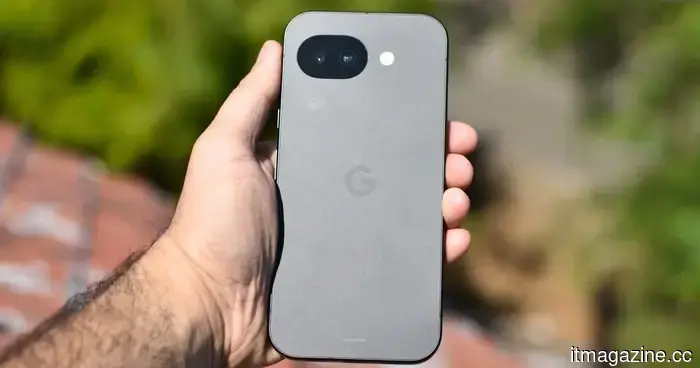 Google has finally clarified why Android AICore consumes so much of your storage, and it truly makes a lot of sense.
If you've ever observed that Android AICore is consuming more storage than anticipated, Google has now provided an explanation — and it turns out that the reason is a completely sensible fail-safe that you'd likely want to have.
Google has finally clarified why Android AICore consumes so much of your storage, and it truly makes a lot of sense.
If you've ever observed that Android AICore is consuming more storage than anticipated, Google has now provided an explanation — and it turns out that the reason is a completely sensible fail-safe that you'd likely want to have.
 Grok is set to arrive on CarPlay as iOS 26.4 transforms the car dashboard into a battleground for AI platforms.
Grok has joined ChatGPT, Perplexity, Claude, and Gemini on CarPlay following the release of iOS 26.4, which allowed AI chatbots on the platform. The car dashboard has now become the most competitive interface in technology.
Grok is set to arrive on CarPlay as iOS 26.4 transforms the car dashboard into a battleground for AI platforms.
Grok has joined ChatGPT, Perplexity, Claude, and Gemini on CarPlay following the release of iOS 26.4, which allowed AI chatbots on the platform. The car dashboard has now become the most competitive interface in technology.
 OpenAI has made ChatGPT subscriptions available to OpenClaw's 3.2 million users, while Anthropic restricts Claude access to the AI agent platform.
ChatGPT subscribers now have the ability to utilize OpenClaw's AI agents through GPT-5.4 for a monthly fee of $23. Anthropic has restricted access to Claude. OpenAI and Anthropic have taken opposing approaches on the same product.
OpenAI has made ChatGPT subscriptions available to OpenClaw's 3.2 million users, while Anthropic restricts Claude access to the AI agent platform.
ChatGPT subscribers now have the ability to utilize OpenClaw's AI agents through GPT-5.4 for a monthly fee of $23. Anthropic has restricted access to Claude. OpenAI and Anthropic have taken opposing approaches on the same product.
 Grok is set to be integrated with CarPlay as iOS 26.4 transforms the car dashboard into the next battleground for AI platforms.
Grok has been added to CarPlay alongside ChatGPT, Perplexity, Claude, and Gemini following the release of iOS 26.4, which allowed AI chatbots on the platform. The car dashboard has become the most competitive interface in technology.
Grok is set to be integrated with CarPlay as iOS 26.4 transforms the car dashboard into the next battleground for AI platforms.
Grok has been added to CarPlay alongside ChatGPT, Perplexity, Claude, and Gemini following the release of iOS 26.4, which allowed AI chatbots on the platform. The car dashboard has become the most competitive interface in technology.
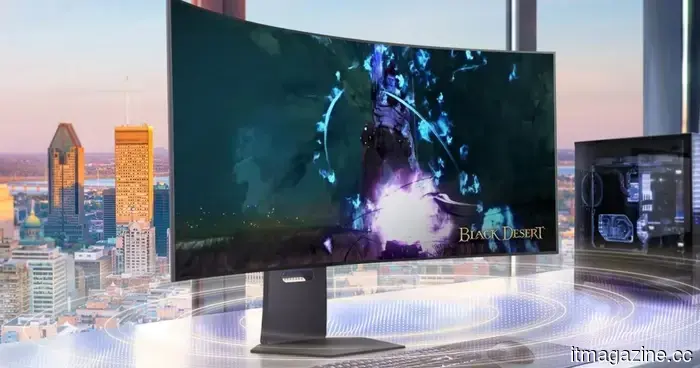 LG's newest luxurious gaming monitor features a 45-inch OLED display that achieves 330Hz at 5K resolution.
The LG UltraGear 45GX950B incorporates AI functionalities such as upscaling and scene optimization, while maintaining the same OLED panel and key specifications as its previous model.
LG's newest luxurious gaming monitor features a 45-inch OLED display that achieves 330Hz at 5K resolution.
The LG UltraGear 45GX950B incorporates AI functionalities such as upscaling and scene optimization, while maintaining the same OLED panel and key specifications as its previous model.
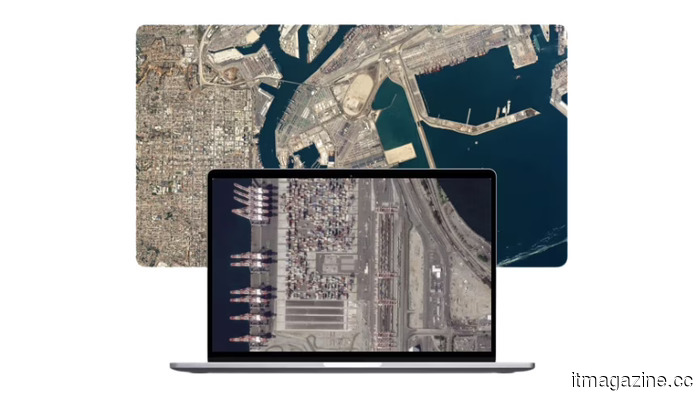 Planet Labs introduces three additional Pelican satellites, buoyed by a $900 million backlog and defense contracts that contribute to its first year of profitability.
Planet Labs initiated the launch of Pelicans 7-9 equipped with Nvidia AI, progressing towards a 32-satellite constellation. The company has achieved profitability, boasting a backlog of $900 million along with significant contracts with NATO and the NRO.
Planet Labs introduces three additional Pelican satellites, buoyed by a $900 million backlog and defense contracts that contribute to its first year of profitability.
Planet Labs initiated the launch of Pelicans 7-9 equipped with Nvidia AI, progressing towards a 32-satellite constellation. The company has achieved profitability, boasting a backlog of $900 million along with significant contracts with NATO and the NRO.
Apple discontinues the $599 Mac Mini as the demand for DRAM in AI data centers leads to an unprecedented 90% increase in memory prices and a worldwide shortage.
Apple has stopped producing the 256GB Mac Mini due to a 90% increase in DRAM prices in the first quarter of 2026. AI servers currently account for 23% of worldwide memory wafer production, resulting in a 10-20% rise in PC prices.