
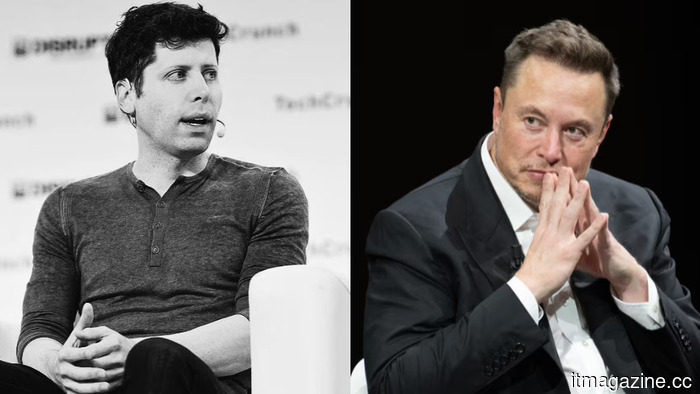
Musk's lawsuit against OpenAI is entering its first week.
After three days of cross-examination in Oakland, the $130 billion lawsuit revealed some uncomfortable admissions, including that xAI utilizes OpenAI’s models for training purposes. The determination will be made by the judge, not the jury.
On Tuesday, Elon Musk testified in Oakland, recounting a narrative he has shared for the past two years. He claimed to have founded OpenAI in 2015 to prevent advanced artificial intelligence from being monopolized by a single entity. He alleged that his former collaborators, Sam Altman and Greg Brockman, had stealthily transformed the lab into a for-profit organization, secured billions from Microsoft, and excluded him from decision-making. He framed the lawsuit he filed in 2024 as a corrective measure aimed at restoring the original nonprofit entity and reclaiming what he asserts was taken from him.
However, three days later, that narrative appeared significantly more disputed than it had earlier in the week.
Musk’s case encountered “some challenges.” His own admissions during cross-examination, the judge's repeated reminders regarding the case's parameters, and several pre-trial rulings limiting the legal claims have collectively made Musk's lawsuit against the AI industry leader appear more difficult to win than the initial framing suggested.
The trial commenced on April 28 in a federal courthouse in Oakland, presided over by Judge Yvonne Gonzalez Rogers. A nine-member jury was selected the day before. The lawsuit involves Musk, his legal team, OpenAI, Altman, Brockman, and Microsoft.
The primary damages sought amount to over $130 billion, while some early reports mentioned figures as high as $150 billion; nonetheless, the structural remedies Musk is pursuing, particularly a partial reversal of OpenAI's for-profit transition, may be the more significant demand.
The procedural context is atypical. Although a jury has been assembled, its verdict will serve only as an advisory opinion. Judge Gonzalez Rogers will make the final determinations regarding liability and remedies and is expected to deliver her ruling by mid-May.
Consequently, the trial functions more as a long, public deposition before the judge than a traditional contest for the jury's support, as she has already refined the case prior to its commencement. She dismissed Musk’s fraud allegations before the trial and issued warnings to both parties.
Over the course of three days, Musk was the first witness, spending parts of three days on the stand, initially being questioned by his own attorney and later undergoing intense cross-examination by William Savitt, OpenAI's lead counsel.
The first awkward situation arose concerning the commitment to nonprofit principles, which is central to the case. Savitt presented internal documents and communications that suggested Musk had advocated for OpenAI to transition to a for-profit model under his leadership in 2017 and 2018, and that he had disengaged from the project when this did not happen. “You were never committed to OpenAI being a nonprofit,” Savitt asserted during the exchange. Musk contested this interpretation but acknowledged the authenticity of the documents.
The second uncomfortable moment, overheard from the audience, occurred when Musk acknowledged that xAI, his AI company that created the Grok chatbot, relies on OpenAI's models, effectively training on the outputs of the very system he claims was wrongfully converted for private benefit.
The third issue was procedural. Savitt contended that Musk had delayed too long in filing his lawsuit, arguing that critical claims were submitted after the relevant statute of limitations had lapsed. Whether the judge will accept this defense remains to be seen, but the timeline will be included in the record regardless.
Before the opening statements, Judge Gonzalez Rogers had already altered the case. Her pre-trial decisions dismissed Musk's fraud allegations and restricted the trial to the narrower issue of whether OpenAI violated charitable trust and contractual obligations during its restructuring.
This adjustment makes the case less dramatic in its framing but simplifies litigation, arguably making it harder for Musk to succeed on his original theory of betrayal.
On the third day, Gonzalez Rogers cautioned the attorneys against treating the proceedings as a referendum on AI safety or Altman's character, noting a tendency from both sides to stray into these areas. Musk reiterated familiar concerns regarding the existential risks posed by AI, a point the judge seemed to view as peripheral to the legal question of whether OpenAI’s directors breached their fiduciary duties.
What lies ahead is that the trial is expected to continue for another two to three weeks. Altman, Brockman, Microsoft CEO Satya Nadella, and several of OpenAI’s early engineers are scheduled to testify. Musk’s expert witnesses, according to court filings, include Berkeley AI researcher Stuart Russell and tax-and-nonprofit specialist David Schizer from Columbia Law School.
OpenAI plans to present its own experts on governance and AI safety, with Axios reporting that the defendants intend to showcase Grok's safety record to the jury.
Musk may still regain some ground. Cross-examinations of his founding partners could lead to their own admissions; the extensive
Other articles
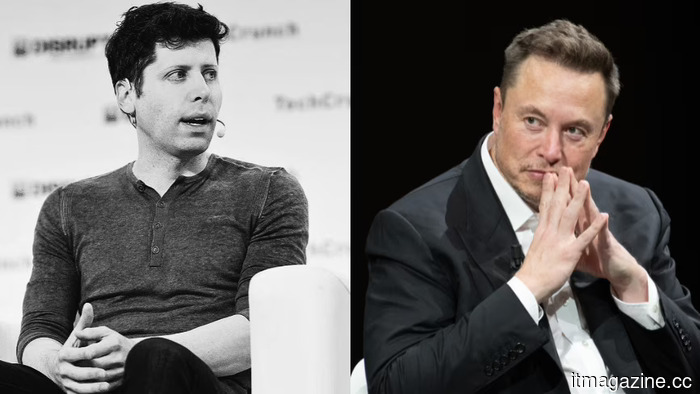 Musk’s lawsuit against OpenAI is situated around its initial week.
La demanda de Elon Musk por 130 mil millones de dólares contra OpenAI enfrentó varios obstáculos en su primera semana, incluyendo su reconocimiento de que xAI se entrena con los modelos de OpenAI.
Musk’s lawsuit against OpenAI is situated around its initial week.
La demanda de Elon Musk por 130 mil millones de dólares contra OpenAI enfrentó varios obstáculos en su primera semana, incluyendo su reconocimiento de que xAI se entrena con los modelos de OpenAI.
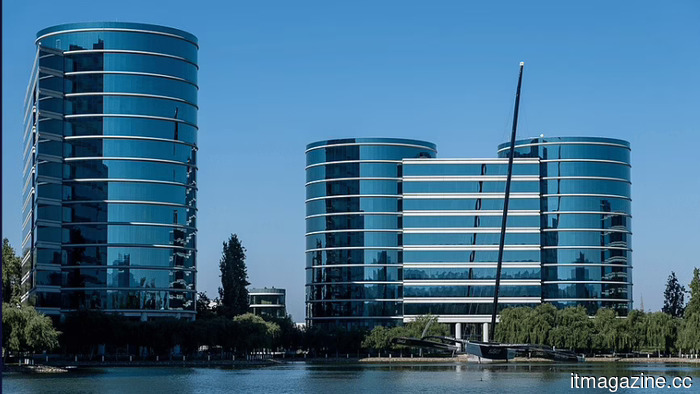 Oracle's stock drops 50% even with a buy consensus from Wall Street, as concerns about concentration arise from a $300B deal with OpenAI.
Out of 51 analysts, 41 recommend Oracle as a buy. The stock has decreased by 50%. This difference represents a $300 billion wager on OpenAI's potential to increase its revenue tenfold.
Oracle's stock drops 50% even with a buy consensus from Wall Street, as concerns about concentration arise from a $300B deal with OpenAI.
Out of 51 analysts, 41 recommend Oracle as a buy. The stock has decreased by 50%. This difference represents a $300 billion wager on OpenAI's potential to increase its revenue tenfold.
 Why a Canadian bank is attempting to forecast earthquakes using quantum computers.
BMO has submitted a provisional patent for a quantum algorithm designed to predict earthquakes and employs AI to deploy mobile branches in areas affected by wildfires.
The $599 Mac mini from Apple is no longer available. The cause? The AI agents.
Apple has stopped offering the $599 Mac mini and increased the starting price to $799, mentioning the demand for AI and agentic tools as the reason for the strain on its desktop supply.
Why a Canadian bank is attempting to forecast earthquakes using quantum computers.
BMO has submitted a provisional patent for a quantum algorithm designed to predict earthquakes and employs AI to deploy mobile branches in areas affected by wildfires.
The $599 Mac mini from Apple is no longer available. The cause? The AI agents.
Apple has stopped offering the $599 Mac mini and increased the starting price to $799, mentioning the demand for AI and agentic tools as the reason for the strain on its desktop supply.
 Why a Canadian bank is attempting to forecast earthquakes using quantum computers.
BMO has submitted a provisional patent for a quantum algorithm designed to predict earthquakes and employs AI to deploy mobile branches in areas affected by wildfires.
Why a Canadian bank is attempting to forecast earthquakes using quantum computers.
BMO has submitted a provisional patent for a quantum algorithm designed to predict earthquakes and employs AI to deploy mobile branches in areas affected by wildfires.
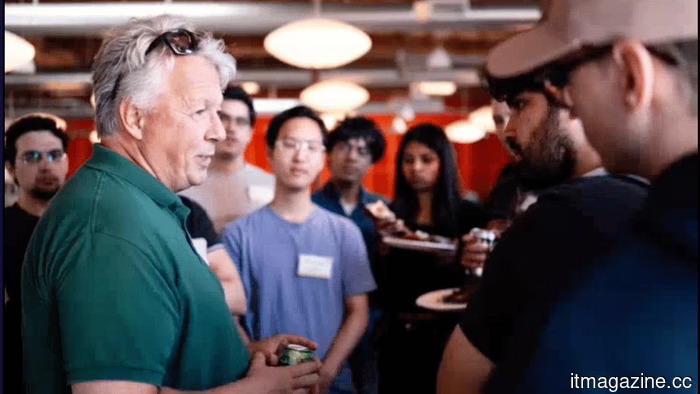 YC's Summer 2026 RFS focuses on agricultural robots, drone defense, and lunar manufacturing as software's competitive advantage diminishes.
Y Combinator’s Request for Startups for Summer 2026 focuses heavily on hardware, defense, and space, spanning 15 categories. The accelerator emphasizes that software serves as the foundation rather than a competitive barrier.
YC's Summer 2026 RFS focuses on agricultural robots, drone defense, and lunar manufacturing as software's competitive advantage diminishes.
Y Combinator’s Request for Startups for Summer 2026 focuses heavily on hardware, defense, and space, spanning 15 categories. The accelerator emphasizes that software serves as the foundation rather than a competitive barrier.
Musk's lawsuit against OpenAI is entering its first week.
La demanda de Elon Musk de $130 mil millones contra OpenAI enfrentó varios obstáculos en su primera semana, incluida su admisión de que xAI se basa en los modelos de OpenAI para su entrenamiento.