
US debt surpasses 100% of GDP as the $690 billion AI investment by Big Tech vies for the same capital markets.
**TL;DR**
For the first time since World War II, US public debt has surpassed 100% of GDP, reaching 100.2% at the close of March. The annual interest payment of $1 trillion now exceeds defense expenditures. This milestone coincides with Big Tech's commitment to invest between $660 billion and $690 billion in AI capital expenditures for 2026, funded through the same debt markets that are absorbing trillions in new Treasury issuances. This situation raises concerns about how long global capital markets can support both government deficits and the technology sector's infrastructure expansion.
The United States government now owes more than it produces. Data from the Bureau of Economic Analysis released on April 30 indicated that public debt reached $31.27 trillion at the end of March, while nominal GDP for the previous year was $31.22 trillion, resulting in a ratio of 100.2%. This marks the first such occurrence since the immediate aftermath of World War II. The wartime peak was 106% in 1946, when the US demobilized 12 million soldiers and began constructing the interstate highway system. Maya MacGuineas, president of the Committee for a Responsible Federal Budget, highlighted the contrast, stating that the 1946 debt stemmed from a significant global conflict, whereas today’s debt arises from a total bipartisan failure to make tough decisions. Including intragovernmental obligations, the total gross national debt has already exceeded $39 trillion, amounting to about $114,000 per American or $289,000 per household. However, the more critical figure is the monthly interest payments: the federal government is projected to spend around $1 trillion on net interest in fiscal 2026, surpassing the entire defense budget.
**The Arithmetic**
In February, the Congressional Budget Office cautioned that if current trends continue, public debt will rise to 108% of GDP by 2030, exceeding the postwar record, and could reach 120% by 2036. The fiscal 2026 deficit is anticipated to be $1.9 trillion, or 5.8% of GDP, escalating to $3.1 trillion by 2036. Currently, the government spends $1.33 for every dollar of revenue collected. Net interest payments, which were $375 billion in fiscal 2019, climbed to $971 billion in fiscal 2025, with the CBO projecting they will rise to $2.1 trillion annually by 2036. Interest payments have already overtaken national defense and Medicare as the second-largest item in the federal budget, following Social Security. This trajectory reflects the CBO’s baseline, predicting outcomes if current laws remain unchanged and no other issues arise.
The One Big Beautiful Bill Act, passed by the House in April, will worsen the situation before any feasible solutions can emerge. The CBO forecasts that the bill will add roughly $2.4 trillion to the deficit over the next decade, not accounting for interest costs, and $3 trillion when including them. The legislation extends 2017 tax cuts, introduces new deductions, and reduces Medicaid and other program spending. While tariff revenue from the administration’s trade policies is expected to cover about $3 trillion in lost tax revenue, the CBO predicts that these tariffs will also increase inflation from 2026 to 2029, thus raising the government’s borrowing costs for the debt the tariffs were meant to help finance. In an alternate scenario where the bill’s temporary provisions are made permanent and the Supreme Court nullifies several tariffs, the CRFB estimates that debt could rise to 131% of GDP by 2034. Proponents assert the bill will spur economic growth that offsets costs, but the CBO disagrees.
**The Collision**
The 100% threshold coincides with a time when the private sector is undertaking the most capital-intensive infrastructure expansion since electrification. The five largest American cloud and AI companies—Microsoft, Alphabet, Amazon, Meta, and Oracle—plan to invest between $660 billion and $690 billion on capital expenditures in 2026, primarily for data centers, GPUs, and AI-related networking. This investment isn't solely funded from cash flow; for instance, Oracle secured $16.3 billion for a single data center campus in Michigan after US banks withdrew from the deal, with PIMCO, the largest bond fund, backing $10 billion of the debt. Meta has pledged $35 billion to CoreWeave, an AI cloud provider, whose debt has ballooned to about $30 billion, much at junk bond rates. CoreWeave turned to the US high-yield market twice in one week in April, raising $1 billion in additional notes at 9.75%. The financing for this AI infrastructure is drawn from the same markets that are also managing trillions in new Treasury issuances, and the competition for capital is very real. The International Monetary Fund warned in April that the increase in Treasury supply
Other articles
 US debt surpasses 100% of GDP as Big Tech's $690 billion investment in AI vies for the same capital markets.
US debt reaches 100% of GDP for the first time since World War II, with interest payments exceeding $1 trillion. Big Tech's capital expenditure on AI surpasses $690 billion. Both are funded from the same debt source.
US debt surpasses 100% of GDP as Big Tech's $690 billion investment in AI vies for the same capital markets.
US debt reaches 100% of GDP for the first time since World War II, with interest payments exceeding $1 trillion. Big Tech's capital expenditure on AI surpasses $690 billion. Both are funded from the same debt source.
 The 6,000 mAh battery in the Razr Fold should be a concern for Samsung and Google: Here’s the reason.
Samsung and Google have dominated the U.S. foldable market for years, but have subtly overlooked its most significant drawback. Motorola has now entered the scene and made that flaw difficult to overlook.
The 6,000 mAh battery in the Razr Fold should be a concern for Samsung and Google: Here’s the reason.
Samsung and Google have dominated the U.S. foldable market for years, but have subtly overlooked its most significant drawback. Motorola has now entered the scene and made that flaw difficult to overlook.
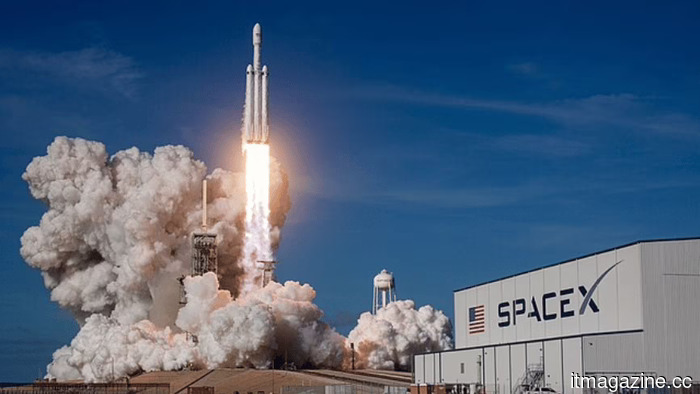 SpaceX has invested over $15 billion in the Starship program.
SpaceX has invested over $15 billion in the development of Starship and aims for a launch frequency similar to that of airlines.
SpaceX has invested over $15 billion in the Starship program.
SpaceX has invested over $15 billion in the development of Starship and aims for a launch frequency similar to that of airlines.
 McKinsey's latest AI report contends that the benefits to productivity are genuine but depend on certain conditions.
McKinsey's recent report suggests that many companies are speeding up their current activities instead of rethinking their workflows to integrate AI.
McKinsey's latest AI report contends that the benefits to productivity are genuine but depend on certain conditions.
McKinsey's recent report suggests that many companies are speeding up their current activities instead of rethinking their workflows to integrate AI.
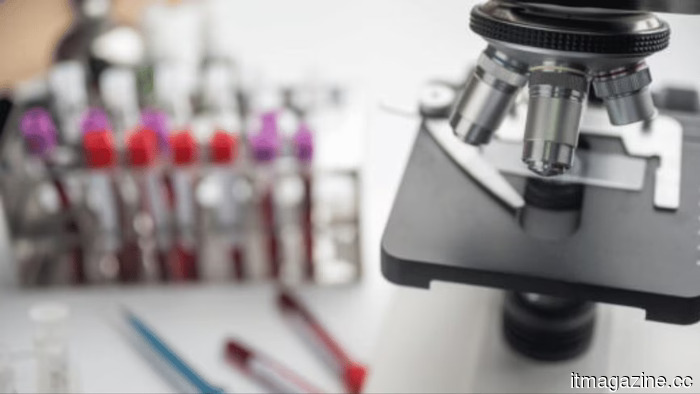 NYBCe and Chan Zuckerberg Biohub are teaming up to develop an iPSC platform utilizing cord blood for regenerative medicine.
NYBCe and CZ Biohub will obtain iPSC lines from the immune cells of cord blood, establishing shared resources that are broadly compatible for cell therapy, disease modeling, and AI-based drug development.
According to Sing Tao, Uber has purchased its competitor Fly Taxi in Hong Kong.
Sing Tao Daily reports that Uber has purchased Fly Taxi in Hong Kong. If the deal is verified, it eliminates the primary competitor for metered-taxi-hailing apps from the market.
NYBCe and Chan Zuckerberg Biohub are teaming up to develop an iPSC platform utilizing cord blood for regenerative medicine.
NYBCe and CZ Biohub will obtain iPSC lines from the immune cells of cord blood, establishing shared resources that are broadly compatible for cell therapy, disease modeling, and AI-based drug development.
According to Sing Tao, Uber has purchased its competitor Fly Taxi in Hong Kong.
Sing Tao Daily reports that Uber has purchased Fly Taxi in Hong Kong. If the deal is verified, it eliminates the primary competitor for metered-taxi-hailing apps from the market.
US debt surpasses 100% of GDP as the $690 billion AI investment by Big Tech vies for the same capital markets.
U.S. debt reaches 100% of GDP for the first time since World War II, with interest payments exceeding $1 trillion. Meanwhile, Big Tech's AI capital expenditures surpass $690 billion. Both are funded through debt from the same source.