
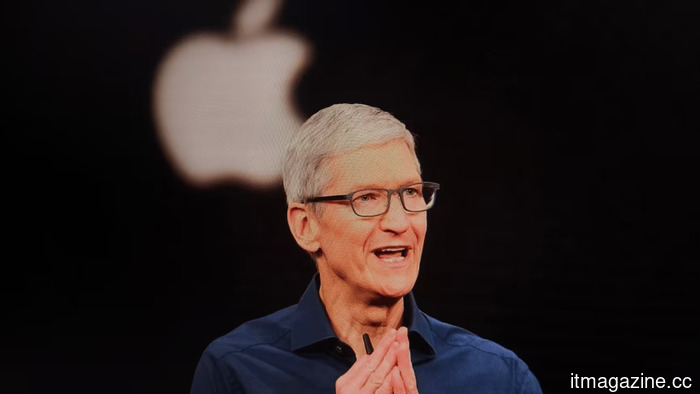
Apple announces a record revenue of $111.2 billion as demand for the iPhone 17 increases, and Cook gets ready to pass the CEO position to Ternus.
**TL;DR:** Apple achieved its highest March quarter ever, reporting $111.2 billion in revenue (up 17%), fueled by record demand for the iPhone 17 and 28% growth in China. Tim Cook, who will pass the CEO position to John Ternus on September 1, emphasized Apple's unique AI strategy of collaborating with OpenAI and Google instead of developing its own model. The results indicate that Apple is taking advantage of AI's consumer benefits without incurring the infrastructure costs that its competitors face. Reddit saw a 69% revenue increase, while Roblox shares fell by 20% due to slower user growth from age verification measures.
On Thursday, Apple announced its best March quarter in history, generating revenue of $111.2 billion, a year-over-year increase of 17%, and a net profit of $29.6 billion. Revenue from iPhones hit a March record of $58 billion, rising 22% due to what Tim Cook termed “extraordinary” demand for the iPhone 17, noted as the most successful launch in the company’s history. Sales in Greater China increased by 28% to $20.5 billion, surpassing all other regions. Services revenue reached a record high of $31 billion. The company also authorized a new $100 billion share buyback. The stock hardly moved, as investors have learned that Apple's strongest quarters often come with cautionary notes. This time, Cook informed analysts that “significantly higher memory costs” would start impacting margins in the June quarter, with effects expected to increase throughout the year. The best quarter in Apple’s history was accompanied by a warning for the upcoming one regarding production costs.
**The strategy that should not have worked:**
Apple's results challenge the dominant narrative of the AI era. While Meta has raised its 2026 capital expenditure forecast to $145 billion, Amazon to $200 billion, and Alphabet to $190 billion, Apple's total capital expenditures remain a fraction of these amounts. The company has not developed its own large language model, built a network of AI data centers, or hired thousands of GPU engineers. Instead, Apple opted to collaborate with OpenAI and Google, incorporating their AI models into its devices via Apple Intelligence, a framework that allocates tasks to on-device processing when feasible and resorts to partner cloud-based models when required. Cook characterized this strategy in Thursday's earnings call as AI that is “respectful of user privacy” and as an integral, intuitive aspect of their devices rather than a mere add-on. Apple's approach means it does not market AI as a product, but rather devices that utilize AI from companies that invested heavily in creating the models that Apple avoids having to develop itself.
The financial outcomes indicate that this strategy is effective. Apple is benefiting from the consumer advantages presented by the AI wave—such as enhanced photo editing, improved search, a more capable Siri, and better app recommendations—without incurring the infrastructure costs that are squeezing margins at competitors. The iPhone 17's record demand partly stems from the Apple Intelligence features integrated into the device, which involve a licensing fee for Apple rather than the costs associated with a data center. The MacBook Neo, priced at $599 and noted by Cook as experiencing “off the charts” demand, achieved a record in new Mac buyers by incorporating an A18 Pro chip—the same processor found in the iPhone 16 Pro—into a fanless design aimed at students and budget-minded consumers. The Neo has already sold out through April, leading Apple to double its production orders to 10 million units. In response, Intel introduced an entirely new line of processors. Apple’s competitive edge in AI lies not in AI itself but rather in the integration of external AI into hardware designed, manufactured, and sold by Apple at margins that competitors struggle to match.
**The handover:**
This was the first earnings call since Apple announced on April 20 that John Ternus, the company's longtime hardware chief, will succeed Cook as CEO on September 1, with Cook transitioning to the role of executive chairman. Ternus made a brief appearance during the call, promising “financial discipline” and mentioning a product roadmap he described as “the most exciting time in my career at Apple to be building products and services.” Cook took the opportunity to commend his successor, expressing confidence in Ternus’s ability to drive the company further than it imagines possible. The tone was polite and rehearsed, but the underlying message was clear: Ternus, with his hardware expertise, is stepping into a role at a company where the future will hinge on software and services.
The challenge Ternus will face is whether Apple’s partnership-driven AI strategy can endure through the next phase of technological advancement. Apple’s trust in Ternus comes at a time when competitors are developing proprietary AI systems increasingly interwoven into their own hardware and service ecosystems. Google’s Gemini models enhance search, Android, Workspace, and Cloud services.
Other articles
 The Xbox Ally X has introduced its own frame upscaling technology that competes with DLSS, along with several other updates.
Auto SR introduces AI-enhanced upscaling to the ROG Xbox Ally X without requiring any action from developers; it operates at the OS level for both DirectX 11 and 12 games.
The Xbox Ally X has introduced its own frame upscaling technology that competes with DLSS, along with several other updates.
Auto SR introduces AI-enhanced upscaling to the ROG Xbox Ally X without requiring any action from developers; it operates at the OS level for both DirectX 11 and 12 games.
 An Oxford study indicates that a friendly AI companion is likely to lie and reinforce your misconceptions.
Enhancing AI to appear more human-like might lead to unforeseen issues. A recent study by the Oxford Internet Institute indicated that chatbots crafted to be warm and personable are prone to misleading users and strengthening inaccurate beliefs. The findings showed that as AI becomes more accommodating, its reliability decreases. What [...]
An Oxford study indicates that a friendly AI companion is likely to lie and reinforce your misconceptions.
Enhancing AI to appear more human-like might lead to unforeseen issues. A recent study by the Oxford Internet Institute indicated that chatbots crafted to be warm and personable are prone to misleading users and strengthening inaccurate beliefs. The findings showed that as AI becomes more accommodating, its reliability decreases. What [...]
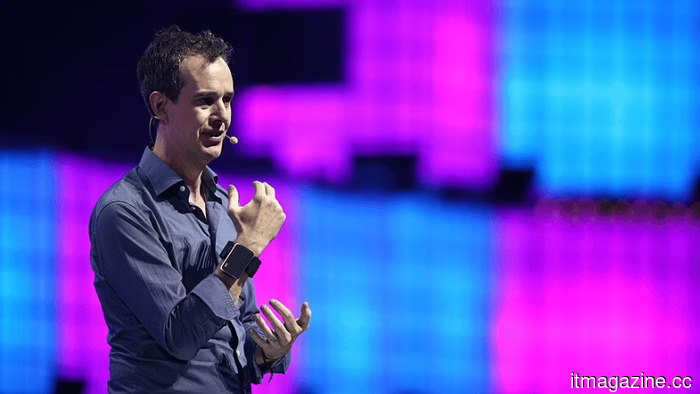 Thomas Reardon, the creator of Internet Explorer, has secured $500 million for Flourish, a startup focused on brain-inspired AI efficiency, which is now valued at $2.5 billion.
Thomas Reardon is seeking to raise $500 million at a $2.5 billion valuation for Flourish, a company that employs neuroscience to significantly reduce the power consumption of AI. Lux Capital and GV are leading this funding round.
Thomas Reardon, the creator of Internet Explorer, has secured $500 million for Flourish, a startup focused on brain-inspired AI efficiency, which is now valued at $2.5 billion.
Thomas Reardon is seeking to raise $500 million at a $2.5 billion valuation for Flourish, a company that employs neuroscience to significantly reduce the power consumption of AI. Lux Capital and GV are leading this funding round.
 Samsung has issued a concerning alert regarding your technology buying intentions as we approach 2027.
Samsung's record profits from chips come with a caution for consumers. With rising demand for AI impacting memory supply, prices for phones, laptops, TVs, consoles, and other electronic devices may increase as we approach 2027.
Samsung has issued a concerning alert regarding your technology buying intentions as we approach 2027.
Samsung's record profits from chips come with a caution for consumers. With rising demand for AI impacting memory supply, prices for phones, laptops, TVs, consoles, and other electronic devices may increase as we approach 2027.
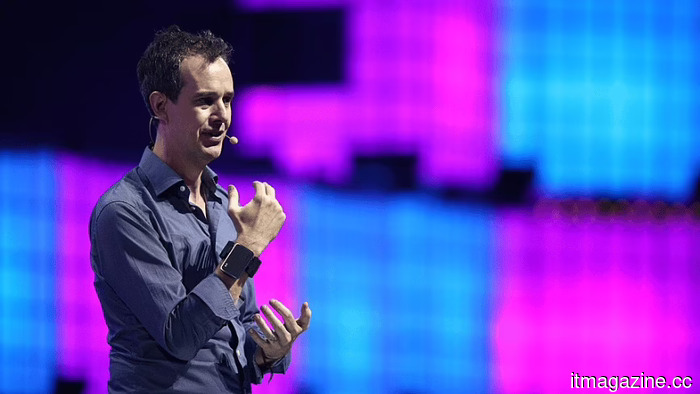 Thomas Reardon, the creator of Internet Explorer, has secured $500 million for Flourish, a startup focused on brain-inspired AI efficiency, which is now valued at $2.5 billion.
Thomas Reardon is seeking to raise $500 million at a valuation of $2.5 billion for Flourish, a company that leverages neuroscience to significantly reduce the energy consumption of AI. The funding round is being led by Lux Capital and GV.
Thomas Reardon, the creator of Internet Explorer, has secured $500 million for Flourish, a startup focused on brain-inspired AI efficiency, which is now valued at $2.5 billion.
Thomas Reardon is seeking to raise $500 million at a valuation of $2.5 billion for Flourish, a company that leverages neuroscience to significantly reduce the energy consumption of AI. The funding round is being led by Lux Capital and GV.
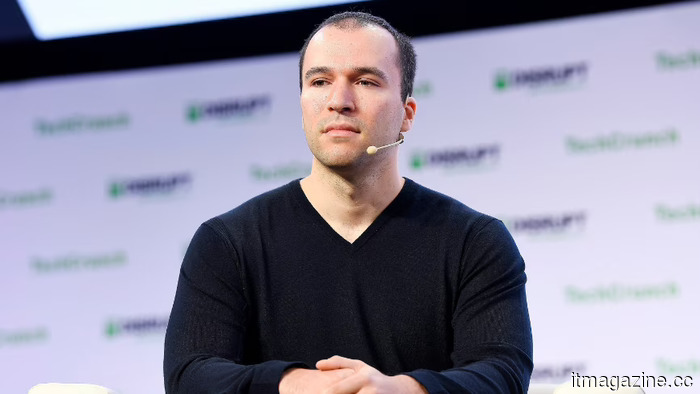 Greg Brockman states that 80% of OpenAI's code is currently created by AI.
OpenAI's president Greg Brockman stated that AI is currently responsible for writing about 80% of the company's code at Sequoia's AI Ascent 2026 event.
Greg Brockman states that 80% of OpenAI's code is currently created by AI.
OpenAI's president Greg Brockman stated that AI is currently responsible for writing about 80% of the company's code at Sequoia's AI Ascent 2026 event.
Apple announces a record revenue of $111.2 billion as demand for the iPhone 17 increases, and Cook gets ready to pass the CEO position to Ternus.
Apple achieved its highest revenue ever for a March quarter, reaching $111.2 billion. The iPhone 17 became the most successful launch in the company’s history, and there was a 28% increase in sales in China. Tim Cook will pass the leadership to John Ternus on September 1.