

McKinsey's latest AI report claims that the benefits of productivity are genuine but dependent on specific factors.
The firm's latest report, titled "AI productivity gains and the performance paradox," concludes that the majority of current AI applications merely "speed up existing work" without rethinking workflows. McKinsey is releasing this finding while aiming for a 1:1 ratio of its 40,000 human consultants to 40,000 AI agents by the end of the year.
McKinsey’s strategy practice has published an analysis indicating that the business world is facing what it describes as an "AI paradox": while the adoption of generative and agent-based AI is on the rise and capital investment is increasing, achieving sustained performance improvements remains difficult.
The report asserts that most AI applications act as "tools that accelerate existing work" and maintain the current workflows. It suggests that significant productivity improvements will only occur when organizations rethink their processes around AI rather than simply adding it on top.
As an analogy, the authors reference the introduction of electricity in factories. "When electricity was first introduced, many enterprises merely swapped out steam engines for electric motors, benefiting from efficiencies while keeping the original line arrangements intact," they explain.
The true advancements came later, when small motors allowed managers to reorganize machines according to workflows, ultimately leading companies to redesign their factories to optimize electricity usage and create new operational models.
McKinsey argues that general-purpose technologies "rarely generate value in a single wave." The recommendations for executives from the analysis include: evaluating how AI will transform industry profit pools; developing or enhancing AI-driven competitive advantages; and converting speed into a structural benefit.
The report uses examples such as JPMorgan Chase’s real-time AI fraud detection, BMW’s visual quality inspections, and Siemens’ AI-based predictive maintenance to illustrate the work-acceleration stage, contrasting them with more profound process redesigns that take companies beyond what McKinsey has termed the "gen AI paradox."
The report surfaces amid growing concerns regarding the gap between AI investments and tangible returns. The Federal Reserve Bank of St. Louis reported a 1.9% excess cumulative productivity growth since ChatGPT's launch in November 2022, a figure that is significant but insufficient to justify the current AI capital investments.
JPMorgan's capital expenditure analysis warned that $650 billion in annual revenue would be required indefinitely to achieve a 10% return on existing AI infrastructure, drawing an analogy to the late 1990s telecom fiber buildout, where infrastructure was established but revenue growth fell short, leading to losses for investors.
Research from MIT Media Lab indicates that 95% of organizations do not see measurable returns from AI adoption. Deloitte's 2026 "State of AI in the Enterprise" report, which surveyed 3,235 executives, revealed that while 66% reported productivity gains from AI, only 20% saw revenue growth, and just 34% used AI to fundamentally transform products or processes.
The PwC 2026 Global CEO Survey, featuring 4,454 CEOs across 95 countries, found that 56% claimed to have gained "nothing from" their AI investments, with only 12% reporting both revenue growth and cost reduction from AI. Workday’s 2026 research indicated that 37% to 40% of time claimed to be saved by AI is consumed by the process of reviewing, correcting, and validating AI-generated outputs.
OpenAI president Greg Brockman stated that AI currently writes 80% of OpenAI’s code. However, a February 2026 NBER study revealed that 80% of companies actively using AI reported no productivity impact.
The overarching picture is complicated by a variance in expert estimates significant enough to leave the "is AI working?" inquiry unanswerable based solely on public data. McKinsey has previously suggested that AI could potentially contribute $4.4 trillion to the global economy, whereas Nobel laureate Daron Acemoglu forecasted a modest 0.5% productivity gain over the next decade. The discrepancy between these estimates presents a challenge for every enterprise's decision regarding AI capital allocation.
Adding depth to McKinsey’s skeptical perspective is the firm’s own ongoing AI deployment. CEO Bob Sternfels indicated at CES 2026 in January that McKinsey operates 25,000 AI agents alongside its 40,000 human consultants and anticipates achieving a 1:1 ratio with 40,000 AI agents by year-end.
Last year, McKinsey saved 1.5 million hours in search and synthesis tasks, leading to a 10% increase in back-office productivity with a 25% reduction in staff. Meanwhile, roles involving client interactions, such as engagement managers and strategic advisors, expanded by 25%, while positions like research analysts and administrative support saw a corresponding decline.
The firm does not dispute the productivity potential of AI in general; rather, it contends that many organizations are not harnessing the productivity benefits that McKinsey itself is realizing, primarily because they are not reconfiguring workflows in the same way.
Other articles
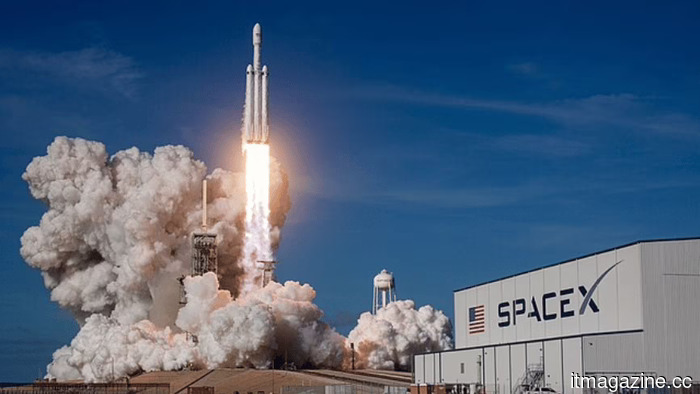 SpaceX has invested over $15 billion in the Starship program.
SpaceX has invested over $15 billion in the development of Starship and aims for a launch frequency similar to that of airlines.
SpaceX has invested over $15 billion in the Starship program.
SpaceX has invested over $15 billion in the development of Starship and aims for a launch frequency similar to that of airlines.
 Meta terminates its contract with Sama following reports from Kenyan workers who encountered intimate videos recorded by users of Ray-Ban smart glasses.
After reporting to journalists that they witnessed users engaging in sexual acts and undressing in footage from Meta smart glasses, 1,108 Kenyan workers were terminated from their positions. This development prompted reactions from regulators and legal professionals.
Meta terminates its contract with Sama following reports from Kenyan workers who encountered intimate videos recorded by users of Ray-Ban smart glasses.
After reporting to journalists that they witnessed users engaging in sexual acts and undressing in footage from Meta smart glasses, 1,108 Kenyan workers were terminated from their positions. This development prompted reactions from regulators and legal professionals.
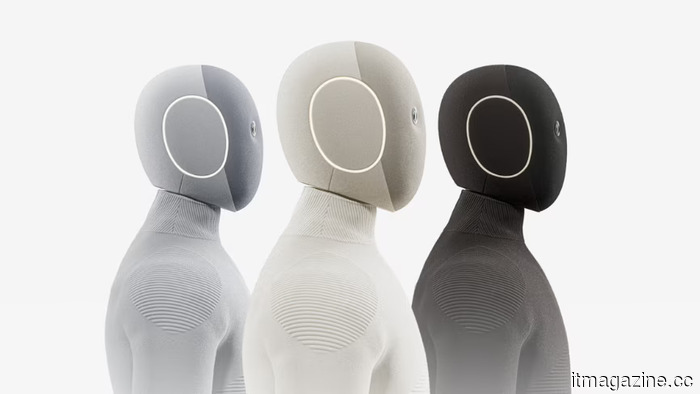 1X has begun delivering NEO humanoid robots to households in the US.
Backed by OpenAI, 1X has launched a factory in Hayward, California, with plans to manufacture 10,000 NEO home humanoid robots in the first year, increasing production to over 100,000 by the close of 2027.
1X has begun delivering NEO humanoid robots to households in the US.
Backed by OpenAI, 1X has launched a factory in Hayward, California, with plans to manufacture 10,000 NEO home humanoid robots in the first year, increasing production to over 100,000 by the close of 2027.
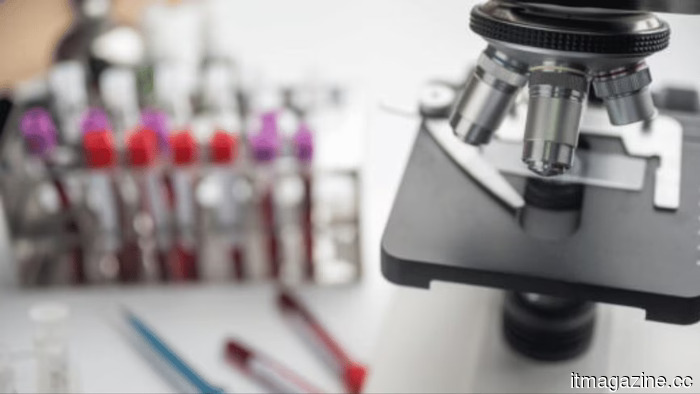 NYBCe and Chan Zuckerberg Biohub are teaming up to develop an iPSC platform utilizing cord blood for regenerative medicine.
NYBCe and CZ Biohub will obtain iPSC lines from the immune cells of cord blood, establishing shared resources that are broadly compatible for cell therapy, disease modeling, and AI-based drug development.
NYBCe and Chan Zuckerberg Biohub are teaming up to develop an iPSC platform utilizing cord blood for regenerative medicine.
NYBCe and CZ Biohub will obtain iPSC lines from the immune cells of cord blood, establishing shared resources that are broadly compatible for cell therapy, disease modeling, and AI-based drug development.
 US debt surpasses 100% of GDP as Big Tech's $690 billion investment in AI vies for the same capital markets.
US debt reaches 100% of GDP for the first time since World War II, with interest payments exceeding $1 trillion. Big Tech's capital expenditure on AI surpasses $690 billion. Both are funded from the same debt source.
US debt surpasses 100% of GDP as Big Tech's $690 billion investment in AI vies for the same capital markets.
US debt reaches 100% of GDP for the first time since World War II, with interest payments exceeding $1 trillion. Big Tech's capital expenditure on AI surpasses $690 billion. Both are funded from the same debt source.
McKinsey's latest AI report claims that the benefits of productivity are genuine but dependent on specific factors.
McKinsey's latest report suggests that the majority of companies are speeding up their current processes instead of restructuring workflows to incorporate AI.