

China's $16.5 billion micro-drama sector emerges as the world's first widespread application of AI-generated video.
**TL;DR** The micro-drama sector in China, expected to surpass 120 billion yuan ($16.5 billion) this year, has become the first global mass commercial use of AI-generated video, outpacing the country’s theatrical box office. In March 2026, over 50,000 AI-native titles were uploaded to Douyin at a fraction of live-action costs. Local governments are supporting production hubs with subsidies up to two million yuan per drama, while the NRTA oversees content through a structured review process, paving the way for an exportable policy for AI entertainment.
Beginning in January 2026, a new AI-generated micro-drama went live on a Chinese streaming platform every 90 seconds. By March, Douyin had seen around 50,000 AI-native titles uploaded within a month, at about one-tenth the cost of traditional productions. The AI-generated footage's usability exceeded 90%. This burgeoning micro-drama sector, consisting of serialized stories typically lasting one to three minutes and viewed vertically, is projected to exceed 120 billion yuan this year, marking the first time it will outstrip China’s total theatrical income. Serving 660 million users, this $16.5 billion industry has emerged as the world's leading example of commercial AI-generated video, unnoticed by Silicon Valley, while OpenAI ended its Sora project due to ineffectiveness. In March alone, China's AI video sector produced more new content than Netflix's entire history.
**The Factory**
The micro-drama production model that started in China around 2023 was inherently designed for rapid output. Studios operated within compact sets known as “shudian” or vertical studios, taking advantage of the proximity of various settings like hospitals and banquet halls, allowing for quick scene changes. A typical live-action micro-drama could be completed in six to eight weeks for several hundred thousand yuan, driven by low costs and high output through platforms like ByteDance’s Red Fruit, Tencent’s WeChat Video Accounts, and Kuaishou’s Xi Fan brand, earning revenue from app purchases, ads, and subscriptions.
With AI integration, production times are shortening even further. Companies are dedicating around 30% of their budgets to AI processes, reducing total production durations from three months to one and costs to roughly one-fifth of traditional methods. Evidence of this shift is clear; in January 2026, AI content made up 38% of the top 100 micro-drama chart, an increase from 7% the prior year. DataEye reported production of over 10,000 new AI-generated animated micro-dramas each month. AI-generated comic-style micro-dramas held an estimated market value of 16.8 billion yuan in 2025. Tools like ByteDance’s Seedance 2.0, Kuaishou’s Kling 3.0, and Shengshu Technology’s Vidu have improved the quality of generated footage to the extent that, for certain genres, the difference between AI and live-action content is increasingly indistinguishable to viewers.
**The State**
The involvement of the state sets China's AI micro-drama phenomenon apart from other AI content initiatives. Local governments across China have created production hubs in smaller cities, providing subsidies, necessary infrastructure, and incentives to draw micro-drama businesses. Chongqing established the Liangjiang Film and Television Animation Cultural and Creative Park, dedicated to vertical format content, hosting over 300 production teams annually. Industry participants refer to it as “Vertical Hengdian.” Linping in Zhejiang province allocated over 100 million yuan to foster content creators and built the first dedicated micro-drama film base. State incentives can reach up to two million yuan per drama, along with additional support structures for funding, content development, data access, and traffic distribution.
The state’s motivations are not solely cultural; in January 2026, CCTV produced its own AI-generated comic drama, signaling high-level endorsement of the technology. Meanwhile, the National Radio and Television Administration has reinforced its regulatory framework, instituting a tiered content review system based on production budgets. Productions budgeted over one million yuan must obtain approval at the provincial level, mid-tier productions follow a different review path, and smaller ones are monitored by their platforms. The NRTA has retracted over 25,000 episodes for content violations and has provided specific guidelines for animated micro-dramas, mandating pre-broadcast reviews and platform checks. This regulatory structure simultaneously stimulates the industry as both an economic driver and a cultural export tool while ensuring that outputs meet state standards of acceptability. It exemplifies how industrial policy can shape entertainment, and it’s proving effective.
**The Quality Problem**
The relationship between the micro-drama industry and AI reflects a trend seen in various sectors where generative AI has eased production barriers. As costs for creating content fall by 90%, the volume produced tends to increase significantly, often leading to mediocrity. This dynamic has emerged
Other articles
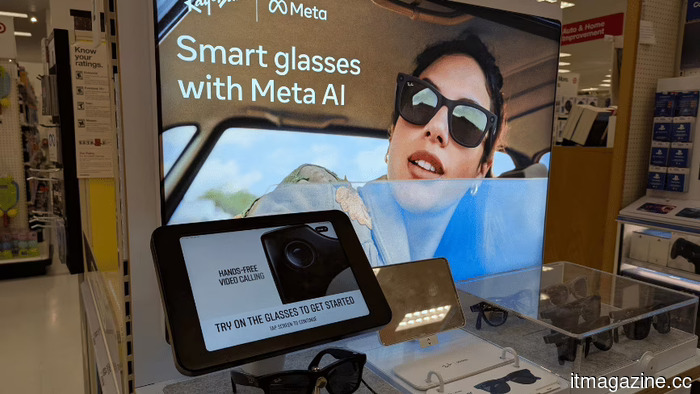 Meta terminates its contract with Sama following reports from Kenyan workers who encountered intimate videos recorded by users of Ray-Ban smart glasses.
After reporting to journalists that they witnessed users engaging in sexual acts and undressing in footage from Meta smart glasses, 1,108 Kenyan workers were terminated from their positions. This development prompted reactions from regulators and legal professionals.
Meta terminates its contract with Sama following reports from Kenyan workers who encountered intimate videos recorded by users of Ray-Ban smart glasses.
After reporting to journalists that they witnessed users engaging in sexual acts and undressing in footage from Meta smart glasses, 1,108 Kenyan workers were terminated from their positions. This development prompted reactions from regulators and legal professionals.
 Reddit's Q1 revenue soars by 69% to reach $663 million, prompting a 9% increase in its shares.
Reddit announced that its revenue for the first quarter of 2026 reached $663 million, marking a 69% increase year-over-year. This figure exceeded expectations in all categories and led to an upward revision of its Q2 guidance beyond consensus estimates.
Reddit's Q1 revenue soars by 69% to reach $663 million, prompting a 9% increase in its shares.
Reddit announced that its revenue for the first quarter of 2026 reached $663 million, marking a 69% increase year-over-year. This figure exceeded expectations in all categories and led to an upward revision of its Q2 guidance beyond consensus estimates.
 SpaceX has invested over $15 billion in Starship.
SpaceX has invested over $15 billion in the development of Starship and is aiming for a launch frequency similar to that of airlines.
SpaceX has invested over $15 billion in Starship.
SpaceX has invested over $15 billion in the development of Starship and is aiming for a launch frequency similar to that of airlines.
 McKinsey's latest AI report claims that the productivity benefits are genuine but contingent.
McKinsey's latest report contends that the majority of companies are speeding up their current tasks instead of rethinking their workflows in relation to AI.
McKinsey's latest AI report claims that the productivity benefits are genuine but contingent.
McKinsey's latest report contends that the majority of companies are speeding up their current tasks instead of rethinking their workflows in relation to AI.
 Reddit's revenue for Q1 increases by 69% to $663 million, and its shares rise by 9%.
Reddit announced that its revenue for the first quarter of 2026 reached $663 million, reflecting a 69% year-over-year increase. The results exceeded expectations in all areas, and the company has elevated its guidance for the second quarter above consensus.
Reddit's revenue for Q1 increases by 69% to $663 million, and its shares rise by 9%.
Reddit announced that its revenue for the first quarter of 2026 reached $663 million, reflecting a 69% year-over-year increase. The results exceeded expectations in all areas, and the company has elevated its guidance for the second quarter above consensus.
 NYBCe and Chan Zuckerberg Biohub are teaming up to develop an iPSC platform utilizing cord blood for regenerative medicine.
NYBCe and CZ Biohub will obtain iPSC lines from the immune cells of cord blood, establishing shared resources that are broadly compatible for cell therapy, disease modeling, and AI-based drug development.
NYBCe and Chan Zuckerberg Biohub are teaming up to develop an iPSC platform utilizing cord blood for regenerative medicine.
NYBCe and CZ Biohub will obtain iPSC lines from the immune cells of cord blood, establishing shared resources that are broadly compatible for cell therapy, disease modeling, and AI-based drug development.
China's $16.5 billion micro-drama sector emerges as the world's first widespread application of AI-generated video.
In just one month, 50,000 AI micro-dramas were launched on Douyin. The cost of production has decreased by 90%. State-funded subsidies support the hubs. China's micro-drama sector represents the initial commercial-scale experiment with AI-generated content.