
NYBCe and Chan Zuckerberg Biohub are joining forces to create an iPSC platform derived from cord blood for use in regenerative medicine.
**TL;DR** The New York Blood Center Enterprises and the Chan Zuckerberg Biohub are joining forces to create induced pluripotent stem cell lines from cord blood, utilizing NYBCe’s collection of over 30,000 units, including rare HLA-homozygous donors, alongside Biohub’s expertise in reprogramming immune cells. These cell lines will serve as shared resources for research in regenerative medicine, disease modeling, and cell therapy, aiming to bridge the gap between laboratory biology and scalable, immune-compatible treatments.
A significant portion of umbilical cord blood collected at birth is discarded. After being clamped and cut, this valuable tissue is typically thrown away as medical waste, including the stem cells within that are immunologically naive, genetically diverse, and capable of differentiation into almost any cell type in the human body. On April 30, the New York Blood Center Enterprises, operating the oldest public cord blood bank globally, and the Chan Zuckerberg Biohub, a biomedical research initiative supported by Mark Zuckerberg and Priscilla Chan, announced their collaboration to convert discarded cells into stable, usable resources: a library of induced pluripotent stem cell lines derived from cord blood. These lines are intended to be broadly compatible with human immune systems and will be accessible as shared resources for research in regenerative medicine, disease modeling, and cell therapy. While the collaboration may not represent a large pharmaceutical deal, lacking billion-dollar licensing agreements or IPO announcements, it aims to address a fundamental issue that has limited cell therapy's growth: the disparity between laboratory-created biology and that which can be manufactured, stored, and delivered at scale to patients.
**The Biology**
Induced pluripotent stem cells (iPSCs) are adult cells reprogrammed to function like embryonic stem cells, able to differentiate into various cell types. This groundbreaking technology was advanced by Shinya Yamanaka, who won the Nobel Prize in 2012 for demonstrating how mature cells can revert to a pluripotent state using four specific genes. Since then, iPSCs have become crucial in the development of experimental therapies, including iPSC-derived neurons for Parkinson's disease, cardiomyocytes for heart failure, and immune cells for cancer treatment. Over 115 clinical trials involving pluripotent stem cell therapies are currently underway worldwide, with more than 1,200 patients treated and no major safety issues reported. The FDA has designated over 60 products with its Regenerative Medicine Advanced Therapy classification, including the first iPSC-derived therapy to achieve both Fast Track and RMAT status, aimed at treating Parkinson’s disease, developed by iRegene. The global iPSC market is expected to expand from $2.6 billion in 2026 to $4.1 billion by 2031.
The challenge does not reside in the functionality of iPSCs, but in their sourcing. Most iPSC lines used for research originate from skin or blood cells taken from individual donors, creating lines with highly varied genetic backgrounds and immune profiles. When these cells are transplanted into patients, the immune system recognizes them as foreign and attacks, necessitating lifelong immunosuppressive treatments that introduce additional risks. Creating patient-specific iPSC lines is an expensive and time-consuming solution. The field requires a middle ground: a collection of standardized, well-characterized iPSC lines compatible with large segments of the population without the need for personalized production. This is where cord blood becomes significant.
**The Resource**
The National Cord Blood Program, part of NYBCe’s Lindsley F. Kimball Research Institute, was founded in 1992 by Dr. Pablo Rubinstein with funding from the National Heart, Lung, and Blood Institute. It was the first public cord blood bank worldwide and has maintained a collection of over 30,000 cord blood units approved for clinical transplantation and research. The program pioneered HEMACORD, the first FDA-licensed cord blood product, which has contributed to thousands of transplants for patients with blood cancers and related disorders without matched bone marrow donors. Cord blood has an immunological advantage: its stem cells have a lower likelihood of inciting graft-versus-host disease compared to adult bone marrow, allowing for greater HLA mismatch tolerance in cord blood transplants. A Phase 2 trial published in the Journal of Clinical Oncology in April 2026 by Fred Hutch Cancer Center revealed that a pooled cord blood product had a 96% one-year survival rate in leukemia patients, with no occurrences of severe graft-versus-host disease.
Included in NYBCe’s inventory are cord blood units from donors who are homozygous at critical HLA loci, meaning they possess identical genes for immune compatibility on both chromosomes. These units are rare and significant because iPSC lines generated from them would be compatible with a large proportion of the population. Research from Japan, where the concept of iPSC haplobanking originated, indicated that lines from about 50 homozygous donors could match more than 90% of the Japanese population.
Other articles
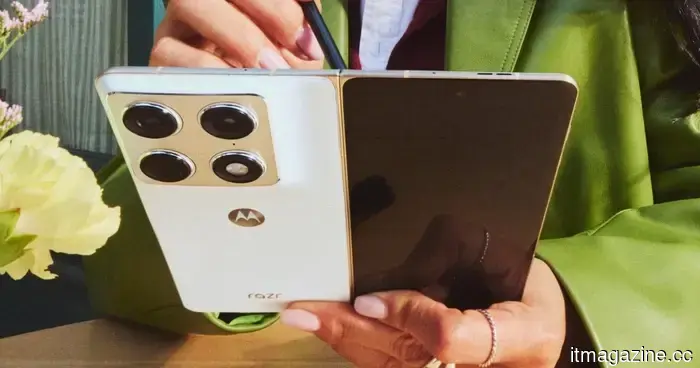 The 6,000 mAh battery in the Razr Fold should be a concern for Samsung and Google: Here’s the reason.
Samsung and Google have dominated the U.S. foldable market for years, but have subtly overlooked its most significant drawback. Motorola has now entered the scene and made that flaw difficult to overlook.
The 6,000 mAh battery in the Razr Fold should be a concern for Samsung and Google: Here’s the reason.
Samsung and Google have dominated the U.S. foldable market for years, but have subtly overlooked its most significant drawback. Motorola has now entered the scene and made that flaw difficult to overlook.
 China's $16.5 billion micro-drama sector emerges as the world's first widespread application of AI-generated video.
In just one month, 50,000 AI micro-dramas were launched on Douyin. The cost of production has decreased by 90%. State-funded subsidies support the hubs. China's micro-drama sector represents the initial commercial-scale experiment with AI-generated content.
China's $16.5 billion micro-drama sector emerges as the world's first widespread application of AI-generated video.
In just one month, 50,000 AI micro-dramas were launched on Douyin. The cost of production has decreased by 90%. State-funded subsidies support the hubs. China's micro-drama sector represents the initial commercial-scale experiment with AI-generated content.
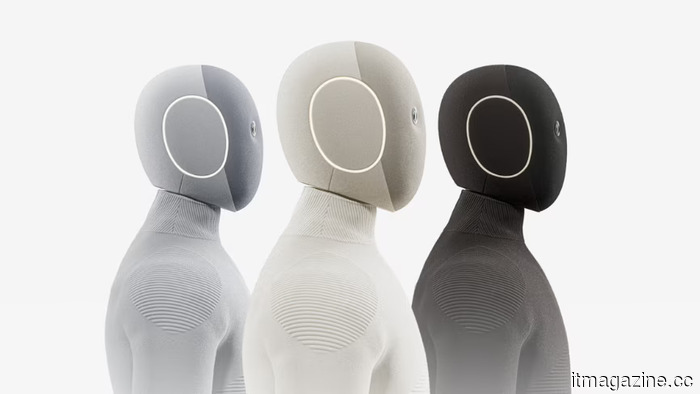 1X has begun delivering NEO humanoid robots to households in the US.
Backed by OpenAI, 1X has launched a factory in Hayward, California, with plans to manufacture 10,000 NEO home humanoid robots in the first year, increasing production to over 100,000 by the close of 2027.
1X has begun delivering NEO humanoid robots to households in the US.
Backed by OpenAI, 1X has launched a factory in Hayward, California, with plans to manufacture 10,000 NEO home humanoid robots in the first year, increasing production to over 100,000 by the close of 2027.
 NYBCe and the Chan Zuckerberg Biohub are partnering to develop an iPSC platform derived from cord blood for the purposes of regenerative medicine.
NYBCe and CZ Biohub will generate iPSC lines from immune cells found in cord blood, establishing shared resources that are widely compatible for applications in cell therapy, disease modeling, and AI-based drug development.
NYBCe and the Chan Zuckerberg Biohub are partnering to develop an iPSC platform derived from cord blood for the purposes of regenerative medicine.
NYBCe and CZ Biohub will generate iPSC lines from immune cells found in cord blood, establishing shared resources that are widely compatible for applications in cell therapy, disease modeling, and AI-based drug development.
 Reddit's Q1 revenue soars by 69% to reach $663 million, prompting a 9% increase in its shares.
Reddit announced that its revenue for the first quarter of 2026 reached $663 million, marking a 69% increase year-over-year. This figure exceeded expectations in all categories and led to an upward revision of its Q2 guidance beyond consensus estimates.
Reddit's Q1 revenue soars by 69% to reach $663 million, prompting a 9% increase in its shares.
Reddit announced that its revenue for the first quarter of 2026 reached $663 million, marking a 69% increase year-over-year. This figure exceeded expectations in all categories and led to an upward revision of its Q2 guidance beyond consensus estimates.
 SpaceX has invested over $15 billion in the Starship program.
SpaceX has invested over $15 billion in the development of Starship and aims for a launch frequency similar to that of airlines.
SpaceX has invested over $15 billion in the Starship program.
SpaceX has invested over $15 billion in the development of Starship and aims for a launch frequency similar to that of airlines.
NYBCe and Chan Zuckerberg Biohub are joining forces to create an iPSC platform derived from cord blood for use in regenerative medicine.
NYBCe and CZ Biohub will obtain iPSC lines from immune cells in cord blood, establishing common, widely compatible resources for cell therapy, disease modeling, and AI-based drug development.