
Q1 2026 earnings for Big Tech: $650 billion in AI capital expenditures and limitations on computing resources.
Google Cloud experienced a 63% growth, while AWS saw a 28% increase. Meta revised its full-year capital expenditure estimate to between $125 and $145 billion, leading to a 6% drop in its shares after hours. Total AI spending in 2026 across five major hyperscalers is now expected to surpass $650 billion.
A key topic during Wednesday’s earnings calls was whether the surge in AI investment was yielding appropriate returns or if the hyperscalers were scaling their operations faster than the market could support. Responses varied by company, but overall, they were sufficient to avoid a major reckoning.
Alphabet reported $109.9 billion in revenue for Q1 2026, exceeding expectations by nearly $3 billion. The highlight was Google Cloud, which grew 63% year on year to reach $20.02 billion, significantly surpassing the anticipated $18.05 billion and accelerating from the 48% growth reported in Q4 2025.
Net income was $62.57 billion, an 81% increase compared to the previous year, although this figure was significantly boosted by a $36.9 billion unrealized gain on equity securities. Capital expenditure for the quarter was $35.7 billion, marking a 107% year-on-year rise. The company also elevated its full-year capex guidance to $180-$190 billion from the previous range of $175-$185 billion.
CEO Sundar Pichai informed analysts that the company faces short-term constraints in computing capacity, suggesting that cloud revenue could have been higher had supply matched demand. The cloud backlog exceeded $460 billion, nearly double that of the prior quarter.
Amazon announced Q1 net sales of $181.5 billion, a 17% increase year on year, and higher than the $177.2 billion consensus. AWS grew by 28% to $37.59 billion, its fastest growth rate in over three years and above the 26% forecasted by analysts. Earnings per share reached $2.78, well above the $1.62 estimate.
CEO Andy Jassy has allocated approximately $200 billion for capital expenditures in 2026. Free cash flow over the past twelve months decreased to $1.2 billion, a 95% year-on-year drop, largely due to increased spending on AI infrastructure. The second-quarter sales guidance of $194-$199 billion significantly exceeds the $189.2 billion consensus.
Meta disclosed Q1 revenue of $56.31 billion, surpassing the estimate of $55.51 billion, and provided a Q2 guidance of $58-$61 billion around the $59.56 billion consensus.
The notable figure was capital expenditure: Meta raised its full-year 2026 forecast to $125-$145 billion from an earlier estimate of $115-$135 billion, citing increased component costs and expanded data center capacity. Subsequently, shares fell approximately 6% after hours.
This increase emphasizes that Meta’s AI strategy relies heavily on its own infrastructure rather than third-party cloud services.
The trend across these three companies is clear: the demand for AI computing surpasses the current infrastructure capabilities. Pichai stated this explicitly, while Jassy’s $200 billion capex commitment conveys a similar message. Meta’s revised guidance recognizes that even with aggressive spending, expansion is necessary.
The 63% growth of Google Cloud and the 28% growth of AWS truly reflect external demand for AI infrastructure from numerous enterprise clients. In contrast, Meta’s AI expenditures are mainly internal, focused on developing the computing resources necessary for its recommendation systems, generative advertising tools, and Llama models. This distinction is crucial for how investors interpret the capital expenditure figures; external growth in cloud services indicates revenue potential, whereas internal investments signal costs.
Collectively, the 2026 capital expenditure commitments from the five hyperscalers—Microsoft, Alphabet, Meta, Amazon, and Apple—are projected to surpass $650 billion, according to industry estimates. This amount exceeds the GDP of many European nations. Whether it generates proportionate returns across the corporate sector will be a pivotal financial issue in the next two years.
Other articles
 Anthropic aims for a valuation of $900 billion in a possible $50 billion funding round.
Anthropic is considering a funding round of $50 billion at a valuation exceeding $900 billion, which could position it as more valuable than OpenAI.
Anthropic aims for a valuation of $900 billion in a possible $50 billion funding round.
Anthropic is considering a funding round of $50 billion at a valuation exceeding $900 billion, which could position it as more valuable than OpenAI.
 Google Photos will allow you to virtually try on clothing that you already own or have simply captured by taking a screenshot.
Google Photos is introducing a new wardrobe feature that utilizes AI to organize your outfits from previous photos, assist you in combining different styles, and allow you to virtually try them on.
Google Photos will allow you to virtually try on clothing that you already own or have simply captured by taking a screenshot.
Google Photos is introducing a new wardrobe feature that utilizes AI to organize your outfits from previous photos, assist you in combining different styles, and allow you to virtually try them on.
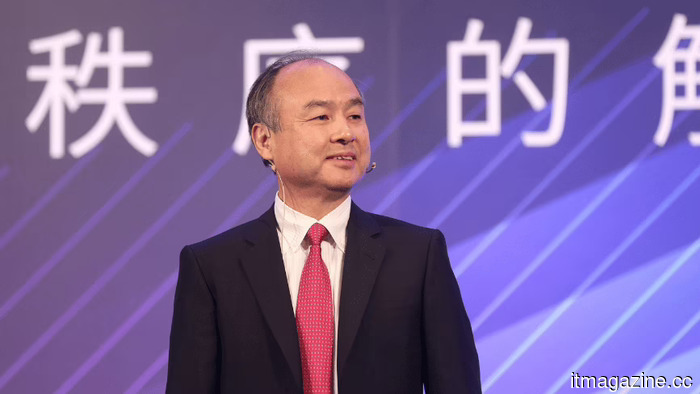 Eight banks are currently supporting SoftBank's unprecedented $40 billion loan to OpenAI.
HSBC, BNP Paribas, and Intesa Sanpaolo are part of a group of eight banks participating in SoftBank's $40 billion bridge loan for OpenAI.
Eight banks are currently supporting SoftBank's unprecedented $40 billion loan to OpenAI.
HSBC, BNP Paribas, and Intesa Sanpaolo are part of a group of eight banks participating in SoftBank's $40 billion bridge loan for OpenAI.
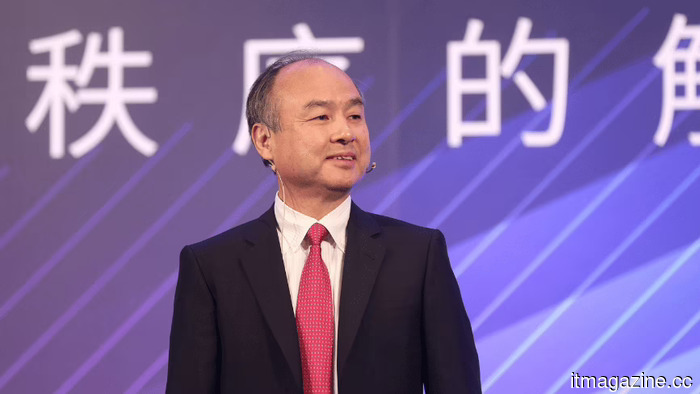 Eight banks are currently supporting SoftBank's unprecedented $40 billion loan to OpenAI.
HSBC, BNP Paribas, and Intesa Sanpaolo are part of a group of eight banks participating in SoftBank's $40 billion bridge loan for OpenAI.
Eight banks are currently supporting SoftBank's unprecedented $40 billion loan to OpenAI.
HSBC, BNP Paribas, and Intesa Sanpaolo are part of a group of eight banks participating in SoftBank's $40 billion bridge loan for OpenAI.
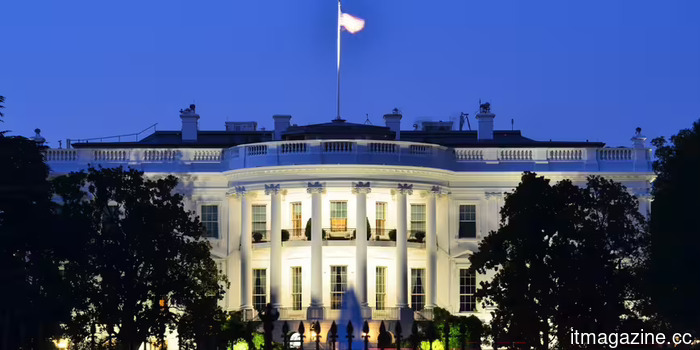 The Trump administration halts the rollout of Anthropic’s Mythos.
The White House has informed Anthropic that it is against the expansion of Mythos access to an additional 70 organizations, citing concerns regarding security and computing resources.
The Trump administration halts the rollout of Anthropic’s Mythos.
The White House has informed Anthropic that it is against the expansion of Mythos access to an additional 70 organizations, citing concerns regarding security and computing resources.
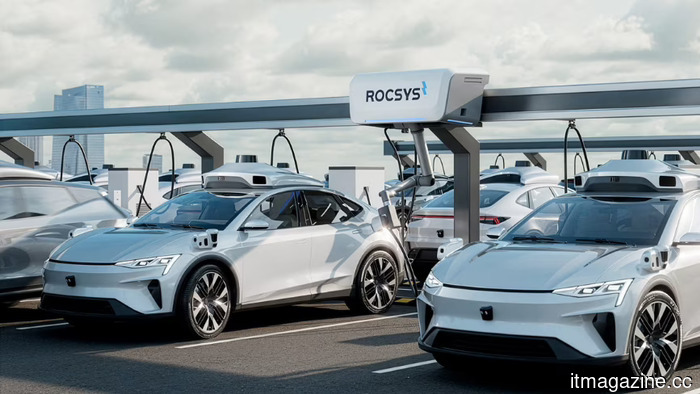 Rocsys secures $13 million in funding for hands-free robotaxi charging solutions.
Rocsys has secured $13 million in funding and introduced the M1, a charging system for robotaxis that features multiple bays and can accommodate up to 10 bays per unit.
Rocsys secures $13 million in funding for hands-free robotaxi charging solutions.
Rocsys has secured $13 million in funding and introduced the M1, a charging system for robotaxis that features multiple bays and can accommodate up to 10 bays per unit.
Q1 2026 earnings for Big Tech: $650 billion in AI capital expenditures and limitations on computing resources.
In the first quarter of 2026, Google Cloud, a part of Alphabet, experienced a 63% growth, whereas AWS reported a 28% increase. Meanwhile, Meta adjusted its capital expenditure guidance to $145 billion, resulting in a 6% drop in its share prices.