
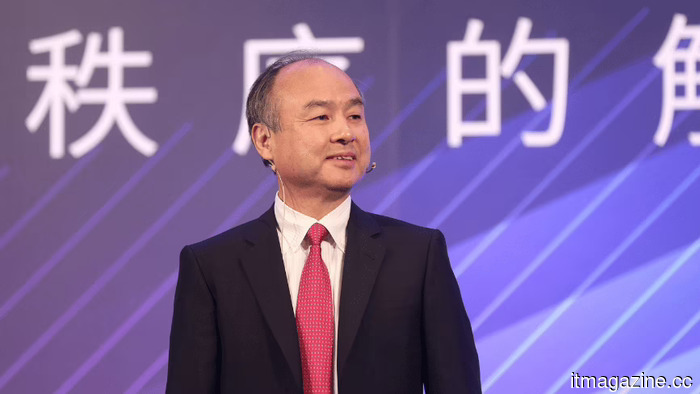
Eight banks are currently supporting SoftBank's unprecedented $40 billion loan to OpenAI.
HSBC, BNP Paribas, and Intesa Sanpaolo are part of eight institutions that have pledged commitments as sub-underwriters in a significant test of investor interest in AI-related debt. The $40 billion bridge loan that SoftBank secured in March to finance its investment in OpenAI is drawing in more lenders, with at least eight banks having confirmed their commitments as sub-underwriters by the end of last week, as reported by Bloomberg.
New participants include HSBC, BNP Paribas, and Intesa Sanpaolo, who are joining the original underwriters in a syndication process currently described by Bloomberg as being in a ‘soft launch’ phase. This loan represents one of the most critical financial arrangements in the ongoing AI boom. Signed on March 27, 2026, it is an unsecured, 12-month bridge loan underwritten by JPMorgan Chase, Goldman Sachs, Mizuho Bank, Sumitomo Mitsui Banking, and MUFG Bank.
SoftBank primarily utilized the funds to support its $30 billion follow-on investment in OpenAI via Vision Fund 2, as part of OpenAI’s historic $110 billion funding round, which is the largest private funding round to date and values OpenAI at $852 billion. Consequently, SoftBank’s total investment in OpenAI has reached about $64.6 billion.
What does the loan structure indicate about the OpenAI IPO? The 12-month unsecured arrangement is intended to be brief, requiring SoftBank to repay or refinance by March 26, 2027. Since the loan is unsecured and not backed by SoftBank’s OpenAI shares, its Arm Holdings stake, or any other specific assets, lenders are assessing SoftBank’s overall creditworthiness and, by default, the probability of a liquidity event that would provide the means to repay.
This liquidity event is almost certainly expected to be an OpenAI IPO. As TechCrunch has pointed out, the 12-month term suggests that both the initial lenders and the sub-underwriters entering the syndicate expect OpenAI to go public within the next year, providing SoftBank with the liquidity needed to repay the debt. Reports indicate that OpenAI is aiming for an IPO as soon as Q4 2026, which would be one of the largest technology public offerings in history. If this IPO is postponed, SoftBank could face substantial refinancing challenges, especially after S&P downgraded its credit outlook to negative in March, citing concentration risk and estimating that OpenAI might constitute about 30% of SoftBank’s portfolio.
SoftBank's debt-driven AI expansion goes beyond this particular loan; the company is also looking to secure a separate $10 billion margin loan, which would be collateralized by its OpenAI shares. Collectively, these financial strategies represent one of the most heavily leveraged positions on a single private entity in contemporary financial history. The wide array of banks now forming around the $40 billion facility, inclusive of US, European, and Japanese institutions, showcases a significant level of creditor confidence in the OpenAI narrative, or at least in SoftBank's capability to manage this risk.
The calculations behind SoftBank's AI investment are substantial. Masayoshi Son’s $100 billion infrastructure commitment in the US, announced with then President-elect Trump in December 2024, created momentum leading up to the investment. During OpenAI’s February 2026 funding round—where Amazon contributed $50 billion, Nvidia $30 billion, and SoftBank $30 billion—SoftBank’s total stake in OpenAI reached an estimated $64.6 billion according to one analyst.
In relation to this position, the $40 billion loan, now being allocated to a wider array of creditors including three major European banks, is structurally comparable to a margin call facility. This allows Son to further increase his investment without having to liquidate other assets, placing a bet on the premise that the anticipated OpenAI IPO will yield a significant enough return to comfortably cover the debt. The participation of HSBC, BNP Paribas, and Intesa Sanpaolo in the syndicate indicates that European banks are also prepared to place their faith in this investment.
Other articles
 Anthropic aims for a $900 billion valuation in a possible $50 billion funding round.
Anthropic is considering a funding round of $50 billion at a valuation exceeding $900 billion, which could potentially surpass OpenAI's value.
Anthropic aims for a $900 billion valuation in a possible $50 billion funding round.
Anthropic is considering a funding round of $50 billion at a valuation exceeding $900 billion, which could potentially surpass OpenAI's value.
 The Trump administration halts the launch of Anthropic's Mythos.
The White House has informed Anthropic that it is against the expansion of Mythos access to an additional 70 organizations, mentioning security and computational issues as reasons.
The Trump administration halts the launch of Anthropic's Mythos.
The White House has informed Anthropic that it is against the expansion of Mythos access to an additional 70 organizations, mentioning security and computational issues as reasons.
 Q1 2026 earnings for Big Tech: $650 billion in AI capital expenditures and limitations on computing resources.
In the first quarter of 2026, Google Cloud, a part of Alphabet, experienced a 63% growth, whereas AWS reported a 28% increase. Meanwhile, Meta adjusted its capital expenditure guidance to $145 billion, resulting in a 6% drop in its share prices.
Q1 2026 earnings for Big Tech: $650 billion in AI capital expenditures and limitations on computing resources.
In the first quarter of 2026, Google Cloud, a part of Alphabet, experienced a 63% growth, whereas AWS reported a 28% increase. Meanwhile, Meta adjusted its capital expenditure guidance to $145 billion, resulting in a 6% drop in its share prices.
 Anthropic is targeting a $900 billion valuation in a possible $50 billion funding round.
Anthropic is considering a funding round of $50 billion, which would value the company at over $900 billion, potentially making it more valuable than OpenAI.
Anthropic is targeting a $900 billion valuation in a possible $50 billion funding round.
Anthropic is considering a funding round of $50 billion, which would value the company at over $900 billion, potentially making it more valuable than OpenAI.
 Google Photos will allow you to virtually try on clothing that you already own or have simply captured by taking a screenshot.
Google Photos is introducing a new wardrobe feature that utilizes AI to organize your outfits from previous photos, assist you in combining different styles, and allow you to virtually try them on.
Google Photos will allow you to virtually try on clothing that you already own or have simply captured by taking a screenshot.
Google Photos is introducing a new wardrobe feature that utilizes AI to organize your outfits from previous photos, assist you in combining different styles, and allow you to virtually try them on.
 The Trump administration halts the rollout of Anthropic’s Mythos.
The White House has informed Anthropic that it is against the expansion of Mythos access to an additional 70 organizations, citing concerns regarding security and computing resources.
The Trump administration halts the rollout of Anthropic’s Mythos.
The White House has informed Anthropic that it is against the expansion of Mythos access to an additional 70 organizations, citing concerns regarding security and computing resources.
Eight banks are currently supporting SoftBank's unprecedented $40 billion loan to OpenAI.
HSBC, BNP Paribas, and Intesa Sanpaolo are part of a group of eight banks participating in SoftBank's $40 billion bridge loan for OpenAI.