
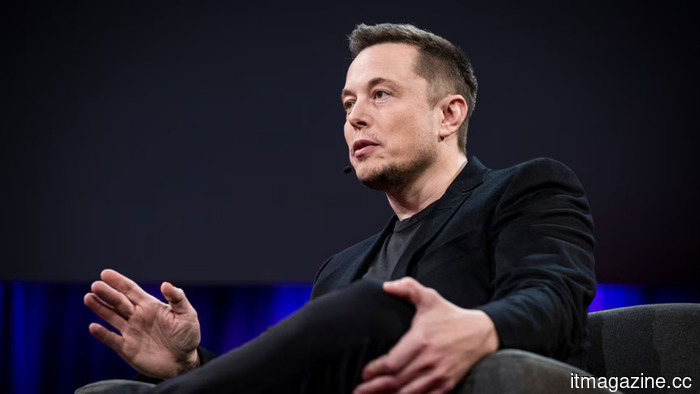
Musk refers to himself as 'a fool' during his testimony for financing OpenAI.
On the tense third day of Musk v. Altman, OpenAI’s lead attorney, William Savitt, utilized Musk’s own emails, pledge discrepancies, and texts from Shivon Zilis to argue that the lawsuit is merely a competitive grievance disguised as a philanthropic concern.
Elon Musk referred to himself as “a fool” for financing OpenAI, accused its leadership of “looting the nonprofit,” and engaged in a confrontational cross-examination with the company's lawyer during the Oakland federal court proceedings on Wednesday.
This third day of the four-week trial was marked by heightened conflict, as Savitt systematically aimed to leverage Musk’s donations, emails, and personal connections against his argument of charitable intent. Musk stated, “I gave them $38 million of essentially free funding, which they then used to create an $800 billion for-profit company. I actually was a fool who created free funding for them to create a startup. I literally was.”
This assertion was notable: Musk’s own narrative portrayed him as a misled donor rather than an unsuccessful corporate maneuverer, and labeling himself as a fool reinforces this image for the jury. However, Savitt quickly exploited the disparity between Musk's actual donations of $38 million and the “up to $1 billion” he had pledged at OpenAI's inception.
“Without me, OpenAI wouldn’t exist!” Musk retorted, raising his voice as Savitt pressed him on the funding shortfall. Musk contended that his contributions went beyond monetary donations, insisting that his reputation, contacts, and credibility held value, and claimed his overall contribution surpassed $100 million in intangible terms.
Judge Yvonne Gonzalez Rogers intervened at one point, noting that Savitt was finding it “difficult” to obtain straightforward answers from Musk. The judge responded, “That is the challenge of all litigants.”
The Zilis texts provided a second narrative in the courtroom. The most damaging evidence Savitt introduced came from Musk’s personal communications with Shivon Zilis, a venture capitalist who was then on OpenAI’s board and also the mother of four of Musk’s children.
Savitt presented a 2018 email in which Zilis inquired if she should stay connected to OpenAI to “keep feeding him information on the company.” Musk confirmed he agreed with this approach. He also acknowledged that Zilis helped maintain communication between him and OpenAI after his departure from the board.
Savitt’s second exhibit featuring Zilis was more structurally significant: an email sent by Zilis to Sam Teller, an employee of Musk, detailing two options for restructuring OpenAI: “Roll everything into a B corp,” or “OpenAI C Corp and OpenAI nonprofit.” Savitt's argument was clear: Musk was presented with for-profit restructuring options and contemplated them.
When asked if he ever directed Zilis to submit paperwork to transition OpenAI into a for-profit corporation, Musk replied, “I don’t recall.” Savitt then posed his most pointed question of the day: “You were never really committed to OpenAI being a nonprofit, were you, Mr. Musk?” Musk challenged that premise. Yet, the jury is now presented with two conflicting narratives: a donor claiming he was misled about nonprofit status and a co-founder who was deliberating over for-profit conversions in internal discussions.
During questioning from his attorney on redirect, Musk discussed the series of events that shifted him from skepticism to litigation. He stated that it was Microsoft’s $10 billion investment, rather than the initial for-profit structure, that he viewed as the critical breach.
“At a $10 billion scale, there’s no way Microsoft is just giving that as a donation or any kind of charitable way,” he explained. Musk recounted texting Sam Altman, saying, “What the hell is going on?... I think I said, ‘This is a bait and switch.’”
Musk also reiterated the safety concerns he has emphasized since filing the lawsuit in 2024. When asked if a for-profit AI company poses a safety risk, he affirmed, “Yes, I think it creates a safety risk.” Savitt countered that Musk couldn’t truly know OpenAI’s safety protocols from an external perspective, stating, “You just don’t know.” Musk conceded he lacked specific knowledge about OpenAI’s internal safety efforts but maintained that the for-profit structure itself was problematic, saying, “It does worry me that a nonprofit suddenly is a for-profit with unlimited profit.”
Savitt pressed Musk on xAI directly, asking whether Grok “lags much farther behind” ChatGPT. Musk acknowledged that xAI, now integrated into SpaceX, has a “very small market share” and is “much smaller” than OpenAI at present, while asserting that xAI is only “technically” a competitor.
The implication was clear: a man creating a direct AI rival to OpenAI is using the legal system to hinder it, cloaked in the language of altruism.
What’s
Other articles
 Blue Owl has multiplied its investment in SpaceX by 10 times and has already divested half of its stake.
The co-CEO of Blue Owl Capital revealed a return of around 10 times on SpaceX, having sold half of the stake at a valuation of $1.25 trillion.
Blue Owl has multiplied its investment in SpaceX by 10 times and has already divested half of its stake.
The co-CEO of Blue Owl Capital revealed a return of around 10 times on SpaceX, having sold half of the stake at a valuation of $1.25 trillion.
 The Moto G87 offers a large camera, an impressive display, and a durable phone option at an affordable price.
Motorola's Moto G87 is introducing a large-phone feel in the budget category, featuring a 200MP camera, a 5000-nit AMOLED display, durable IP69 rating, and Android 16, all for 399 euros.
The Moto G87 offers a large camera, an impressive display, and a durable phone option at an affordable price.
Motorola's Moto G87 is introducing a large-phone feel in the budget category, featuring a 200MP camera, a 5000-nit AMOLED display, durable IP69 rating, and Android 16, all for 399 euros.
 The Moto G87 features a large camera, a vibrant display, and is one of the few durable phones available at an affordable price.
The Motorola Moto G87 is delivering big-phone features in the budget category, featuring a 200MP camera, a 5000-nit AMOLED display, robust IP69 protection, and Android 16, all for 399 euros.
The Moto G87 features a large camera, a vibrant display, and is one of the few durable phones available at an affordable price.
The Motorola Moto G87 is delivering big-phone features in the budget category, featuring a 200MP camera, a 5000-nit AMOLED display, robust IP69 protection, and Android 16, all for 399 euros.
 What to buy for the mom who claims she doesn't want anything.
This post is presented to you as a paid collaboration with SKG. Finding a thoughtful Mother's Day gift is more challenging than it appears, and many typical choices tend to lose their significance after the occasion ends. The SKG G7 Pro Fold 3.0 neck massager and the SKG W9 Ultra 2.0 lower back massager are designed for everyday use, […]
What to buy for the mom who claims she doesn't want anything.
This post is presented to you as a paid collaboration with SKG. Finding a thoughtful Mother's Day gift is more challenging than it appears, and many typical choices tend to lose their significance after the occasion ends. The SKG G7 Pro Fold 3.0 neck massager and the SKG W9 Ultra 2.0 lower back massager are designed for everyday use, […]
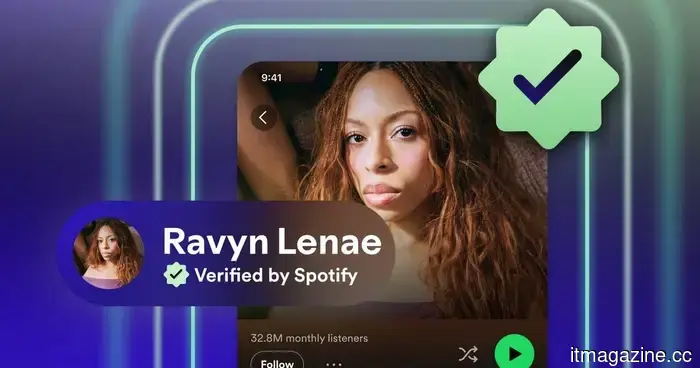 Spotify introduces verified artist badges to ensure that listeners can confirm they are enjoying music from a real person rather than an AI.
Spotify is introducing a new Verified badge along with artist activity insights to help you determine if there's an actual person behind the music you enjoy.
Spotify introduces verified artist badges to ensure that listeners can confirm they are enjoying music from a real person rather than an AI.
Spotify is introducing a new Verified badge along with artist activity insights to help you determine if there's an actual person behind the music you enjoy.
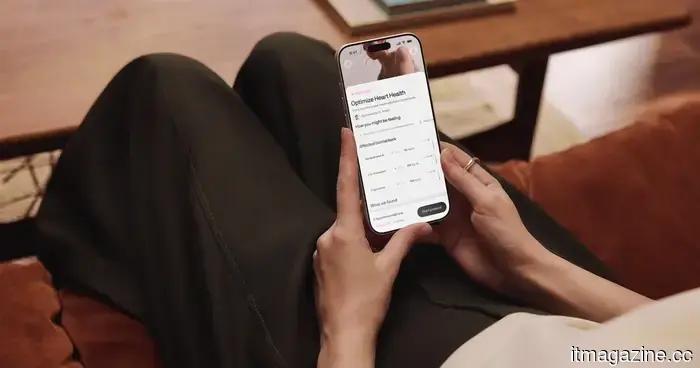 Superpower and the Emergence of Preventive Health: Why the Future of Medicine Is Proactive Instead of Reactive
For many years, healthcare has primarily operated on a straightforward principle: you seek assistance when something is amiss. Symptoms arise, you consult with a doctor, undergo tests, and then address the problem. However, this traditional model is facing challenges from a new wave of companies – platforms that strive to […]
Superpower and the Emergence of Preventive Health: Why the Future of Medicine Is Proactive Instead of Reactive
For many years, healthcare has primarily operated on a straightforward principle: you seek assistance when something is amiss. Symptoms arise, you consult with a doctor, undergo tests, and then address the problem. However, this traditional model is facing challenges from a new wave of companies – platforms that strive to […]
Musk refers to himself as 'a fool' during his testimony for financing OpenAI.
Elon Musk referred to himself as 'a fool' while on the stand and had a heated exchange with OpenAI’s lawyer during a tense cross-examination on the third day of Musk v. Altman.