
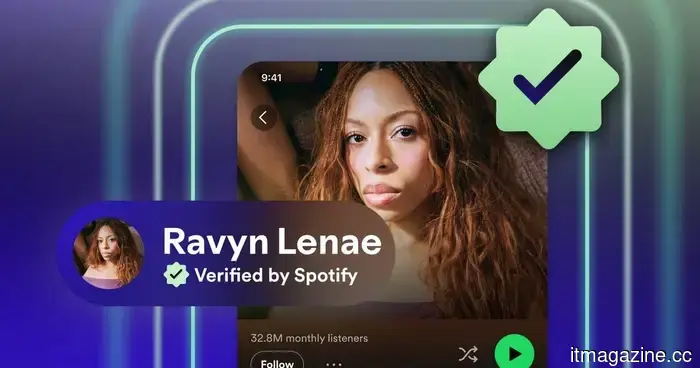
Spotify introduces verified artist badges to ensure that listeners can confirm they are enjoying music from a real person rather than an AI.
Spotify has made it simpler to distinguish between genuine artists and AI-generated music.
In the era of artificial intelligence, it has become increasingly challenging to determine if the music you enjoy is produced by real humans or generated by algorithms. Earlier reports indicated that Spotify had no intention of labeling AI-generated music.
However, it appears that the company has shifted its stance on this issue. The platform is introducing a new "Verified by Spotify" badge, along with more information about artist activity, to provide users with greater context about the artists they listen to and discover.
What does the verified badge signify?
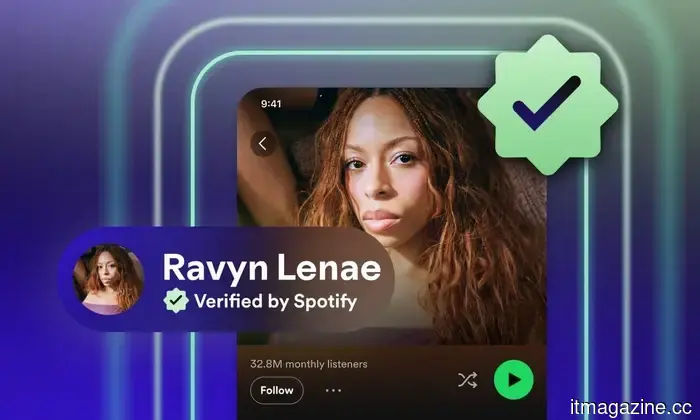
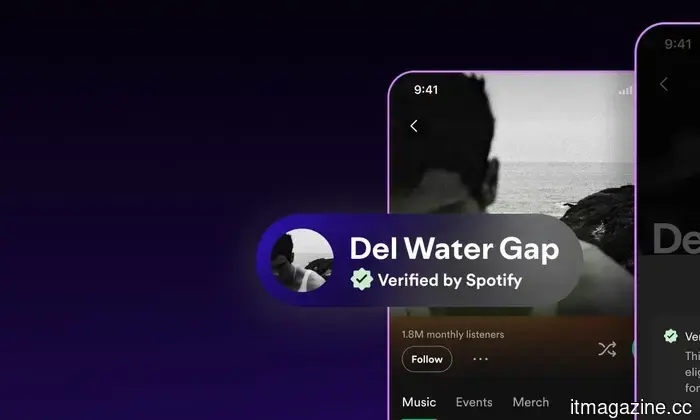
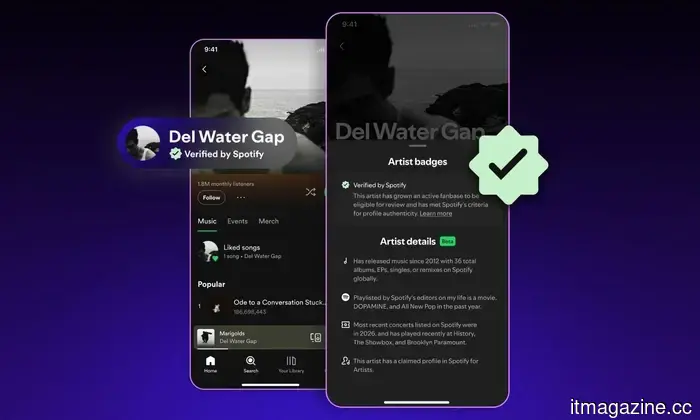
The badge features a light green checkmark with the text "Verified by Spotify." It will begin to appear on artist profiles and next to their names in search results in the coming weeks.
To qualify for the badge, an artist must have consistent listener engagement over time, adhere to Spotify's platform policies, and maintain a real, identifiable presence, such as concert dates, merchandise, and linked social media accounts. Currently, AI-generated artists and personas that inundate the streaming service are not eligible for verification.
Spotify states that at launch, over 99% of artists that listeners actively search for will be verified.
What other changes are taking place?
In addition to the badge, Spotify is adding a new section to all artist profiles, regardless of their verified status. This section will showcase career milestones, release activity, and touring history, providing listeners with a more comprehensive view of the artist beyond their music.
Spotify acknowledges that the system is not flawless from the outset. The company will continue to improve the verification process over time. However, this represents a significant step toward allowing users to connect with the human artistry behind their favorite music.
Recently, Apple Music also introduced a “Transparency Tags” feature designed to help identify AI-generated music. Nonetheless, I favor Spotify's approach, as verifying human artists is considerably easier than flagging AI music.
Your Google TV experience is about to become more chaotic with a dedicated YouTube Shorts feed.
Google is making a move to dominate your living room's home screen, betting that the vertical video habit you've developed on your phone will transition to the largest screen in your house.
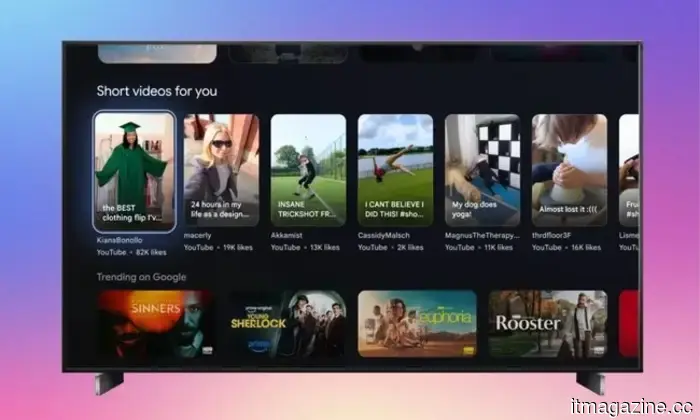
Google’s vision for your television now incorporates short-form vertical video. Earlier today, the company announced a series of updates for Google TV, highlighted by a dedicated “Short videos for you” row debuting on the home screen this summer. The new feature will be directly accessible on the Google TV home screen, presenting a personalized feed of YouTube Shorts based on your viewing history; no app launch is necessary.
DJI Mic Mini 2 allows you to coordinate your mic's color with your outfit.
The Mic Mini 2 is designed to look good while delivering high-quality sound.
Many streamers and YouTubers use small microphones attached to their clothing for improved audio, but a black microphone often appears mismatched with colorful outfits. DJI aims to resolve this with its Mic Mini 2. Following the recent launch of the Osmo Pocket 4, the company has introduced the Mic Mini 2 as a successor to the original model that debuted in November 2024. The standout feature? You can now customize your microphone’s appearance with interchangeable magnetic covers.
YouTube TV's custom multiview lets you combine the NFL Sunday Ticket with any channel.
YouTube TV's Custom Multiview isn't merely an enhancement; it's a pivotal moment where the service stops dictating your simultaneous viewing and begins asking what you truly want to see.
YouTube TV’s multiview feature has always been a great concept, but it was previously limited by one frustrating restriction: Google decided what you could watch, rather than you. That is now changing. On April 28, 2026, YouTube CEO Neal Mohan announced the full rollout of the custom multiview function for YouTube TV, allowing subscribers complete control to curate their own multi-screen viewing experience from any live channel.



Other articles
 Finance ministers from the Eurozone will meet to discuss Anthropic's Mythos AI, as no EU government currently has access, and the White House is preventing its expansion.
EU finance ministers are set to discuss Mythos on Monday. No European government has access to the model. The Bundesbank asserts that the EU should request it. However, the White House disagrees.
Finance ministers from the Eurozone will meet to discuss Anthropic's Mythos AI, as no EU government currently has access, and the White House is preventing its expansion.
EU finance ministers are set to discuss Mythos on Monday. No European government has access to the model. The Bundesbank asserts that the EU should request it. However, the White House disagrees.
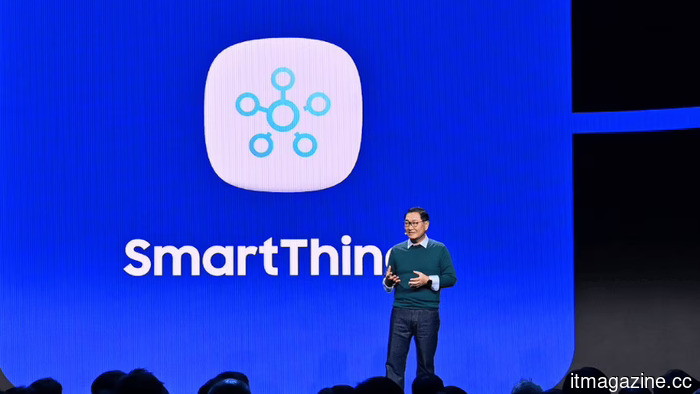 The wealth of Samsung's Lee family has surged to $45.5 billion due to the AI chip boom, while 30,000 employees are calling for a share of the profits and are threatening to strike.
Samsung's Lee dynasty saw its wealth increase to $45.5 billion within a year, fueled by demand for AI memory chips. Profits in Q1 surged eightfold. Currently, 30,000 employees are threatening to strike for a share of the profits.
The wealth of Samsung's Lee family has surged to $45.5 billion due to the AI chip boom, while 30,000 employees are calling for a share of the profits and are threatening to strike.
Samsung's Lee dynasty saw its wealth increase to $45.5 billion within a year, fueled by demand for AI memory chips. Profits in Q1 surged eightfold. Currently, 30,000 employees are threatening to strike for a share of the profits.
 The integration of AI requires accountability, in addition to innovation.
With the rapid adoption of AI, it is essential for leaders to emphasize accountability, ethics, and oversight. This is why integrity is crucial for successful AI integration.
The integration of AI requires accountability, in addition to innovation.
With the rapid adoption of AI, it is essential for leaders to emphasize accountability, ethics, and oversight. This is why integrity is crucial for successful AI integration.
 A Sony patent suggests a gaming system that modifies its difficulty level depending on the player's performance.
A recently revealed Sony patent describes an AI system that has the capability to observe player emotions and adjust the game's difficulty in real-time accordingly.
A Sony patent suggests a gaming system that modifies its difficulty level depending on the player's performance.
A recently revealed Sony patent describes an AI system that has the capability to observe player emotions and adjust the game's difficulty in real-time accordingly.
 Blue Owl has multiplied its investment in SpaceX by 10 times and has already divested half of its stake.
The co-CEO of Blue Owl Capital revealed a return of around 10 times on SpaceX, having sold half of the stake at a valuation of $1.25 trillion.
Blue Owl has multiplied its investment in SpaceX by 10 times and has already divested half of its stake.
The co-CEO of Blue Owl Capital revealed a return of around 10 times on SpaceX, having sold half of the stake at a valuation of $1.25 trillion.
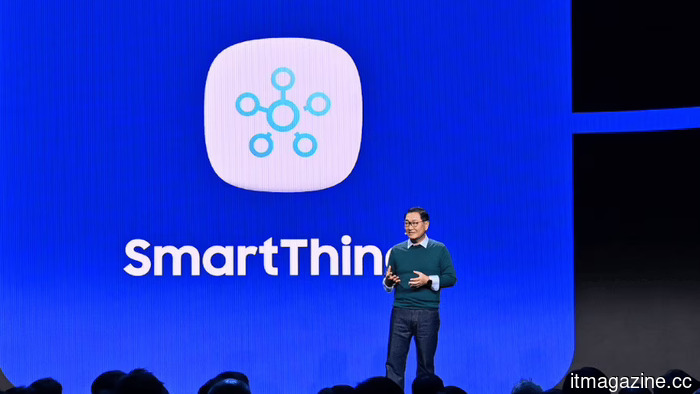 The wealth of Samsung's Lee family has increased to $45.5 billion due to the AI chip surge, as 30,000 employees call for a share of the profits and threaten to strike.
The Lee dynasty of Samsung increased its wealth to $45.5 billion in a year due to the demand for AI memory chips. Profits for the first quarter surged eightfold. Currently, 30,000 workers are threatening to go on strike for a share of the earnings.
The wealth of Samsung's Lee family has increased to $45.5 billion due to the AI chip surge, as 30,000 employees call for a share of the profits and threaten to strike.
The Lee dynasty of Samsung increased its wealth to $45.5 billion in a year due to the demand for AI memory chips. Profits for the first quarter surged eightfold. Currently, 30,000 workers are threatening to go on strike for a share of the earnings.
Spotify introduces verified artist badges to ensure that listeners can confirm they are enjoying music from a real person rather than an AI.
Spotify is introducing a new Verified badge along with artist activity insights to help you determine if there's an actual person behind the music you enjoy.