
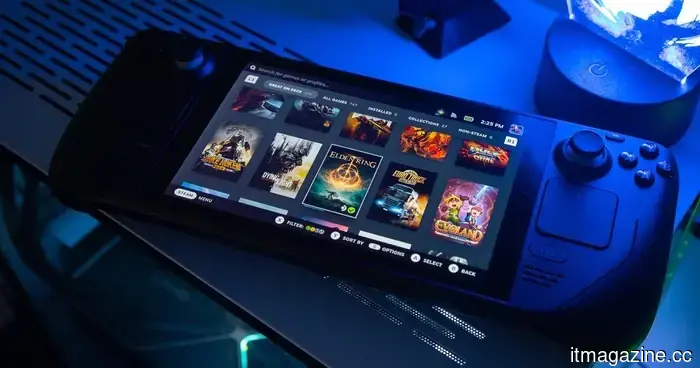
Steam Deck 2 wish list: features I desire in the next-generation model.
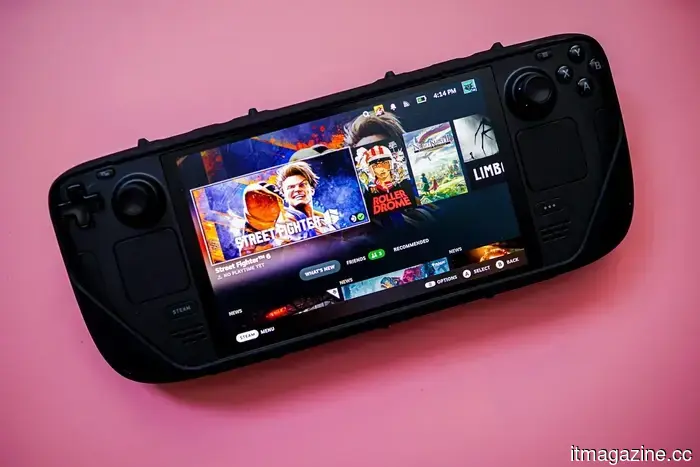
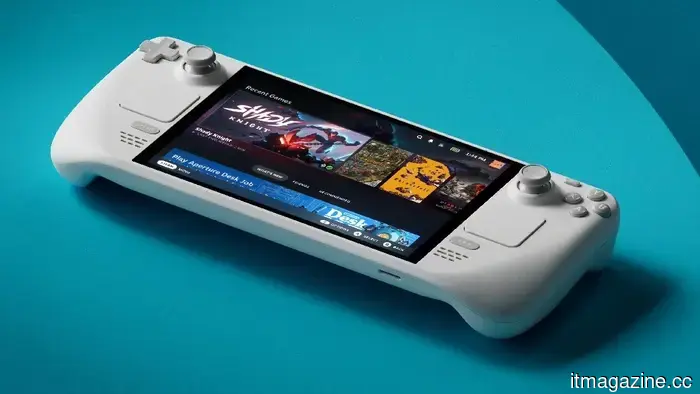
Valve has already accomplished the challenging part with the Steam Deck. It demonstrated that a handheld gaming PC can deliver a console-like experience while remaining practical and enjoyable. With the release of the Steam Deck OLED, the company refined this concept by enhancing the screen, increasing the battery size, and incorporating several smart enhancements.
Therefore, the Steam Deck 2 doesn't need to pursue a radically new identity. The current Steam Deck has its imperfections, but it doesn’t need to engage in a meaningless specifications battle. What I truly desire is a combination of quality-of-life enhancements and hardware improvements that meaningfully enhance the overall experience.
Provide a better screen that prioritizes efficiency
The Steam Deck OLED features a beautiful display. Valve’s choice to adopt OLED technology, a smoother 90Hz refresh rate, and a larger 7.4-inch screen was a refreshing upgrade, and I absolutely want OLED to be included in the Steam Deck 2 as well. However, it is puzzling that Valve omitted a feature that would significantly improve a handheld: built-in VRR (Variable Refresh Rate). This absence is notable since VRR can enhance the smoothness of games without forcing the system to adhere to strict frame rate targets, which can also lead to better battery performance. Interestingly, while the Steam Deck OLED supports VRR on some external displays via USB-C, it does not have this capability on its own screen. Equipping the Steam Deck 2 with a smoother 120Hz OLED panel and VRR would level the playing field with competitors.
Battery life and charging require larger improvements
Battery life remains the primary quality-of-life challenge for handheld PCs. Valve made notable strides with the OLED version due to its larger 50Wh battery and improved efficiency. However, it wasn't long before reviews highlighted that more demanding titles can still deplete the Deck OLED's battery quickly.
A larger battery would have a significant impact. The ASUS ROG Ally X is a good reference point, featuring a substantial 80Wh battery. Therefore, a battery in the 70Wh range for a Steam Deck 2 would greatly enhance the system's portability without frequent reliance on a charger.
Charging also needs attention. Valve provides the Steam Deck with a 45W power supply, and while the 20% to 80% charging stats appear reasonable, a complete charge still takes longer than I would prefer. Sleep functionality requires improvement as well. Battery drain during sleep has been a prominent discussion topic within the community regarding current models. A quick wake-up feature is only beneficial if the device isn't quietly using battery power while resting in a bag or on a table.
Replaceable Battery?
This request may be ambitious, but a replaceable battery on the Steam Deck 2 would be remarkable. To be fair, Valve has already made the OLED model easier to repair than the original, incorporating Torx screws and providing better internal access. With the EU pushing for regulations requiring removable and replaceable batteries in portable electronics, there’s a slight possibility that handhelds could eventually benefit from this shift.
Greater emphasis on controls and core hardware
To ensure the Steam Deck 2 feels future-proof, I have a few ambitious requests.
Firstly, it should have two USB-C ports, as having just one seems too restricting for a handheld PC that requires the same port for charging. One of these could even support Thunderbolt. This isn’t merely a personal wish—users on the Steam Deck subreddit have expressed a desire for an additional port for some time. We also need more memory capacity. 16GB now feels like a bare minimum rather than a comfortable target.
On the controls front, I hope Valve seriously considers TMR joystick sensors instead of relying on the traditional Hall Effect sensors. TMR technology is gaining traction since it offers the same "drift-resistant magnetic stick" appeal while consuming significantly less power. The company has already experimented with this technology in its new Steam Controller, which features dual TMR magnetic thumbsticks. Thus, this is more than just a technical improvement; it aligns with Valve’s vision of a “generational leap” in technology.
New Steam Controller Valve
The Steam Deck 2 doesn’t need to be flashy
Valve doesn't have to create the fastest or most efficient handheld on the market. It simply needs the Steam Deck 2 to capitalize on the strengths that made the original successful, while further refining the experience.
Even if the company doesn’t implement all of the enhancements discussed above, I still have confidence that Valve will get the formula correct. The company has never been most captivating when it tries to follow trends; it has stood out precisely because it is willing to embrace a good idea, continue experimenting (as seen with the original Steam Machine), and enhance it without getting sidetracked by the rest of the industry.
As one of my favorite YouTubers, DJ Peach Cobbler, aptly stated: “Valve is not a massively successful company in spite of their failures, they are massively successful because they’re willing to fail.”

Other articles
 You can now utilize Google Translate to enhance your pronunciation with immediate AI feedback.
Google Translate is reaching its 20th anniversary and is celebrating by introducing an AI pronunciation coach that listens to your speech and indicates precisely where you are making errors.
You can now utilize Google Translate to enhance your pronunciation with immediate AI feedback.
Google Translate is reaching its 20th anniversary and is celebrating by introducing an AI pronunciation coach that listens to your speech and indicates precisely where you are making errors.
 The top headphone offers of 2026: substantial discounts on earbuds, studio headphones, and high-fidelity equipment.
Whether you're looking for true wireless earbuds for your daily commute or a pair of high-end headphones meant to last for years, this is an exceptionally good time to make a purchase. We're currently tracking discounts reaching up to 50% on some of the top-rated headphones available, including brands like Beats, Apple, Sennheiser, and HIFIMAN. [...]
The top headphone offers of 2026: substantial discounts on earbuds, studio headphones, and high-fidelity equipment.
Whether you're looking for true wireless earbuds for your daily commute or a pair of high-end headphones meant to last for years, this is an exceptionally good time to make a purchase. We're currently tracking discounts reaching up to 50% on some of the top-rated headphones available, including brands like Beats, Apple, Sennheiser, and HIFIMAN. [...]
 This small brain implant has the potential to alleviate depression from home.
Motif Neurotech has recently received FDA approval to test a small brain implant aimed at treating depression, and the entire procedure can be completed in just 20 minutes.
This small brain implant has the potential to alleviate depression from home.
Motif Neurotech has recently received FDA approval to test a small brain implant aimed at treating depression, and the entire procedure can be completed in just 20 minutes.
 You can now utilize Google Translate to improve your pronunciation with instant AI feedback.
Google Translate is marking its 20th anniversary by introducing an AI pronunciation coach that listens to your speech and identifies your mistakes accurately.
Munich-based mbiomics secures €30 million to advance the development of a live bacterial product.
Mbiomics has successfully completed a €30 million Series A funding round to further develop MBX-116, a live bacterial product aimed at enhancing the response to immune checkpoint inhibitors in patients with advanced melanoma.
You can now utilize Google Translate to improve your pronunciation with instant AI feedback.
Google Translate is marking its 20th anniversary by introducing an AI pronunciation coach that listens to your speech and identifies your mistakes accurately.
Munich-based mbiomics secures €30 million to advance the development of a live bacterial product.
Mbiomics has successfully completed a €30 million Series A funding round to further develop MBX-116, a live bacterial product aimed at enhancing the response to immune checkpoint inhibitors in patients with advanced melanoma.
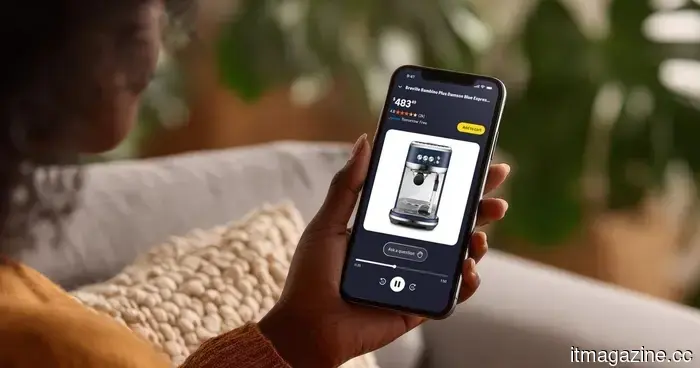 Amazon now allows you to engage in a genuine conversation with AI while browsing for products.
Shopping on Amazon has become significantly more interactive. The company has introduced "Join the chat," a new feature within its existing "Hear the highlights" experience. For those unfamiliar with "Hear the highlights," it is an AI-driven audio summary tool available on millions of product pages throughout the Amazon Shopping platform.
Amazon now allows you to engage in a genuine conversation with AI while browsing for products.
Shopping on Amazon has become significantly more interactive. The company has introduced "Join the chat," a new feature within its existing "Hear the highlights" experience. For those unfamiliar with "Hear the highlights," it is an AI-driven audio summary tool available on millions of product pages throughout the Amazon Shopping platform.
Steam Deck 2 wish list: features I desire in the next-generation model.
Valve already possesses the top handheld foundation available, so the upcoming Steam Deck 2 only requires more intelligent enhancements where it counts the most.