
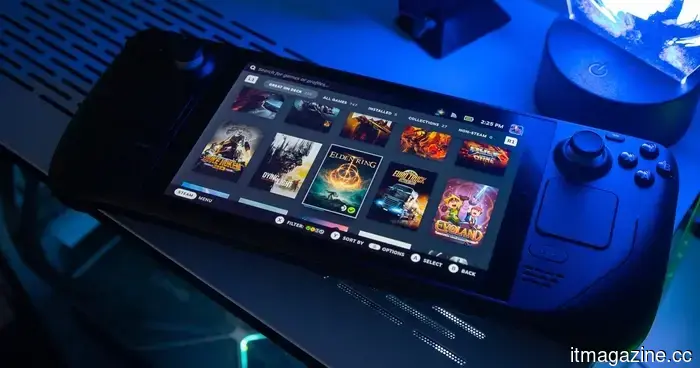
Steam Deck 2 wish list: features I'd like to see in the next generation model.
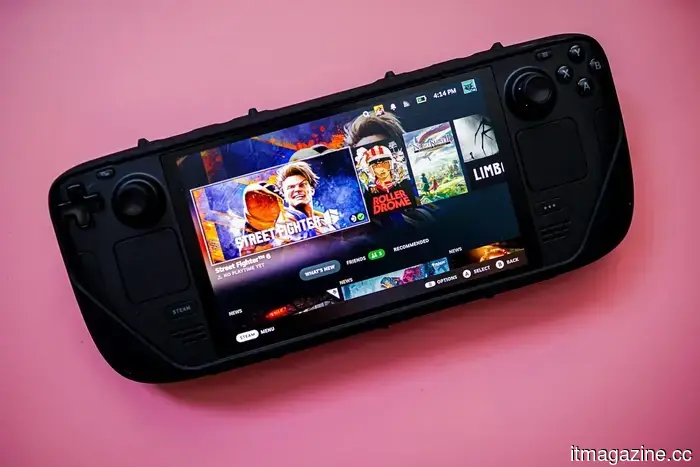
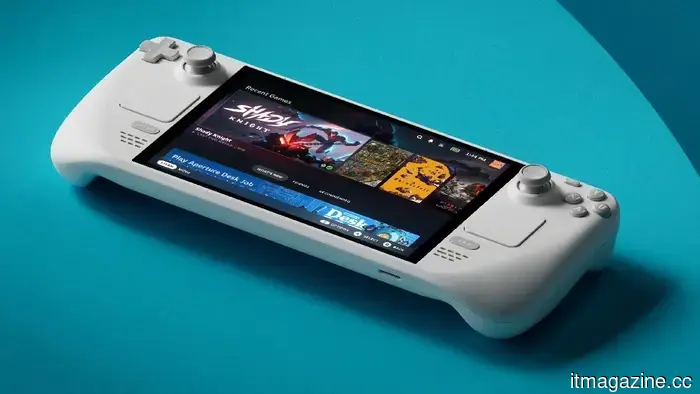
Valve has already tackled the challenging aspects with the Steam Deck. It demonstrated that a handheld gaming PC can deliver a console-like experience while remaining practical and enjoyable. With the Steam Deck OLED, the company further enhanced this concept with an improved screen, a larger battery, and several clever upgrades.
Thus, the Steam Deck 2 doesn’t need to pursue an overly ambitious new direction. While the current Steam Deck isn't perfect, it doesn’t have to engage in a meaningless specifications battle. What I genuinely desire is a blend of quality-of-life enhancements and hardware improvements that enhance the overall experience in significant ways.
Provide a superior screen that also prioritizes efficiency.
The Steam Deck OLED already features a stunning display. Valve’s choice to adopt OLED technology, a smoother 90Hz refresh rate, and a bigger 7.4-inch screen resulted in a very refreshing upgrade, and I would certainly like to see OLED included in the Steam Deck 2 as well. However, it’s puzzling that Valve didn’t incorporate one crucial feature that could greatly enhance a handheld: built-in VRR (Variable Refresh Rate). This omission is particularly noteworthy since VRR can be quite beneficial for portable devices like this.
It could help games run smoother without requiring the system to target fixed frame rates, which can also improve battery performance. Interestingly, the Steam Deck OLED does support VRR on specific external displays via USB-C, but not on its own screen. If the Steam Deck 2 features a faster 120Hz OLED display with VRR, it would be competitive with its rivals.
Improvements to battery life and charging are essential.
Battery life remains the primary area of improvement for handheld PCs. Valve made significant strides with the OLED version, thanks to its larger 50Wh battery and enhanced efficiency. Nonetheless, reviews quickly noted that demanding titles can still drain the Deck OLED fairly rapidly.
A larger battery would significantly impact usability. The ASUS ROG Ally X serves as a good benchmark with its substantial 80Wh battery. Thus, even a capacity around 70Wh for the Steam Deck 2 would greatly help in reducing the need to be constantly connected to a charger.
Charging needs to be improved as well. Valve provides the Steam Deck with a 45W power supply, and while the 20% to 80% charging times seem reasonable on paper, achieving a full charge still takes longer than I would prefer. The sleep function also requires attention. Battery drain during sleep has been a widely discussed concern among users of the current models. A quick wake-up feature is not helpful if the device is quietly depleting its battery while it rests in a bag or on a surface.
Could a replaceable battery be a possibility?
This may be an ambitious request, but a replaceable battery on the Steam Deck 2 would be exceptional. To be fair, Valve has already made the OLED model easier to repair compared to the original, with Torx screws and improved internal accessibility. With the European Union intensifying efforts for removable and replaceable battery regulations for portable electronics, there exists a minimal chance that handhelds could ultimately benefit from this trend as well.
Increased emphasis on controls and core hardware.
To ensure the Steam Deck 2 feels future-proof, I have a few additional requests.
First, it should feature two USB-C ports because having just one feels too restrictive for a handheld PC that also requires the same port for charging. One of those could potentially support Thunderbolt. This isn't an isolated wishlist item; users on the Steam Deck subreddit have been advocating for an additional port for some time. More memory capacity is also necessary. 16GB now seems like a minimum requirement rather than a comfortable amount.
On the controls front, I hope Valve will seriously consider TMR joystick sensors instead of sticking with the traditional Hall Effect technology. TMR is gaining traction for its ability to provide the same "drift-resistant magnetic stick" benefits while consuming significantly less power. The company has already experimented with this in its new Steam Controller, which incorporates dual TMR magnetic thumbsticks. Thus, this upgrade is more than just a technical enhancement; it aligns with Valve’s vision of achieving a "generational leap" in technology.
Steam Deck 2 doesn’t need to be extravagant.
Valve doesn't need to create the fastest or most efficient handheld on the market. It simply needs the Steam Deck 2 to build on the strengths that made the original successful and refine the experience further.
Even if the company doesn’t implement all of the aforementioned upgrades, I still have confidence in Valve to get it right. The company has never been most compelling when it attempts to conform to industry trends; rather, it stands out because it embraces good ideas, continues to innovate (as seen with the original Steam Machine), and enhances them without being sidetracked by the rest of the market.
As one of my favorite YouTubers, DJ Peach Cobbler, expressed: "Valve is not a massively successful company in spite of their failures, they are massively successful

Other articles
 Steam Deck 2 wish list: features I desire in the next-generation model.
Valve already possesses the top handheld foundation available, so the upcoming Steam Deck 2 only requires more intelligent enhancements where it counts the most.
Steam Deck 2 wish list: features I desire in the next-generation model.
Valve already possesses the top handheld foundation available, so the upcoming Steam Deck 2 only requires more intelligent enhancements where it counts the most.
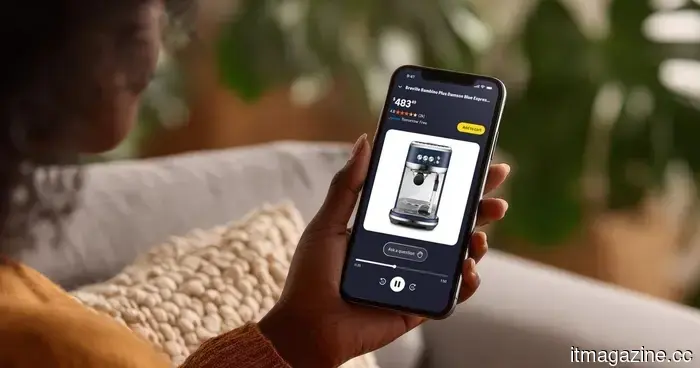 Amazon now allows you to engage in a genuine conversation with AI while browsing for products.
Shopping on Amazon has become significantly more interactive. The company has introduced "Join the chat," a new feature within its existing "Hear the highlights" experience. For those unfamiliar with "Hear the highlights," it is an AI-driven audio summary tool available on millions of product pages throughout the Amazon Shopping platform.
Amazon now allows you to engage in a genuine conversation with AI while browsing for products.
Shopping on Amazon has become significantly more interactive. The company has introduced "Join the chat," a new feature within its existing "Hear the highlights" experience. For those unfamiliar with "Hear the highlights," it is an AI-driven audio summary tool available on millions of product pages throughout the Amazon Shopping platform.
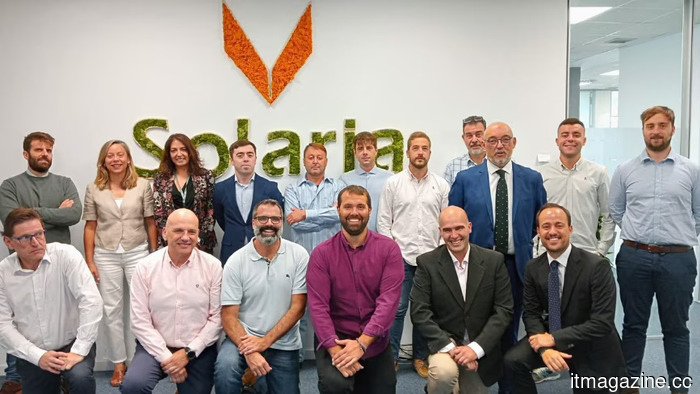 Solaria secures €300 million to transform solar farms into AI infrastructure.
Solaria secures €300 million in a placement that was oversubscribed by 6.7 times to expand its Powered Land data centre platform and BESS hybrid initiative throughout Europe.
Solaria secures €300 million to transform solar farms into AI infrastructure.
Solaria secures €300 million in a placement that was oversubscribed by 6.7 times to expand its Powered Land data centre platform and BESS hybrid initiative throughout Europe.
 Netflix has renewed Stranger Things: Tales From ’85 for a second season, even though it has received the lowest ratings in the franchise's history.
Despite mixed reviews, Netflix has renewed Stranger Things: Tales From '85 for a second season. The animated spin-off has received the lowest ratings for the franchise on both Rotten Tomatoes and IMDB.
Munich-based mbiomics secures €30 million to advance the development of a live bacterial product.
Mbiomics has successfully completed a €30 million Series A funding round to further develop MBX-116, a live bacterial product aimed at enhancing the response to immune checkpoint inhibitors in patients with advanced melanoma.
Netflix has renewed Stranger Things: Tales From ’85 for a second season, even though it has received the lowest ratings in the franchise's history.
Despite mixed reviews, Netflix has renewed Stranger Things: Tales From '85 for a second season. The animated spin-off has received the lowest ratings for the franchise on both Rotten Tomatoes and IMDB.
Munich-based mbiomics secures €30 million to advance the development of a live bacterial product.
Mbiomics has successfully completed a €30 million Series A funding round to further develop MBX-116, a live bacterial product aimed at enhancing the response to immune checkpoint inhibitors in patients with advanced melanoma.
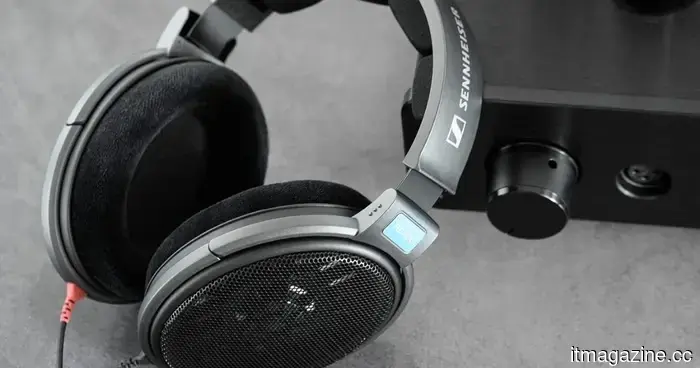 The top headphone offers of 2026: significant discounts on earbuds, studio headphones, and high-end audio equipment.
Whether you’re looking for true wireless earbuds for your daily commute or a high-quality set of headphones designed to last for years, now is an excellent time to make a purchase. We’re observing discounts of up to 50% on some of the top-rated headphones available, including brands like Beats, Apple, Sennheiser, and HIFIMAN. […]
The top headphone offers of 2026: significant discounts on earbuds, studio headphones, and high-end audio equipment.
Whether you’re looking for true wireless earbuds for your daily commute or a high-quality set of headphones designed to last for years, now is an excellent time to make a purchase. We’re observing discounts of up to 50% on some of the top-rated headphones available, including brands like Beats, Apple, Sennheiser, and HIFIMAN. […]
Steam Deck 2 wish list: features I'd like to see in the next generation model.
Valve already possesses the top handheld foundation available, so the upcoming Steam Deck 2 requires only intelligent enhancements in the most crucial areas.