
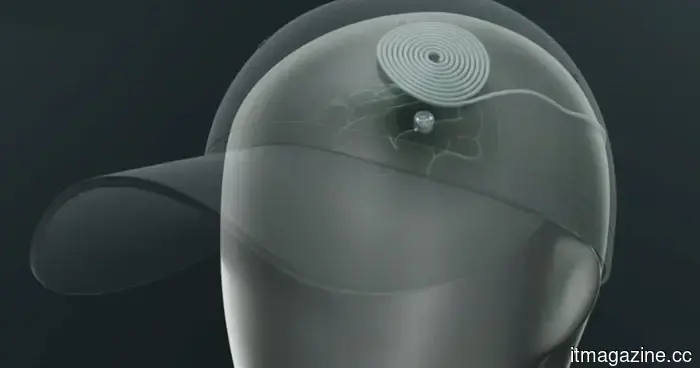
This small brain implant has the potential to alleviate depression from home.
A small brain implant combined with a baseball cap could represent the future of depression treatment.
Approximately 3 million Americans experience treatment-resistant depression, meaning standard antidepressants are ineffective for them. Motif Neurotech aims to address this with a tiny brain implant, which has recently received FDA approval for human trials.
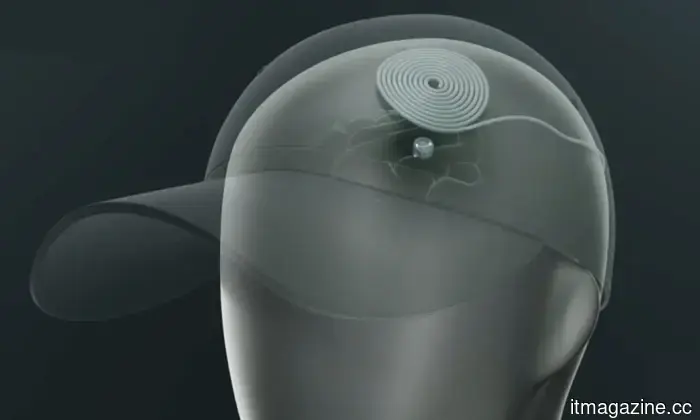
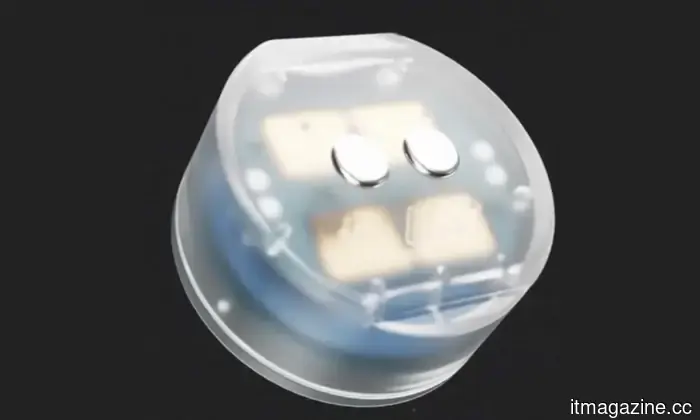
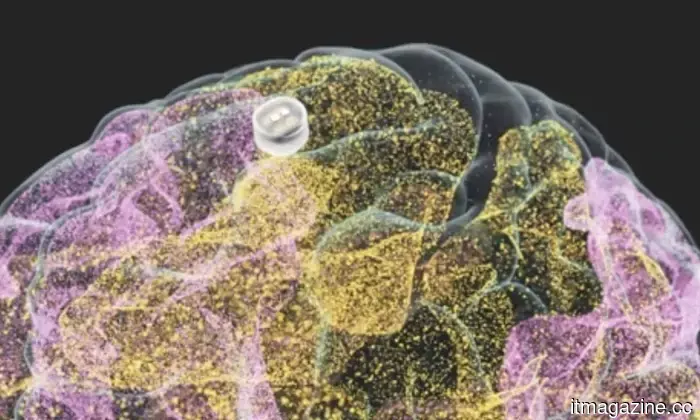
According to Wired, the Houston-based startup has created a small device that is placed in the skull, just above the brain's protective membrane. It targets the area of the brain responsible for higher-level thinking, which often becomes inactive in individuals with major depressive disorder. The implant sends precise electrical pulses to reactivate this network.
The most advantageous aspect? The entire procedure only takes 20 minutes and does not necessitate conventional brain surgery.
So, how does this actually function?
Once inserted, the device operates wirelessly. Patients can charge and manage it using a baseball cap that transmits stimulation data directly to the implant. By wearing the cap for 10 to 20 minutes multiple times daily, patients undergo treatment.
Jacob Robinson, co-founder and CEO of Motif, states that patients may begin to notice results within the first 10 days. After this initial period, the cap transforms into a maintenance tool, rather than requiring daily usage.
Is brain electrical stimulation a new concept?
Not really. Electroconvulsive therapy has existed since the 1930s, and transcranial magnetic stimulation has been FDA-approved since 2008. However, existing treatments tend to be either excessively intense or require significant time commitments, often involving multiple weekly sessions at a clinic for a span of six weeks.
The current trial plans to enroll approximately 10 participants and will last for 12 months, mainly to assess the implant's safety. Researchers will also monitor changes in depression symptoms, anxiety, and overall quality of life throughout the duration.
Future iterations of the device are anticipated to track brain activity over time, paving the way for truly personalized treatment. I hope the company achieves success in its endeavors and heralds a new chapter in depression treatment.
Rachit is an experienced tech journalist with over seven years of expertise in covering consumer technology.
Spotify seemingly lacks a clear strategy for labeling AI-generated music.
A quiet unease is spreading within the music streaming world, and Spotify, the platform trusted by over half a billion people to provide their soundtracks, is doing surprisingly little to address it. AI-generated songs are inundating streaming services at an alarming rate that would have seemed dystopian just five years ago—tens of thousands each day infiltrating the same playlists and recommendation algorithms as beloved human artists. Most listeners are unaware of this, as research indicates that a significant majority cannot distinguish them through blind listening.
Listeners are already finding their own solutions.
Samsung’s forthcoming Galaxy Glasses have leaked, and the designs fail to impress.
In the smart glasses industry, the styles that people are willing to wear daily are those that don’t make them feel like they’re donned in a science experiment.
Samsung's anticipated smart glasses are no longer merely a rumor. Android Headlines has seemingly released the first images of the Galaxy Glasses, and if you were hoping for a futuristic design, you might be in for a disappointment.
In the revealed pictures, the Galaxy Glasses feature a familiar, rounded sunglasses-style appearance that closely resembles the Meta Ray-Bans available on the market for the past few years. The “Samsung” branding is present on one of the temple arms, but beyond that, there’s little to differentiate their design from others.
Meta's newest ambitious project involves beaming solar power at night from satellites.
Meta's partnership with Overview Energy goes beyond simply providing clean energy; it showcases the requirements for sustaining AI operations on a planetary scale.
Among the many criticisms directed at Meta, lacking ambition has never been one of them. The company that oversees some of the most widely used social media and messaging platforms, including Facebook, Instagram, Messenger, and WhatsApp, is now exploring the possibility of transmitting sunlight from space to Earth’s surface to power its AI data centers during nighttime (as reported by TechCrunch).




Other articles
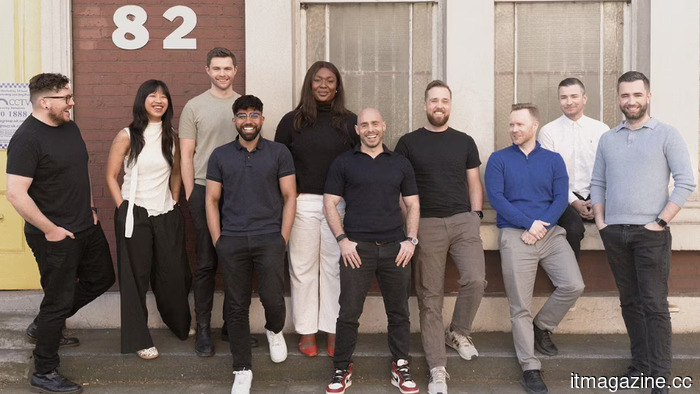 Dex secures $5.3 million to develop an AI talent agency for engineers.
Dex, an AI-based talent agency for technical recruitment, has secured $5.3 million in funding, spearheaded by Notion Capital, and currently has an annual recurring revenue (ARR) of $1.8 million.
Dex secures $5.3 million to develop an AI talent agency for engineers.
Dex, an AI-based talent agency for technical recruitment, has secured $5.3 million in funding, spearheaded by Notion Capital, and currently has an annual recurring revenue (ARR) of $1.8 million.
 You can now utilize Google Translate to improve your pronunciation with instant AI feedback.
Google Translate is marking its 20th anniversary by introducing an AI pronunciation coach that listens to your speech and identifies your mistakes accurately.
You can now utilize Google Translate to improve your pronunciation with instant AI feedback.
Google Translate is marking its 20th anniversary by introducing an AI pronunciation coach that listens to your speech and identifies your mistakes accurately.
 YouTube TV's custom multiview feature allows you to combine NFL Sunday Ticket with any other channel.
YouTube TV's personalized Multiview Builder is now available, allowing subscribers to merge up to four live streams from any channel included in their plan, such as NFL Sunday Ticket, across various categories.
YouTube TV's custom multiview feature allows you to combine NFL Sunday Ticket with any other channel.
YouTube TV's personalized Multiview Builder is now available, allowing subscribers to merge up to four live streams from any channel included in their plan, such as NFL Sunday Ticket, across various categories.
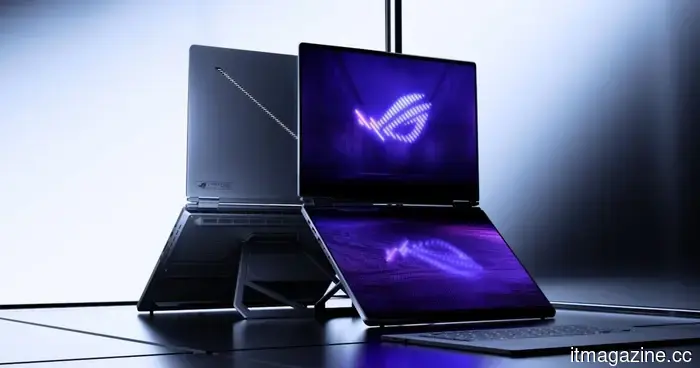 Asus has placed the astonishing dual-screen ROG Zephyrus Duo on the market at a staggering price.
The ROG Zephyrus Duo makes its comeback featuring two complete 16-inch ROG Nebula HDR OLED touchscreens, offering over 21 inches of total display area, powered by the Intel Core Ultra 9 386H and supporting up to the RTX 5090 Laptop GPU at 135W.
Asus has placed the astonishing dual-screen ROG Zephyrus Duo on the market at a staggering price.
The ROG Zephyrus Duo makes its comeback featuring two complete 16-inch ROG Nebula HDR OLED touchscreens, offering over 21 inches of total display area, powered by the Intel Core Ultra 9 386H and supporting up to the RTX 5090 Laptop GPU at 135W.
 Netflix has confirmed the renewal of Stranger Things: Tales From '85 for a second season, even though it has received the lowest ratings in the franchise's history.
Despite receiving mixed reviews, Netflix has renewed Stranger Things: Tales From '85 for a second season. The animated spinoff currently has the lowest ratings for the franchise on both Rotten Tomatoes and IMDB.
Netflix has confirmed the renewal of Stranger Things: Tales From '85 for a second season, even though it has received the lowest ratings in the franchise's history.
Despite receiving mixed reviews, Netflix has renewed Stranger Things: Tales From '85 for a second season. The animated spinoff currently has the lowest ratings for the franchise on both Rotten Tomatoes and IMDB.
 Cognizant acquires Astreya for $600 million in its fourth significant acquisition.
Cognizant has reached an agreement to purchase Astreya, a managed services company specializing in AI infrastructure and data centers, for around $600 million. This marks its fourth significant acquisition in the past 18 months.
Cognizant acquires Astreya for $600 million in its fourth significant acquisition.
Cognizant has reached an agreement to purchase Astreya, a managed services company specializing in AI infrastructure and data centers, for around $600 million. This marks its fourth significant acquisition in the past 18 months.
This small brain implant has the potential to alleviate depression from home.
Motif Neurotech has recently received FDA approval to test a small brain implant aimed at treating depression, and the entire procedure can be completed in just 20 minutes.