
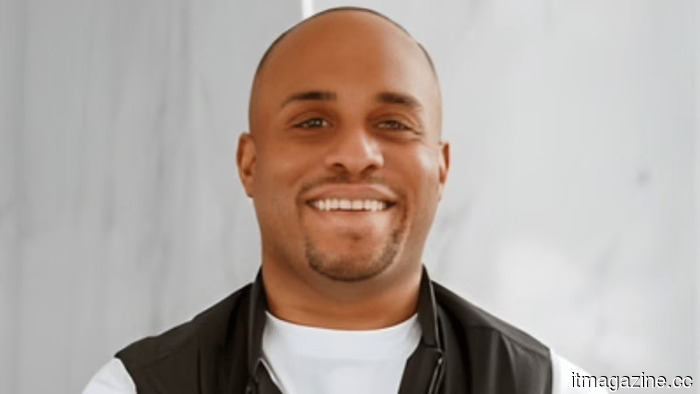
Scholly's founder, Christopher Gray, has filed a lawsuit against Sallie Mae, claiming wrongful termination and the sale of student data, which includes information about minors.
**Summary**: Christopher Gray, the founder of Scholly, a scholarship app with five million users backed by Shark Tank, is suing Sallie Mae in Delaware Superior Court and has submitted a whistleblower complaint to the SEC. He claims that Sallie Mae terminated his co-founders and dismissed him for raising concerns about data privacy, alleging the company is selling users' personal information, including the ages, genders, races, and financial statuses of minors, to third parties. Sallie Mae has denied these accusations.
Christopher Gray developed Scholly to assist students in finding scholarships. Growing up in Birmingham, Alabama, he became the first in his family to attend college after securing $1.3 million in scholarships to Drexel University. He transformed his experience into a mobile application that matched students with financial aid based on their profiles. The app attracted five million users, was featured on Shark Tank in 2015 where Lori Greiner and Daymond John invested, and became the top download in both app stores. In 2023, Sallie Mae, a student lending company linked to the American student debt crisis, acquired Scholly. Now, Gray is suing Sallie Mae in Delaware Superior Court and has lodged a whistleblower complaint with the SEC, alleging that Sallie Mae dismissed his co-founders, fired him after he raised data privacy issues, and is selling Scholly users' personal data, including minors, to third parties. The allegedly sold data includes sensitive information about students, which stands in stark contrast to Scholly’s original purpose.
**The Acquisition**: Sallie Mae took over Scholly in 2023 as part of a broader effort to diversify beyond its core student lending operations, promoting itself as part of student financial wellness. This acquisition granted Sallie Mae access to five million users—primarily students and their families—who willingly provided extensive personal and financial details in search of scholarships. For Scholly's users, the app symbolized a resource created by someone who understood their challenges: a first-generation college student who navigated the scholarship landscape and streamlined the process for others. For Sallie Mae, the deal signified a pathway to reach a demographic that would eventually require student loans, which the company framed as a commitment to helping students find scholarships before borrowing.
Gray had previously expressed positive views about the acquisition, offering guidance to founders on leveraging AI and noting how it enhanced financial backing for historically Black colleges and universities. The relationship seemed stable until mid-2024 when, according to the lawsuit, Sallie Mae laid off the founding team of Scholly, including Gray’s co-founders. He claims to have overheard Sallie Mae executives discussing plans to sell user data during meetings around that time. After he raised data privacy concerns, Gray was let go approximately one year post-acquisition. His lawsuit depicts his firing as retaliation for voicing objections to practices he felt compromised Sallie Mae's commitments to Scholly's users.
**The Allegations**: The lawsuit and SEC whistleblower complaint revolve around two primary accusations: wrongful termination and the unauthorized sale of user data. Gray contends that Sallie Mae sold data collected from the Scholly app, including personal information about minors, to third parties without adequate notice to users. The data categories allegedly sold—age, gender, race, and financial status—are notably sensitive, especially for minors who registered for a scholarship tool rather than a data marketplace. Gray is pursuing back pay, punitive damages, and legal fees. Sallie Mae denies the allegations and intends to contest the lawsuit.
The case embodies several factors currently reshaping the tech industry. Acquisitions in the tech sector often see the purchasing company absorbing the startup’s user base and technology while dismantling the original team. The rationale is straightforward: users and their data represent the core asset, not the founders or the original product vision. When the acquiring company's business model relies on monetizing the same kind of data that the startup collected, the founder’s vision regarding the data can become an impediment. Gray’s lawsuit claims he turned into that impediment when he objected to a use of his users' data that contradicted the implicit agreement between Scholly and its community—that students would share personal information to receive scholarship matches, not for the data to be sold to third parties by the largest private student lender in the U.S.
**The Context**: Sallie Mae has faced its share of regulatory and legal challenges concerning its treatment of borrowers. The Department of Justice settled with the company for $60 million over allegations of overcharging service members in interest. The FDIC also reached a settlement with Sallie Mae regarding deceptive practices. Separately, borrowers have accused the company of lending discrimination. In 2014, the company split into Navient, which manages federal loans, and Sallie Mae, which focuses on private lending and banking, partly to distance its private lending arms from the federal loan portfolio's regulatory issues. The acquisition of Scholly was part of the new Sallie Mae
Other articles
 OpenAI states that it is
OpenAI rejected a WSJ report about unmet targets as mere clickbait. In reaction, investors began selling shares of Oracle, CoreWeave, SoftBank, and chip stocks. The key issue now is whether the $600 billion in commitments continues to be viable.
OpenAI states that it is
OpenAI rejected a WSJ report about unmet targets as mere clickbait. In reaction, investors began selling shares of Oracle, CoreWeave, SoftBank, and chip stocks. The key issue now is whether the $600 billion in commitments continues to be viable.
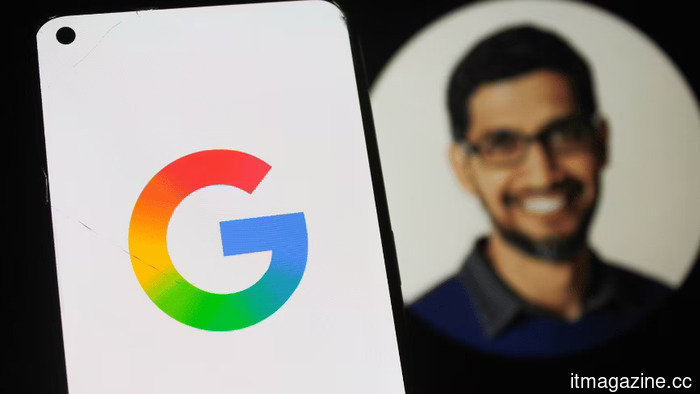 Google has entered into a classified agreement with the Pentagon regarding AI.
Google provided the Pentagon with classified access to Gemini for "any lawful purpose" just one day after over 580 employees voiced their protests. Additionally, it withdrew from a $100 million drone swarm competition following an ethics evaluation.
Google has entered into a classified agreement with the Pentagon regarding AI.
Google provided the Pentagon with classified access to Gemini for "any lawful purpose" just one day after over 580 employees voiced their protests. Additionally, it withdrew from a $100 million drone swarm competition following an ethics evaluation.
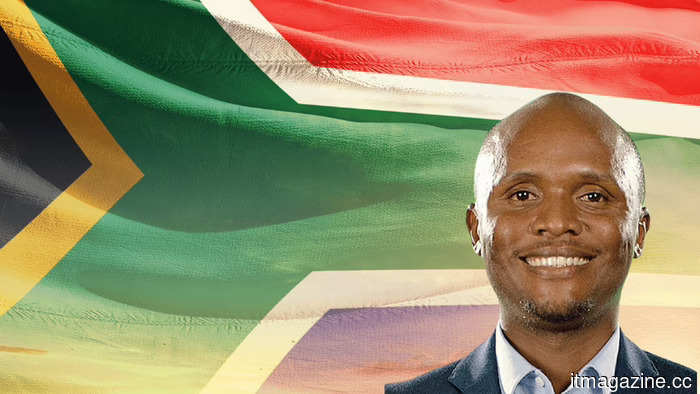 South Africa retreats from its national AI policy following the discovery that at least 6 out of 67 academic citations were identified as AI-generated fabrications.
South Africa withdrew its proposed AI policy after News24 discovered fabricated citations in actual journals. Minister Malatsi termed it an "unacceptable lapse." The integrity of the policy aimed at regulating AI was compromised by this issue.
South Africa retreats from its national AI policy following the discovery that at least 6 out of 67 academic citations were identified as AI-generated fabrications.
South Africa withdrew its proposed AI policy after News24 discovered fabricated citations in actual journals. Minister Malatsi termed it an "unacceptable lapse." The integrity of the policy aimed at regulating AI was compromised by this issue.
 Google has entered into a classified AI agreement with the Pentagon for
Google granted the Pentagon classified access to Gemini for "any lawful purpose" just one day after more than 580 employees staged a protest. Additionally, the company withdrew from a $100 million drone swarm competition following an ethics review.
Google has entered into a classified AI agreement with the Pentagon for
Google granted the Pentagon classified access to Gemini for "any lawful purpose" just one day after more than 580 employees staged a protest. Additionally, the company withdrew from a $100 million drone swarm competition following an ethics review.
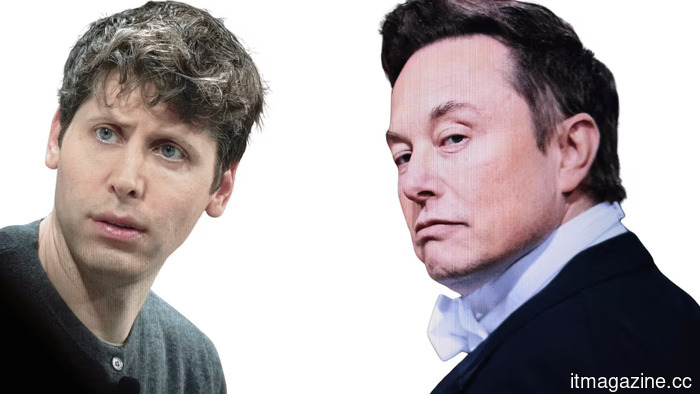 Musk v. Altman opening statements:
The opening arguments in the Musk-Altman trial highlighted the strategies of both parties. Musk's attorney claimed, "they took a charity." In contrast, OpenAI's attorney stated, "he resigned and filed a lawsuit after they achieved success." Musk was the first to testify.
Musk v. Altman opening statements:
The opening arguments in the Musk-Altman trial highlighted the strategies of both parties. Musk's attorney claimed, "they took a charity." In contrast, OpenAI's attorney stated, "he resigned and filed a lawsuit after they achieved success." Musk was the first to testify.
 Nvidia launches the Nemotron 3 Nano Omni: a versatile open multimodal model featuring 30 billion parameters, with 3 billion active, designed for edge AI agents.
Nvidia's Nemotron 3 Nano Omni combines vision, audio, and text into a single open-weight model with a throughput that is 9 times greater. It utilizes only 3 billion of its 30 billion parameters at each step and is designed for edge AI agents operating on single GPUs.
Nvidia launches the Nemotron 3 Nano Omni: a versatile open multimodal model featuring 30 billion parameters, with 3 billion active, designed for edge AI agents.
Nvidia's Nemotron 3 Nano Omni combines vision, audio, and text into a single open-weight model with a throughput that is 9 times greater. It utilizes only 3 billion of its 30 billion parameters at each step and is designed for edge AI agents operating on single GPUs.
Scholly's founder, Christopher Gray, has filed a lawsuit against Sallie Mae, claiming wrongful termination and the sale of student data, which includes information about minors.
Christopher Gray created Scholly to assist students in locating scholarships. Following its acquisition by Sallie Mae, he claims he was dismissed for opposing the sale of users' personal data, which included information about minors.