
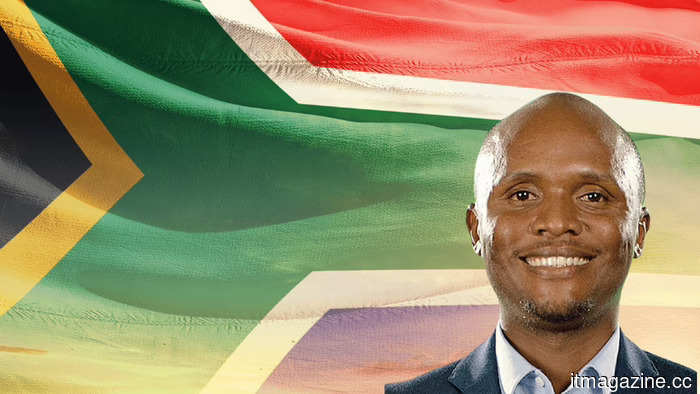
South Africa retreats from its national AI policy following the discovery that at least 6 out of 67 academic citations were identified as AI-generated fabrications.
**Summary:** South Africa’s Communications Minister Solly Malatsi rescinded the country's draft national AI policy after News24 found that at least six of its 67 academic references were AI-generated inaccuracies, citing non-existent articles in legitimate journals. Approved by Cabinet in March and released for public feedback, Malatsi labeled the situation as an “unacceptable lapse” and vowed to take responsibility. This scandal has left South Africa without a proper framework for AI governance and raised concerns about the government’s ability to regulate the technology effectively.
The South African Department of Communications and Digital Technologies dedicated months to creating a national artificial intelligence policy, proposing a National AI Commission, an AI Ethics Board, an AI Regulatory Authority, an AI Ombudsperson, a National AI Safety Institute, and an AI Insurance Superfund. The policy was built on five governance pillars—skills capacity, responsible governance, ethical and inclusive AI, cultural preservation, and human-centered deployment—and adopted a risk-based approach aligned with the EU AI Act. After Cabinet approval on March 25, the Government Gazette published it on April 10 for public comment. However, News24 discovered that at least six citations were fabricated. Although the journals existed, the articles attributed to various authors were non-existent. Editors from the South African Journal of Philosophy, AI & Society, and the Journal of Ethics and Social Philosophy confirmed that these articles had never been published. Minister Malatsi speculated that the authors used a generative AI tool without validating the references. Thus, a policy developed to manage AI was compromised by the very technology it aimed to regulate.
**Withdrawal Announcement:**
On April 27, Malatsi announced the policy's withdrawal, denouncing the falsified citations as an “unacceptable lapse” that undermined the draft's integrity and credibility. He indicated that there would be accountability measures for those involved in drafting and quality assurance. The parliamentary committee chair humorously suggested that the department avoid using ChatGPT when reworking the document. While it will be revised and released for public feedback again, no timeline has been given. Consequently, South Africa currently lacks a formal AI governance framework as global governments are wrestling with how to regulate AI, and the country’s reputation in these discussions has suffered a setback that will linger beyond the policy revision.
The issue extends beyond the presence of fabricated citations; it highlights that such inaccuracies surfaced in a government document about artificial intelligence, prepared by the department overseeing the country's digital technology strategy, during a critical time when significant AI governance discussions were taking place in Brussels, Washington, and Beijing. The EU AI Act, the most ambitious regulatory framework for AI, is experiencing delays, with implementation timelines for high-risk systems pushed to 2027. The U.S. lacks federal AI legislation and is observing states take independent action while the White House seeks to manage these efforts. Meanwhile, China has enacted selective AI regulations. In this context, South Africa presented a policy that failed basic verification checks.
**The Pattern:**
The issue of fictitious citations in South Africa's policy reflects a troubling trend as institutions increasingly rely on generative AI for research and drafting. A study in Nature found that 2.6% of academic papers published in 2025 contained at least one potentially false citation, a rise from 0.3% in 2024. If this rate persists across approximately seven million scholarly publications from 2025, over 110,000 papers could include invalid references. GPTZero, a Canadian detection startup, analyzed more than 4,000 papers accepted at the 2025 NeurIPS conference and found over 100 fictitious citations across at least 53 papers. A separate study revealed that only 26.5% of AI-generated bibliographic references were entirely accurate. The root of the problem lies in the structural manner in which large language models generate citations via probabilistic prediction, rather than through actual information retrieval, leading to references that appear credible but lack validity.
The South African situation is not remarkable for AI's hallucination, a known limitation of generative models, but for the fact that these inaccuracies made their way into a government policy document that received Cabinet approval without reference verification. The drafting involved civil servants, subject matter consultations, and a ministerial review. Dumisani Sondlo, the department’s AI policy lead, previously described the development process as recognizing a lack of sufficient knowledge. However, that recognition did not extend to acknowledging the unreliability of the tool employed in drafting the policy. The six fictitious citations identified by News24 were merely the ones caught, and it remains uncertain whether the other references are legitimate. The entire bibliography is now under scrutiny, raising doubts about the analytical groundwork for the policy proposals.
**The Implications:**
As a direct result, South Africa's AI governance timeline has been reset. The draft policy, which aimed to establish the country as a leader in responsible AI adoption in Africa, must be re-evaluated, reconsulted, and resubmitted. The credibility
Other articles
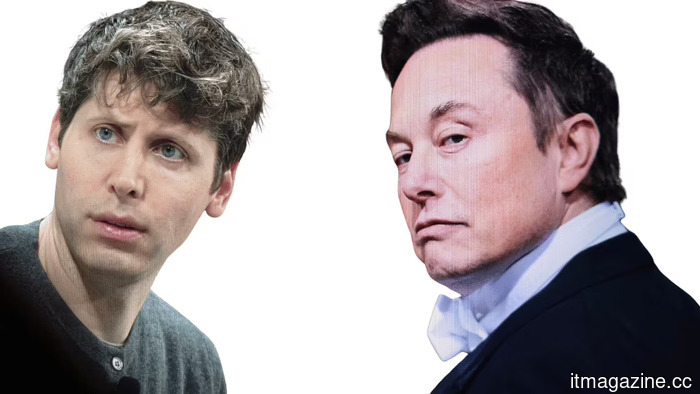 Musk v. Altman opening statements:
The opening statements in the Musk-Altman trial highlighted the strategies of both parties. Musk's attorney claimed, "they took a charity." In contrast, OpenAI's lawyer stated, "he resigned and filed a lawsuit once they achieved success." Musk was the first to testify.
Musk v. Altman opening statements:
The opening statements in the Musk-Altman trial highlighted the strategies of both parties. Musk's attorney claimed, "they took a charity." In contrast, OpenAI's lawyer stated, "he resigned and filed a lawsuit once they achieved success." Musk was the first to testify.
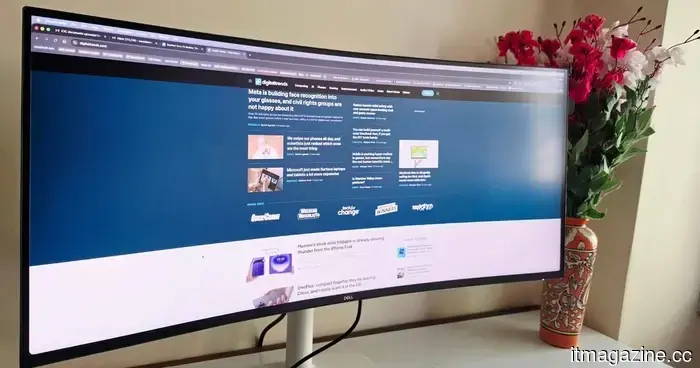 Dell 34 Plus USB-C monitor review: An ultrawide beauty with delightful surprises
The Dell 34 Plus USB-C is a stylish ultrawide monitor with a 120Hz refresh rate, excelling in productivity thanks to its smart port hub, impressive design, and single-cable ease, making it well worth the investment.
Dell 34 Plus USB-C monitor review: An ultrawide beauty with delightful surprises
The Dell 34 Plus USB-C is a stylish ultrawide monitor with a 120Hz refresh rate, excelling in productivity thanks to its smart port hub, impressive design, and single-cable ease, making it well worth the investment.
 The release date for season 4 of Ted Lasso is scheduled for this summer, and the trailer appears to be quite promising.
In Season 4, Ted returns to Richmond facing a brand new challenge: coaching a women's football team in the second division.
The release date for season 4 of Ted Lasso is scheduled for this summer, and the trailer appears to be quite promising.
In Season 4, Ted returns to Richmond facing a brand new challenge: coaching a women's football team in the second division.
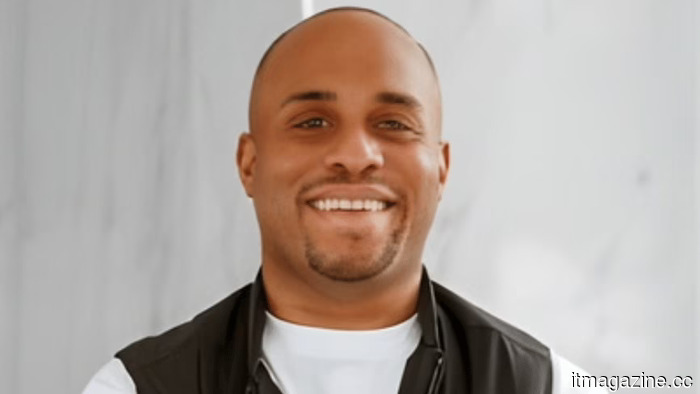 Scholly founder Christopher Gray has filed a lawsuit against Sallie Mae, claiming wrongful dismissal and the unauthorized sale of student data that includes information on minors.
Christopher Gray created Scholly to assist students in discovering scholarships. Following its acquisition by Sallie Mae, he claims he was terminated for opposing the sale of users' personal data, which included information about minors.
Scholly founder Christopher Gray has filed a lawsuit against Sallie Mae, claiming wrongful dismissal and the unauthorized sale of student data that includes information on minors.
Christopher Gray created Scholly to assist students in discovering scholarships. Following its acquisition by Sallie Mae, he claims he was terminated for opposing the sale of users' personal data, which included information about minors.
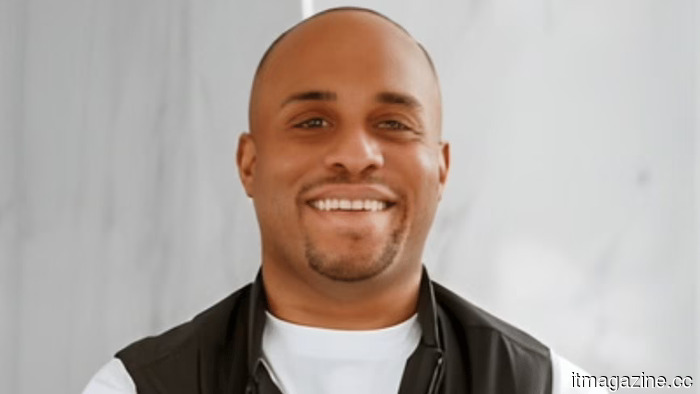 Scholly's founder, Christopher Gray, has filed a lawsuit against Sallie Mae, claiming wrongful termination and the sale of student data, including that of minors.
Christopher Gray created Scholly to assist students in locating scholarships. Following its acquisition by Sallie Mae, he claims he was dismissed for protesting the sale of users' personal data, which included information about minors.
Scholly's founder, Christopher Gray, has filed a lawsuit against Sallie Mae, claiming wrongful termination and the sale of student data, including that of minors.
Christopher Gray created Scholly to assist students in locating scholarships. Following its acquisition by Sallie Mae, he claims he was dismissed for protesting the sale of users' personal data, which included information about minors.
 Nvidia discreetly announced a new version of the GeForce RTX 5070 GPU within a driver blog post.
Nvidia's latest 12GB GeForce RTX 5070 Laptop GPU employs a different GDDR7 memory format to tackle supply issues, offering laptop manufacturers a third configuration option in addition to the current 8GB variant.
Nvidia discreetly announced a new version of the GeForce RTX 5070 GPU within a driver blog post.
Nvidia's latest 12GB GeForce RTX 5070 Laptop GPU employs a different GDDR7 memory format to tackle supply issues, offering laptop manufacturers a third configuration option in addition to the current 8GB variant.
South Africa retreats from its national AI policy following the discovery that at least 6 out of 67 academic citations were identified as AI-generated fabrications.
South Africa withdrew its proposed AI policy after News24 discovered fabricated citations in actual journals. Minister Malatsi termed it an "unacceptable lapse." The integrity of the policy aimed at regulating AI was compromised by this issue.