

OpenAI states that it is
**Summary**
The Wall Street Journal indicated that OpenAI failed to meet its internal revenue and user growth targets, including the goal of reaching one billion weekly ChatGPT users by the end of 2025. OpenAI dismissed the report as “prime clickbait” and claimed it is “firing on all cylinders.” However, the market reacted negatively, resulting in significant losses for companies linked to OpenAI, such as Oracle (-7.7%), CoreWeave (-7.4%), SoftBank (-10%), and various chip manufacturers. The core concern is whether OpenAI's $600 billion in computing commitments can be substantiated, especially as competitors like Anthropic gain an edge in revenue, its CFO has expressed doubts about the IPO timeline, and overall growth appears to be slowing.
OpenAI branded the report as “clickbait,” asserting that its business is performing exceptionally well. In a joint statement, CEO Sam Altman and CFO Sarah Friar emphasized their complete alignment. Nonetheless, the message failed to influence investors. After the Journal’s report revealed that OpenAI had not met its revenue and user growth goals, many companies reliant on OpenAI's success saw their market values plummet. Oracle, which has a significant partnership with OpenAI, declined by 7.7%. Similarly, CoreWeave and SoftBank experienced drops of 7.4% and nearly 10%, respectively, in Tokyo. Other firms like Nvidia, Broadcom, AMD, and Arm also saw declines between 2% and 6%. Investors were more focused on the efficacy of OpenAI's financial commitments rather than the company's rebuttal.
**The Targets**
The Journal reported that OpenAI did not achieve its internal target of one billion weekly users for ChatGPT by the end of 2025, having reached only 900 million by February 2026—a figure representing remarkable year-over-year growth. Nonetheless, OpenAI's performance is assessed against its need to justify substantial computing investments, which have been revised to $600 billion, down from $1.4 trillion earlier this year. The report also noted that OpenAI missed several monthly revenue targets in early 2026, losing footing against competitors like Google’s Gemini and Anthropic. OpenAI's estimated annual revenue stands at about $25 billion, while Anthropic surpassed it with over $30 billion in April, spending significantly less on training.
CFO Sarah Friar cautioned that without a boost in revenue growth, OpenAI might struggle to finance its computing commitments which total hundreds of billions from partnerships with Oracle, CoreWeave, and others. These obligations assume a leap in revenue from the current $25 billion to $280 billion by 2030. The disparity is substantial, indicating that the company may not sustain its ambitious plans. Friar has additionally expressed internally that OpenAI may not be ready for the IPO that Altman hopes to pursue in late 2026, suggesting a preference for a 2027 launch. The public alignment statement followed the report, indicating unresolved disagreements.
**The Response**
OpenAI spokesperson Steve Sharpe characterized the Journal’s findings as “clickbait,” claiming the consumer division shows strong revenue performance, while the enterprise sector is better positioned than ever. The internal sentiment, he said, is “incredibly positive.” However, these statements do not directly address the report’s claims, which highlighted OpenAI's failure to meet targets and concerns raised by its CFO about future funding, as well as increasing competition. Labeling the report as clickbait serves more as a communications tactic than a financial justification.
Yet, OpenAI can still point to positive developments: enterprise revenue now makes up over 40% of total revenue with nine million paying business users—quadrupling since September 2025. Its advertising venture launched in February surpassed $100 million in annualized revenue within six weeks and is expected to reach $2.5 billion this year, possibly hitting $100 billion by 2030. OpenAI’s active enterprise initiatives, including the rapid rollout of GPT-5.5, illustrate a company making significant moves. Additionally, amassing 50 million paying subscribers demonstrates a notable consumer presence. The true concern lies in the enormous commitments and the necessity for unprecedented business growth to support them.
**The Arithmetic**
OpenAI’s financial circumstances illustrate a stark imbalance: while its spending commitments are contractual, its revenue forecasts are more aspirational. The company pledges approximately $600 billion for compute infrastructure through 2030, aiming for an annual average of roughly $100 billion. To justify this level of spending, it seeks $280 billion in revenue by 2030, necessitating more than a tenfold increase in the next four years from its current run rate of $25 billion. The valuation of $852 billion from its record $122 billion funding round in March hinged on these growth expectations. If those do not materialize, that valuation may also become merely aspirational.
Adding to the pressure is the competitive environment.
Otros artículos
 OpenAI states that it is
OpenAI rejected a WSJ report about unmet targets as mere clickbait. In reaction, investors began selling shares of Oracle, CoreWeave, SoftBank, and chip stocks. The key issue now is whether the $600 billion in commitments continues to be viable.
OpenAI states that it is
OpenAI rejected a WSJ report about unmet targets as mere clickbait. In reaction, investors began selling shares of Oracle, CoreWeave, SoftBank, and chip stocks. The key issue now is whether the $600 billion in commitments continues to be viable.
 At last, Amazon resolves the issue that made reading on the Kindle Colorsoft uncomfortable in low light conditions.
Amazon's most recent update introduces a comprehensive Dark Mode to the Kindle Colorsoft and Scribe Colorsoft, allowing users to customize the appearance of each section across the entire device.
At last, Amazon resolves the issue that made reading on the Kindle Colorsoft uncomfortable in low light conditions.
Amazon's most recent update introduces a comprehensive Dark Mode to the Kindle Colorsoft and Scribe Colorsoft, allowing users to customize the appearance of each section across the entire device.
 Logitech’s latest G512 X gaming keyboard combines top-tier performance with extensive customization options.
Logitech's newest gaming keyboard offers PC gamers additional options to customize, adjust, and display their setup, including the responsiveness of each key.
Logitech’s latest G512 X gaming keyboard combines top-tier performance with extensive customization options.
Logitech's newest gaming keyboard offers PC gamers additional options to customize, adjust, and display their setup, including the responsiveness of each key.
 Samsung is facing a potential ban on its foldable phones in the US due to a patent dispute.
A recent lawsuit alleges that Samsung has violated patents related to foldable phones and is requesting a ban on sales in the US, although these allegations have yet to be substantiated.
Samsung is facing a potential ban on its foldable phones in the US due to a patent dispute.
A recent lawsuit alleges that Samsung has violated patents related to foldable phones and is requesting a ban on sales in the US, although these allegations have yet to be substantiated.
 Google has entered into a classified agreement with the Pentagon regarding AI.
Google provided the Pentagon with classified access to Gemini for "any lawful purpose" just one day after over 580 employees voiced their protests. Additionally, it withdrew from a $100 million drone swarm competition following an ethics evaluation.
Google has entered into a classified agreement with the Pentagon regarding AI.
Google provided the Pentagon with classified access to Gemini for "any lawful purpose" just one day after over 580 employees voiced their protests. Additionally, it withdrew from a $100 million drone swarm competition following an ethics evaluation.
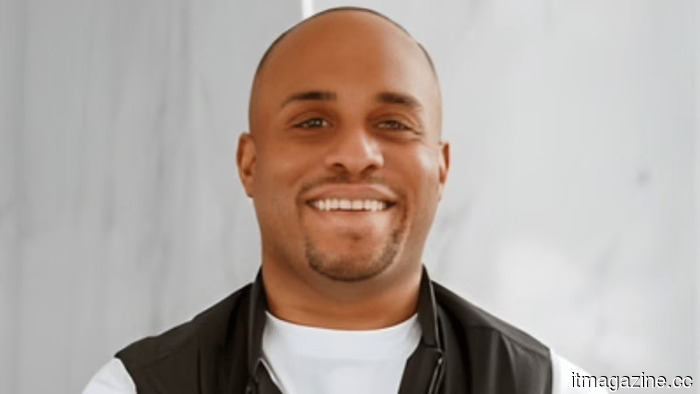 Scholly's founder, Christopher Gray, has filed a lawsuit against Sallie Mae, claiming wrongful termination and the sale of student data, which includes information about minors.
Christopher Gray created Scholly to assist students in locating scholarships. Following its acquisition by Sallie Mae, he claims he was dismissed for opposing the sale of users' personal data, which included information about minors.
Scholly's founder, Christopher Gray, has filed a lawsuit against Sallie Mae, claiming wrongful termination and the sale of student data, which includes information about minors.
Christopher Gray created Scholly to assist students in locating scholarships. Following its acquisition by Sallie Mae, he claims he was dismissed for opposing the sale of users' personal data, which included information about minors.
OpenAI states that it is
OpenAI characterized a WSJ report regarding missed targets as mere clickbait. In reaction, investors sold shares of Oracle, CoreWeave, SoftBank, and semiconductor stocks. The crucial question remains whether the $600 billion in commitments remains viable.