
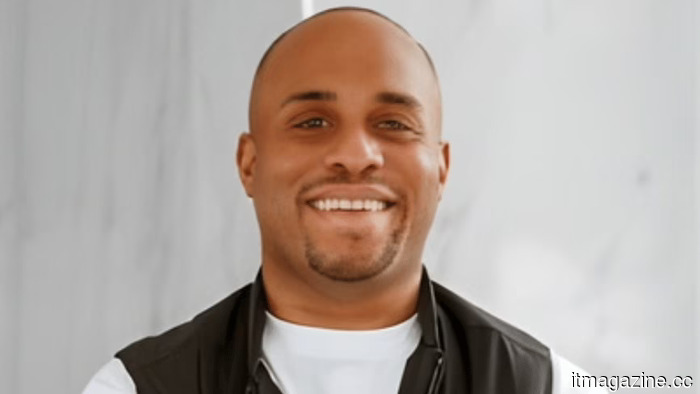
Scholly founder Christopher Gray has filed a lawsuit against Sallie Mae, claiming wrongful dismissal and the unauthorized sale of student data that includes information on minors.
**TL;DR** Christopher Gray, the founder of Scholly, a scholarship app with five million users and backed by Shark Tank, is suing Sallie Mae in Delaware Superior Court and has submitted a whistleblower complaint to the SEC. He claims that Sallie Mae dismissed his co-founders, terminated him for expressing concerns over data privacy, and is selling users’ personal information—including details about minors—to third parties. Sallie Mae has refuted these allegations.
Christopher Gray created Scholly to assist students in finding scholarships, having experienced the journey himself as a first-generation college student from Birmingham, Alabama, who secured $1.3 million in scholarships to attend Drexel University. His app pairs students with financial assistance opportunities based on user profiles and garnered five million users. It was featured on Shark Tank in 2015, where Lori Greiner and Daymond John invested, ultimately becoming the top download in both app stores. In 2023, Sallie Mae, a prominent student lending company linked with the American student debt crisis, acquired Scholly. Gray is now taking legal action against Sallie Mae in Delaware Superior Court while filing a whistleblower complaint with the SEC. He asserts that Sallie Mae dismissed his co-founders, fired him after he raised concerns regarding data privacy, and improperly sold Scholly user data—particularly that of minors—to third parties. The information allegedly sold includes users' ages, genders, races, and financial statuses. This acquisition appears to have transitioned from helping students manage financial burdens to monetizing their sensitive information.
**The acquisition**
Sallie Mae's acquisition of Scholly in 2023 aimed to expand its focus beyond student lending into student financial wellness. This move granted Sallie Mae a user base of five million individuals, mainly students and their families, who willingly provided personal and financial information for scholarship matching. For Scholly's users, the app was a helpful tool created by someone who understood their challenges. In contrast, Sallie Mae sought a way to connect with a demographic that would eventually require student loans, framing the acquisition as a means to help students find grants before incurring debt.
Initially, Gray spoke positively about the acquisition, giving advice to other founders on leveraging AI and highlighting the financial support it brought to historically Black colleges and universities. However, the relationship soured by July 2024 when Sallie Mae laid off the Scholly founding team. Gray alleges that he overheard Sallie Mae executives discussing plans to sell Scholly user data during this period. Upon raising his data privacy concerns, he was terminated approximately a year after the acquisition's completion. His lawsuit claims that his firing was a retaliatory response to his objections against practices he felt betrayed the commitments Sallie Mae made to Scholly's users.
**The allegations**
The lawsuit and SEC whistleblower complaint focus on two main charges: wrongful termination and the unauthorized sale of user data. Gray argues that Sallie Mae sold information gathered through Scholly, including sensitive data about minors, to third parties without adequate disclosure to the users. The personal details categorized—such as age, gender, race, and financial status—are particularly sensitive, especially in the context of minors who signed up for a scholarship search platform rather than a data marketplace. Gray is seeking back pay, punitive damages, and legal fees. Sallie Mae has denied the allegations and intends to contest the lawsuit.
The case represents the broader dynamics within the technology industry. Startup acquisitions often involve the acquirer gaining access to the startup's user base and technology but dismantling the original team. The rationale is straightforward: users and their data are the primary assets, not the founders or their vision. When the acquirer's business model hinges on monetizing data similar to that which the startup collected, the founder's perspective on the intended use of this data can become an impediment. Gray’s lawsuit contends that he became an obstacle when he disagreed with the way his users' data was being used, which conflicted with the implied agreement between Scholly and its community—that users would share their data for scholarship matches, not sell it to the nation's largest private student lender.
**The context**
Sallie Mae has faced its share of regulatory and legal issues concerning its treatment of borrowers. The Department of Justice reached a $60 million settlement with the company due to allegations of overcharging service members. Additionally, the FDIC settled allegations regarding unfair and deceptive practices. Borrowers have also accused Sallie Mae of racial discrimination in lending. In 2014, the company split into Navient, which manages federal loans, and Sallie Mae, focusing on private lending and banking, to distance its private sector operations from federal loan regulatory issues. The acquisition of Scholly was part of Sallie Mae's rebranding efforts to establish a more favorable image in the student finance sector, emphasizing tools and resources over debt. If Gray's claims hold true, this rebranding may have merely been superficial, as the company utilized a tool
Other articles
 Samsung is facing a potential ban on its foldable phones in the US due to a patent dispute.
A recent lawsuit alleges that Samsung has violated patents related to foldable phones and is requesting a ban on sales in the US, although these allegations have yet to be substantiated.
Samsung is facing a potential ban on its foldable phones in the US due to a patent dispute.
A recent lawsuit alleges that Samsung has violated patents related to foldable phones and is requesting a ban on sales in the US, although these allegations have yet to be substantiated.
 Google has entered into a classified AI agreement with the Pentagon for
Google granted the Pentagon classified access to Gemini for "any lawful purpose" just one day after more than 580 employees staged a protest. Additionally, the company withdrew from a $100 million drone swarm competition following an ethics review.
Google has entered into a classified AI agreement with the Pentagon for
Google granted the Pentagon classified access to Gemini for "any lawful purpose" just one day after more than 580 employees staged a protest. Additionally, the company withdrew from a $100 million drone swarm competition following an ethics review.
 Nvidia has launched the Nemotron 3 Nano Omni, an open multimodal model featuring 30 billion parameters, with 3 billion active, designed for edge AI agents.
Nvidia's Nemotron 3 Nano Omni integrates vision, audio, and text into a single open-weight model, achieving 9x throughput. Only 3 billion out of 30 billion parameters are utilized per step. It is designed for edge AI agents operating on individual GPUs.
Nvidia has launched the Nemotron 3 Nano Omni, an open multimodal model featuring 30 billion parameters, with 3 billion active, designed for edge AI agents.
Nvidia's Nemotron 3 Nano Omni integrates vision, audio, and text into a single open-weight model, achieving 9x throughput. Only 3 billion out of 30 billion parameters are utilized per step. It is designed for edge AI agents operating on individual GPUs.
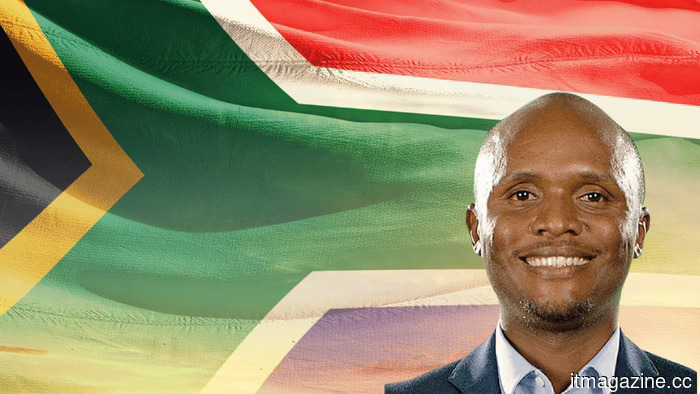 South Africa has retracted its national AI policy after discovering that at least 6 out of 67 academic references were identified as AI-generated fabrications.
South Africa withdrew its proposed AI policy after News24 discovered fraudulent citations in actual journals. Minister Malatsi described it as an "unacceptable lapse." This issue compromised the integrity of the policy intended to regulate AI.
South Africa has retracted its national AI policy after discovering that at least 6 out of 67 academic references were identified as AI-generated fabrications.
South Africa withdrew its proposed AI policy after News24 discovered fraudulent citations in actual journals. Minister Malatsi described it as an "unacceptable lapse." This issue compromised the integrity of the policy intended to regulate AI.
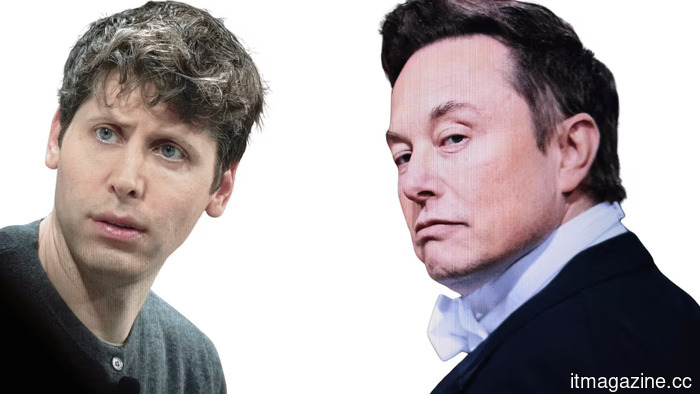 Musk v. Altman opening statements:
The opening arguments in the Musk-Altman trial highlighted the strategies of both parties. Musk's attorney claimed, "they took a charity." In contrast, OpenAI's attorney stated, "he resigned and filed a lawsuit after they achieved success." Musk was the first to testify.
Musk v. Altman opening statements:
The opening arguments in the Musk-Altman trial highlighted the strategies of both parties. Musk's attorney claimed, "they took a charity." In contrast, OpenAI's attorney stated, "he resigned and filed a lawsuit after they achieved success." Musk was the first to testify.
 Nvidia launches the Nemotron 3 Nano Omni: a versatile open multimodal model featuring 30 billion parameters, with 3 billion active, designed for edge AI agents.
Nvidia's Nemotron 3 Nano Omni combines vision, audio, and text into a single open-weight model with a throughput that is 9 times greater. It utilizes only 3 billion of its 30 billion parameters at each step and is designed for edge AI agents operating on single GPUs.
Nvidia launches the Nemotron 3 Nano Omni: a versatile open multimodal model featuring 30 billion parameters, with 3 billion active, designed for edge AI agents.
Nvidia's Nemotron 3 Nano Omni combines vision, audio, and text into a single open-weight model with a throughput that is 9 times greater. It utilizes only 3 billion of its 30 billion parameters at each step and is designed for edge AI agents operating on single GPUs.
Scholly founder Christopher Gray has filed a lawsuit against Sallie Mae, claiming wrongful dismissal and the unauthorized sale of student data that includes information on minors.
Christopher Gray created Scholly to assist students in discovering scholarships. Following its acquisition by Sallie Mae, he claims he was terminated for opposing the sale of users' personal data, which included information about minors.