
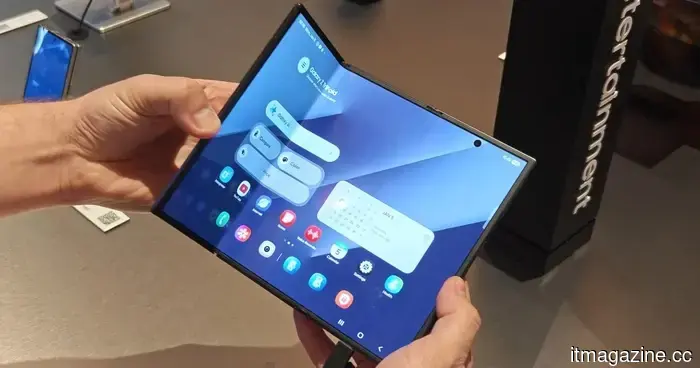
Samsung is facing a potential ban on its foldable phones in the US due to a patent dispute.
Samsung’s dominance in the foldable market is encountering a significant legal challenge.
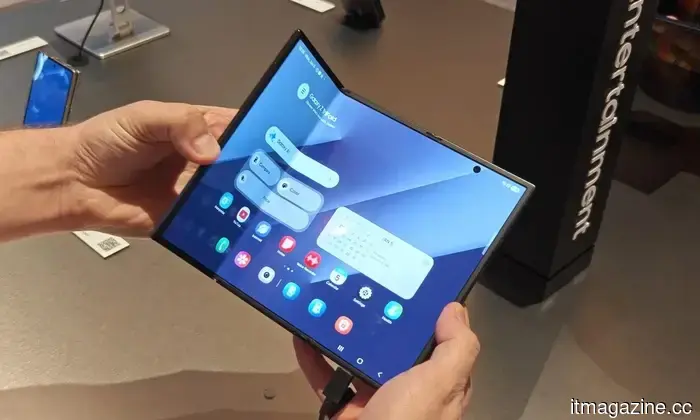
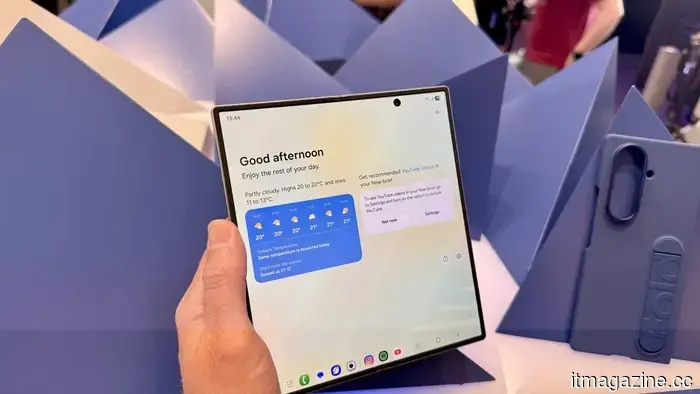
Samsung is currently facing a new legal hurdle that could serve as a substantial obstacle for its foldable phones in the United States. Lepton Computing LLC has filed a lawsuit in a federal court in Texas, alleging that the South Korean tech behemoth and its US subsidiary have infringed upon several patents concerning foldable phone technology.
If this legal matter escalates, it could negatively affect sales of Samsung’s Galaxy Z series, which encompasses the Fold, Flip, and the new TriFold models.
Details of the lawsuit
In the legal documents, covered later by The Biz, Lepton claims that Samsung has utilized patented technologies related to flexible display structures, hinge mechanisms, and user interface functionalities without permission. The company asserts that these concepts were developed long before foldable phones entered the market.
The patents in dispute address how foldable displays function and how the software adjusts to different screen states. These elements are crucial to the operation of contemporary foldable devices. Lepton is seeking damages and is also advocating for a potential prohibition on Samsung’s foldable phones in the US.
What are the implications?
It is important to note that alleging patent infringement does not equate to proving it. Patent disputes in the technology sector are frequently complicated, often involving overlapping concepts, prior art, and competing assertions. While Lepton possesses patents associated with foldable technology, this does not confirm that Samsung has breached those patents.
Samsung has a vast portfolio of patents related to foldable technology, developed through years of research and development, which will likely be significant if the case progresses.
Why is this significant, and what are the next steps?
Samsung is a major player in the foldable phone market, particularly in the US, where the primary competitor is Motorola’s Razr series. Therefore, any disruptions could significantly impact the entire segment. In a worst-case scenario where Samsung is prohibited from selling foldables in the US, Apple's forthcoming foldable iPhone could enter the market with minimal competition.
Currently, this situation is still in the early stages of legal proceedings. Such cases can often take years to resolve, usually resulting in a substantial settlement. Until then, this remains an ongoing story.



Other articles
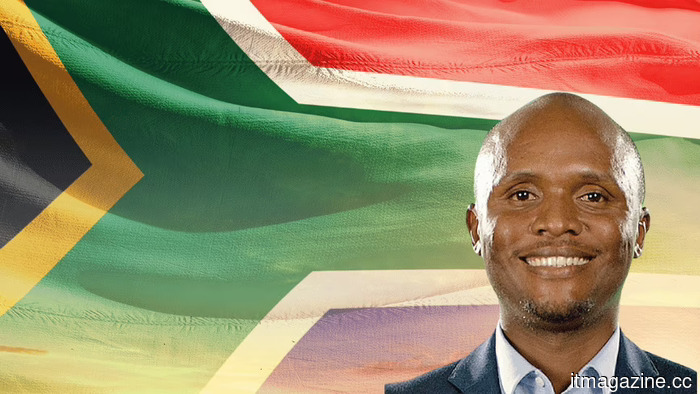 South Africa has retracted its national AI policy after discovering that at least 6 out of 67 academic citations were identified as AI-generated inaccuracies.
South Africa retracted its proposed AI policy after News24 discovered fraudulent citations in legitimate journals. Minister Malatsi referred to it as an "unacceptable lapse." The credibility of the policy intended to regulate AI was compromised as a result.
South Africa has retracted its national AI policy after discovering that at least 6 out of 67 academic citations were identified as AI-generated inaccuracies.
South Africa retracted its proposed AI policy after News24 discovered fraudulent citations in legitimate journals. Minister Malatsi referred to it as an "unacceptable lapse." The credibility of the policy intended to regulate AI was compromised as a result.
 Musk states that the OpenAI case will establish a precedent for
Musk informed the jurors that his lawsuit against OpenAI is aimed at safeguarding charitable donations rather than pursuing personal profit. He has rejected any financial advantages and is advocating for a mandatory return to a nonprofit status. OpenAI contends that his true motive was to obtain control.
Musk states that the OpenAI case will establish a precedent for
Musk informed the jurors that his lawsuit against OpenAI is aimed at safeguarding charitable donations rather than pursuing personal profit. He has rejected any financial advantages and is advocating for a mandatory return to a nonprofit status. OpenAI contends that his true motive was to obtain control.
 Scholly founder Christopher Gray has filed a lawsuit against Sallie Mae, claiming wrongful dismissal and the unauthorized sale of student data that includes information on minors.
Christopher Gray created Scholly to assist students in discovering scholarships. Following its acquisition by Sallie Mae, he claims he was terminated for opposing the sale of users' personal data, which included information about minors.
Scholly founder Christopher Gray has filed a lawsuit against Sallie Mae, claiming wrongful dismissal and the unauthorized sale of student data that includes information on minors.
Christopher Gray created Scholly to assist students in discovering scholarships. Following its acquisition by Sallie Mae, he claims he was terminated for opposing the sale of users' personal data, which included information about minors.
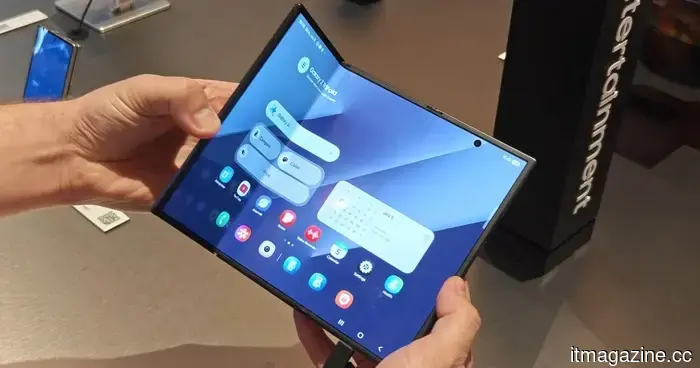 Samsung is facing a potential ban on its foldable phones in the US due to a patent conflict.
A recent lawsuit alleges that Samsung has violated foldable phone patents and is requesting a ban on sales in the US, although the allegations have not yet been substantiated.
Samsung is facing a potential ban on its foldable phones in the US due to a patent conflict.
A recent lawsuit alleges that Samsung has violated foldable phone patents and is requesting a ban on sales in the US, although the allegations have not yet been substantiated.
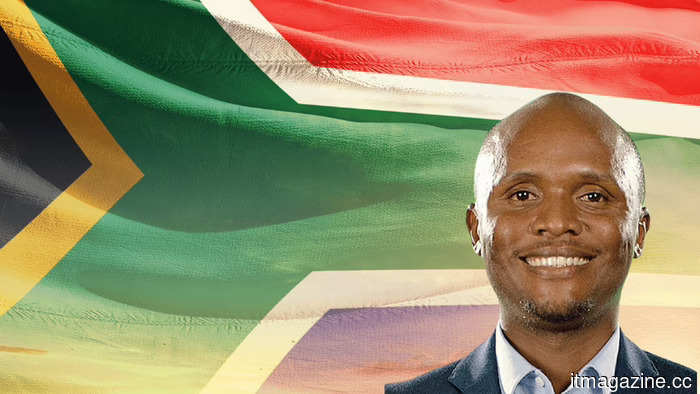 South Africa retreats from its national AI policy following the discovery that at least 6 out of 67 academic citations were identified as AI-generated fabrications.
South Africa withdrew its proposed AI policy after News24 discovered fabricated citations in actual journals. Minister Malatsi termed it an "unacceptable lapse." The integrity of the policy aimed at regulating AI was compromised by this issue.
South Africa retreats from its national AI policy following the discovery that at least 6 out of 67 academic citations were identified as AI-generated fabrications.
South Africa withdrew its proposed AI policy after News24 discovered fabricated citations in actual journals. Minister Malatsi termed it an "unacceptable lapse." The integrity of the policy aimed at regulating AI was compromised by this issue.
 South Africa retracts its national AI policy after discovering that at least 6 out of 67 academic references were AI-generated fabrications.
South Africa retracted its draft AI policy after News24 discovered fraudulent citations in legitimate journals. Minister Malatsi described it as an "unacceptable lapse." The policy intended to regulate AI was compromised as a result.
South Africa retracts its national AI policy after discovering that at least 6 out of 67 academic references were AI-generated fabrications.
South Africa retracted its draft AI policy after News24 discovered fraudulent citations in legitimate journals. Minister Malatsi described it as an "unacceptable lapse." The policy intended to regulate AI was compromised as a result.
Samsung is facing a potential ban on its foldable phones in the US due to a patent dispute.
A recent lawsuit alleges that Samsung has violated patents related to foldable phones and is requesting a ban on sales in the US, although these allegations have yet to be substantiated.