
Meta has reached an agreement to transmit solar energy from space to its AI data centers.
Overview's satellites will continuously harvest sunlight in geosynchronous orbit and transmit it to current ground solar facilities as near-infrared light, which these installations will transform into electricity. This method allows solar farms to produce energy during the night without needing new land, grid connections, or additional infrastructure on the ground.
Meta has entered into an agreement with Overview Energy, a space solar startup, to obtain up to 1 gigawatt of power from satellites that gather solar energy in orbit and send it to Earth in near-infrared. An initial orbital demonstration is scheduled for January 2028, with commercial power delivery anticipated in 2030. The financial terms of this agreement have not been disclosed.
This arrangement represents the first commercial capacity reservation for space-based solar energy by any company and serves as a significant endorsement of a technology that has long been considered speculative engineering.
The primary issue being addressed by this deal is a critical operational limitation in AI infrastructure: data centers require a constant electricity supply, but the most common renewable energy sources, wind and solar, have intermittent availability.
In 2024, Meta's data centers consumed over 18,000 gigawatt-hours of electricity, which is roughly equivalent to powering 1.7 million American households for one year. As the company grows its AI computational presence, including the Hyperion data center campus in Louisiana and the Prometheus campus in Ohio—which is powered by nuclear energy—its overall power needs are set to rise significantly.
Meta aims to reach a renewable energy capacity of 30 gigawatts. However, even with companies committing to renewable energy, challenges persist as solar farms produce no power at night and wind farms are influenced by weather conditions.
Storing electricity at the scale needed for data centers is costly and requires significant land. While nuclear energy resolves the issue of intermittency, it involves lengthy regulatory approval and construction periods. Space solar presents an alternative solution.
Overview's design is distinctly different from earlier concepts of space solar that suggested using lasers or microwaves to transmit energy back to Earth. Those methods encounter notable technical, safety, and regulatory challenges: microwave transmissions need large, specially designed rectenna installations, and high-intensity laser beams raise aviation and safety issues.
Instead, Overview employs a broad, low-intensity near-infrared beam, which is invisible to the naked eye and, according to CEO Marc Berte, safe to look at from the satellite. The beam is directed not at a new receiving station but at an existing utility-scale solar farm. The photovoltaic infrastructure of the farm can convert the near-infrared light into electricity in the same manner it converts sunlight, effectively extending its generation hours into the evening and nighttime without the need for new land, grid connections, or infrastructure.
The satellites will function in geosynchronous orbit, staying fixed in relation to a specific location on the Earth’s surface. Founded in 2022 and located in Ashburn, Virginia—an area rich in data centers that hosts a significant portion of the world’s internet infrastructure—Overview emerged from stealth mode in December 2025.
The company has already proven energy beaming from a moving airborne platform to the ground, which serves as a precursor to the forthcoming space-based transmission. The satellite demonstration planned for January 2028 will be the first test of energy transmission from orbit. Its advisory board includes notable figures such as Jim Bridenstine, former NASA Administrator; Mike Griffin, another former NASA Administrator; and Joseph Kelliher, ex-FERC Chairman and Executive Vice-President of Regulatory Affairs at NextEra Energy, bringing expertise from both space and energy regulatory sectors that Overview's technology must navigate.
Meta's Vice-President of Energy and Sustainability, Nat Sahlstrom, described the deal as a strategic safeguard, stating: “Space solar technology represents a transformative step forward by leveraging existing terrestrial infrastructure to deliver new, uninterrupted energy from orbit. We are excited to help bring this new energy technology to market.”
However, there are significant caveats. The 2030 target for commercial delivery comes just eight years after Overview's founding and is in a field that has yet to produce any commercial systems despite many ambitious concepts. The technical hurdles associated with the development, launch, and maintenance of a geosynchronous satellite capable of continuous high-power energy transmission on a commercial scale remain unresolved.
The agreement gives Meta early access to the capacity of Overview’s system but does not ensure that it will come to fruition as intended, and the financial terms remain undisclosed. Overview has introduced a new measurement unit called "megawatt-photons" to describe the light power necessary to generate a megawatt of electricity, illustrating how this deal diverges from a typical power purchase agreement.
For Meta, the expense of entering a capacity reservation agreement with this pre-commercial startup is minimal compared to the potential benefits of securing 1 gigawatt of continuous renewable power for its data centers by 2030. Should Overview succeed, Meta gains a strategic edge; if not, it will
Other articles
 Turtle Beach has included a controls display on its Command Series MC7 gaming mouse.
The Command Series MC7 from Turtle Beach transforms the gaming mouse into a compact control hub featuring an integrated touch screen for DPI settings, macros, audio management, apps, and streaming controls.
Turtle Beach has included a controls display on its Command Series MC7 gaming mouse.
The Command Series MC7 from Turtle Beach transforms the gaming mouse into a compact control hub featuring an integrated touch screen for DPI settings, macros, audio management, apps, and streaming controls.
 The upcoming Steam Controller has just experienced a price leak, and wow!
A YouTuber released a video prematurely, revealing the Steam Controller's price of $99.99. Although the video was quickly removed, it was seen by the internet before disappearing.
The upcoming Steam Controller has just experienced a price leak, and wow!
A YouTuber released a video prematurely, revealing the Steam Controller's price of $99.99. Although the video was quickly removed, it was seen by the internet before disappearing.
 Spotify transitions from background music to workout sessions.
Today, Spotify introduces a fitness category, allowing Premium subscribers to access Peloton workout classes in the US, UK, Australia, and six additional markets.
Spotify transitions from background music to workout sessions.
Today, Spotify introduces a fitness category, allowing Premium subscribers to access Peloton workout classes in the US, UK, Australia, and six additional markets.
 A Samsung leak indicates that its forthcoming wide foldable phone will stand out prominently amid a multitude of devices.
Leaked prototypes showcase a broader, shorter Galaxy Fold featuring a passport-like design and seemingly supporting Qi2 magnets, and we are definitely excited about it.
A Samsung leak indicates that its forthcoming wide foldable phone will stand out prominently amid a multitude of devices.
Leaked prototypes showcase a broader, shorter Galaxy Fold featuring a passport-like design and seemingly supporting Qi2 magnets, and we are definitely excited about it.
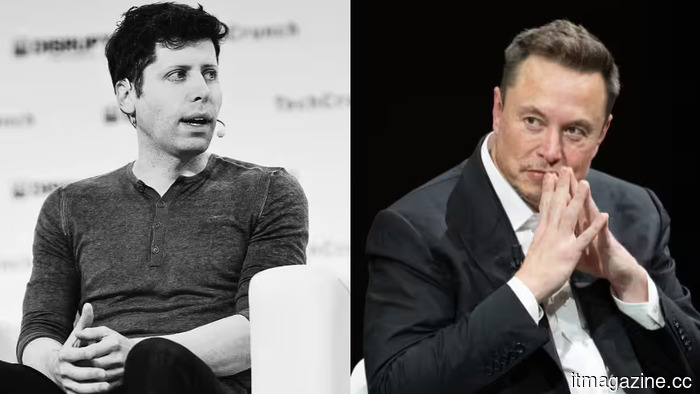 Musk v. Altman is set to go to trial in Oakland.
Jury selection began on Monday in the case of Musk v. Altman, a federal lawsuit regarding OpenAI's shift to a for-profit model. Musk is requesting $150 billion and the reinstatement of OpenAI as a nonprofit organization.
Musk v. Altman is set to go to trial in Oakland.
Jury selection began on Monday in the case of Musk v. Altman, a federal lawsuit regarding OpenAI's shift to a for-profit model. Musk is requesting $150 billion and the reinstatement of OpenAI as a nonprofit organization.
Meta has reached an agreement to transmit solar energy from space to its AI data centers.
Meta has finalized an agreement to obtain up to 1GW from Overview Energy’s satellites, which transmit near-infrared light to current ground solar farms.