
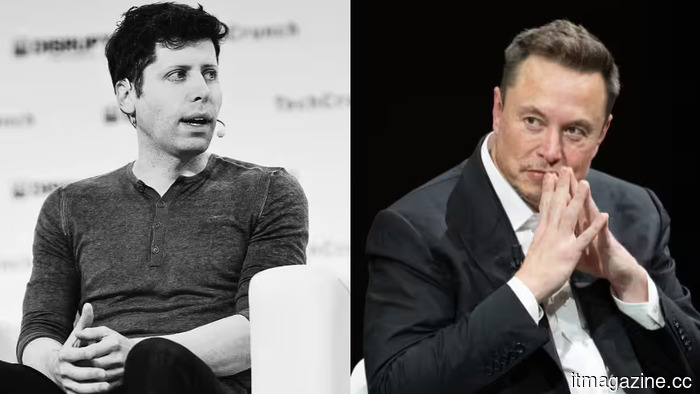
Musk v. Altman is set to go to trial in Oakland.
A four-week federal case regarding OpenAI's essence, a diary entry, $150 billion in claimed damages, and the question of whether a nonprofit can transform into the world's most valuable AI company is underway.
The lengthy legal dispute between Elon Musk and Sam Altman concerning OpenAI's future transitioned from social media to a federal courtroom in Oakland, California, on Monday, with jury selection taking place in the US District Court for the Northern District of California. Opening arguments are anticipated for Tuesday.
The trial, overseen by US District Judge Yvonne Gonzalez Rogers, is set to last four weeks, through mid-May, with court sessions scheduled from Monday to Thursday. The jury’s verdict will serve as an advisory opinion, while the ultimate judgment regarding liability and any remedial actions will be at the discretion of Judge Gonzalez Rogers.
The case revolves around Musk's assertion that he co-founded OpenAI in 2015 along with Altman, Greg Brockman, and others with the clear intention that it would remain a nonprofit focused on developing artificial general intelligence for humanity's benefit. Musk claims Altman and Brockman misled him when they changed OpenAI to a for-profit model in 2019, thirteen months after he departed from the OpenAI board. Musk's lawsuit, filed in August 2024, alleges breach of charitable trust, fraud, and asserts that Microsoft facilitated this breach.
He is pursuing $150 billion in damages from OpenAI and Microsoft, with the funds aimed at benefiting OpenAI’s charitable arm; additionally, he seeks Altman’s removal from both the for-profit and nonprofit boards, along with an order for OpenAI to revert to nonprofit status.
Judge Gonzalez Rogers expedited the main claims to trial, deeming there is significant public interest in resolving them promptly.
OpenAI's counter-argument is direct and backed by internal documents. The company contends that Musk was not deceived about the shift to for-profit status, as he was actively engaged in discussions about it, but he wanted OpenAI to merge with Tesla and to lead that combined entity. When Altman and Brockman refused, OpenAI states Musk opted to leave and establish his own AI lab. A key piece of evidence is a diary entry from Brockman, penned in autumn 2017, stating: “This is the only chance we have to get out from Elon. Is he the ‘glorious leader’ that I would pick?”
This entry will be pivotal for both parties: for Musk, it indicates a conspiracy to exclude him; for OpenAI, it shows that its leadership had genuine concerns regarding Musk's desire for control.
The witness list includes prominent figures from the AI field. Both Musk and Altman are expected to testify in person, along with Microsoft CEO Satya Nadella and Shivon Zilis, a former OpenAI board member and mother of four of Musk's children.
OpenAI's legal team plans to argue that Zilis shared information about OpenAI with Musk while he was not on the board, a claim that, if proven, would intertwine personal and corporate aspects of the case. Depending on the plaintiffs' witness arrangement, Musk may be called to testify as soon as Tuesday.
Pre-trial decisions have largely favored OpenAI. Musk had initially sought over $100 billion in personal damages but has shifted his focus to seeking $150 billion for OpenAI's charitable arm after certain claims were limited.
The judge has ruled that Musk cannot be questioned about alleged ketamine use during the trial, which restricts one avenue of attack on his credibility, though inquiries regarding his attendance at the 2017 Burning Man festival and his relationship with Zilis are permitted.
The trial presents personal risks for Musk that extend beyond legal consequences: last month, a jury found him liable for defrauding investors in his $44 billion Twitter acquisition in 2022, and any damaging testimony related to his business conduct in this case would likely emerge during SpaceX’s planned IPO this summer.
For OpenAI, the stakes are existential. If Judge Gonzalez Rogers rules in Musk’s favor and orders OpenAI to undo its for-profit transition, the company’s ability to raise capital, pursue a potential $1 trillion IPO, and function as a commercial entity would be severely jeopardized.
Currently, OpenAI boasts nearly one billion weekly active users and was valued at $852 billion in its latest funding round, having just completed a $122 billion funding raise. Microsoft holds a 27% stake in the public benefit corporation, and the entire structure depends on the for-profit conversion that Musk seeks to overturn.
As NPR’s Casey Newton noted, the case also reflects a clash between "two enormous personalities," whose public rivalry has significantly influenced the AI landscape, highlighted by Musk’s $97.4 billion offer to acquire OpenAI in February 2025 (which Altman countered by suggesting the purchase of X for $9.74 billion) and their competing posts on X prior to the
Other articles
 Turtle Beach has included a controls display on its Command Series MC7 gaming mouse.
The Command Series MC7 from Turtle Beach transforms the gaming mouse into a compact control hub featuring an integrated touch screen for DPI settings, macros, audio management, apps, and streaming controls.
Meta has reached an agreement to transmit solar energy from space to its AI data centers.
Meta has finalized an agreement to obtain up to 1GW from Overview Energy’s satellites, which transmit near-infrared light to current ground solar farms.
Turtle Beach has included a controls display on its Command Series MC7 gaming mouse.
The Command Series MC7 from Turtle Beach transforms the gaming mouse into a compact control hub featuring an integrated touch screen for DPI settings, macros, audio management, apps, and streaming controls.
Meta has reached an agreement to transmit solar energy from space to its AI data centers.
Meta has finalized an agreement to obtain up to 1GW from Overview Energy’s satellites, which transmit near-infrared light to current ground solar farms.
 A Samsung leak indicates that its forthcoming wide foldable phone will stand out prominently amid a multitude of devices.
Leaked prototypes showcase a broader, shorter Galaxy Fold featuring a passport-like design and seemingly supporting Qi2 magnets, and we are definitely excited about it.
A Samsung leak indicates that its forthcoming wide foldable phone will stand out prominently amid a multitude of devices.
Leaked prototypes showcase a broader, shorter Galaxy Fold featuring a passport-like design and seemingly supporting Qi2 magnets, and we are definitely excited about it.
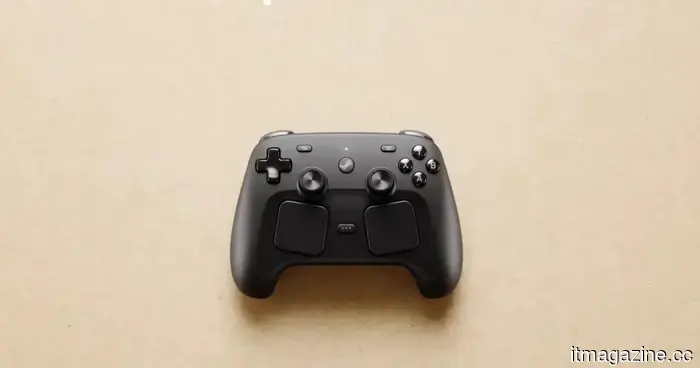 The upcoming Steam Controller has just experienced a price leak, and wow!
A YouTuber released a video prematurely, revealing the Steam Controller's price of $99.99. Although the video was quickly removed, it was seen by the internet before disappearing.
The upcoming Steam Controller has just experienced a price leak, and wow!
A YouTuber released a video prematurely, revealing the Steam Controller's price of $99.99. Although the video was quickly removed, it was seen by the internet before disappearing.
 Spotify transitions from background music to workout sessions.
Today, Spotify introduces a fitness category, allowing Premium subscribers to access Peloton workout classes in the US, UK, Australia, and six additional markets.
Spotify transitions from background music to workout sessions.
Today, Spotify introduces a fitness category, allowing Premium subscribers to access Peloton workout classes in the US, UK, Australia, and six additional markets.
Musk v. Altman is set to go to trial in Oakland.
Jury selection began on Monday in the case of Musk v. Altman, a federal lawsuit regarding OpenAI's shift to a for-profit model. Musk is requesting $150 billion and the reinstatement of OpenAI as a nonprofit organization.