
The trial between Musk and Altman starts, with $150 billion on the line due to OpenAI's shift from a nonprofit to a for-profit model.
**TL;DR** Jury selection is set to begin on Monday in the case of Musk v. Altman, a federal trial to determine if the transition of OpenAI from a nonprofit to a profit-making entity constitutes unjust enrichment and breach of charitable trust. Elon Musk eliminated fraud allegations last Friday to concentrate on the two remaining charges. An entry from Greg Brockman’s 2017 diary, wherein he labels the nonprofit commitment as “a lie,” serves as the most incriminating evidence. Judge Gonzalez Rogers acknowledged “ample evidence” in support of Musk's claims and dismissed nearly all attempts to have the case thrown out. The advisory jury will hear testimony from Musk, Altman, Nadella, Murati, and Sutskever, while the judge alone will decide on potential remedies, which could reach $150 billion in damages and the reversal of the corporate conversion.
Jury selection will commence Monday in Oakland federal court for the trial assessing whether OpenAI's shift from a nonprofit to one of the world’s most valuable companies represented a breach of charitable trust. Elon Musk, a co-founder of OpenAI who contributed at least $38 million, is suing Sam Altman, Greg Brockman, and OpenAI, focusing on two claims: unjust enrichment and breach of charitable trust. He seeks damage awards up to $150 billion for the nonprofit arm, the removal of Altman and Brockman from leadership, and a court directive to reverse the for-profit transition. On Friday, Musk voluntarily dropped his fraud claims, scaling the case down from 26 to 2 while emphasizing the central issue: did OpenAI’s leadership promise a nonprofit but create a company valued at $852 billion instead?
**The Evidence**
The most critical piece of evidence in the case is not an email from Sam Altman but rather a diary entry penned by Greg Brockman, OpenAI's co-founder and president, in 2017: “I cannot believe that we committed to non-profit if three months later we’re doing b-corp then it was a lie.” Judge Yvonne Gonzalez Rogers, overseeing the case and responsible for determining remedies if the jury finds liability, referenced this entry in her January 15 ruling that allowed the case to proceed to trial. She identified “ample evidence” that supports Musk’s assertions and dismissed nearly all efforts from OpenAI and Microsoft to have the lawsuit dismissed. The ruling was a 28-page indication that the court views the case as serious enough to be heard by a jury, which in itself validates the claims made.
Musk's legal team has also produced a 2017 email from Altman claiming he was still “enthusiastic about the non-profit structure” after Musk indicated he might withdraw funding. Musk’s lawyers interpret this statement as a misrepresentation aimed at ensuring donations continued while leadership privately plotted a different course. Hundreds of pages of discovery materials from depositions in autumn 2025, including emails, texts, and Slack messages, indicate that leadership “said one thing publicly and planned something completely different privately.” A February 2023 message from Altman to Musk, sent after Musk openly criticized OpenAI, stated: “You’re my hero and that’s what it feels like when you attack OpenAI.” The witness roster resembles a Silicon Valley exposé, featuring Musk, Altman, Microsoft CEO Satya Nadella, former OpenAI CTO Mira Murati, co-founder Ilya Sutskever, and Shivon Zilis.
**The Defence**
OpenAI has deemed the lawsuit “baseless,” labeling it a “harassment campaign fueled by ego, jealousy, and a desire to impede a competitor.” That competitor is xAI, an AI company Musk established in 2023, recently merging it with SpaceX in an all-stock deal valued at $1.25 trillion. OpenAI's defense will argue that Musk’s motivations are competitive rather than charitable, noting Musk's departure from the board in February 2018, the withdrawal of a larger anticipated donation, and asserting he lacks the standing to dictate the organization’s structure after his exit. Judge Gonzalez Rogers acknowledged, “this country likes competition,” hinting at possible self-interest in Musk’s allegations.
OpenAI’s structural defense asserts that its conversion was reviewed by the attorneys general in both California and Delaware. The nonprofit entity now functions as the OpenAI Foundation, holding about 26% of the company’s worth—approximately $130 billion—and retains oversight over mission alignment and the right to appoint members to the for-profit board. The Foundation's $25 billion pledge upon OpenAI's recapitalization positions it as one of the world's most well-endowed philanthropic organizations. OpenAI argues that this arrangement maintains its charitable mission while enabling the investments necessary to pursue artificial general intelligence. Altman, Brockman, and Microsoft have all denied any wrongdoing.
**The Structure**
The trial's structure is unconventional. The nine-member jury's verdict regarding liability is advisory only. Judge Gonzalez Rogers will make the final decision on both
Other articles
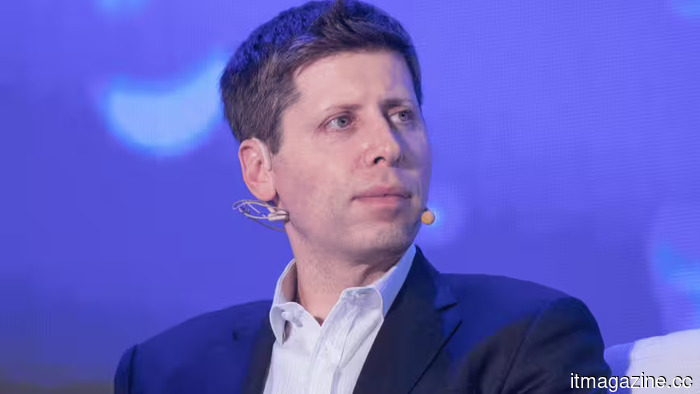 Sam Altman has issued an apology following OpenAI's decision not to report the ChatGPT user involved in the Tumbler Ridge school shooting.
OpenAI identified the Tumbler Ridge shooter's ChatGPT account as a concern 8 months prior to the incident. Staff suggested notifying law enforcement, but their superiors dismissed the recommendation. Altman's apology does not bridge the gap.
Sam Altman has issued an apology following OpenAI's decision not to report the ChatGPT user involved in the Tumbler Ridge school shooting.
OpenAI identified the Tumbler Ridge shooter's ChatGPT account as a concern 8 months prior to the incident. Staff suggested notifying law enforcement, but their superiors dismissed the recommendation. Altman's apology does not bridge the gap.
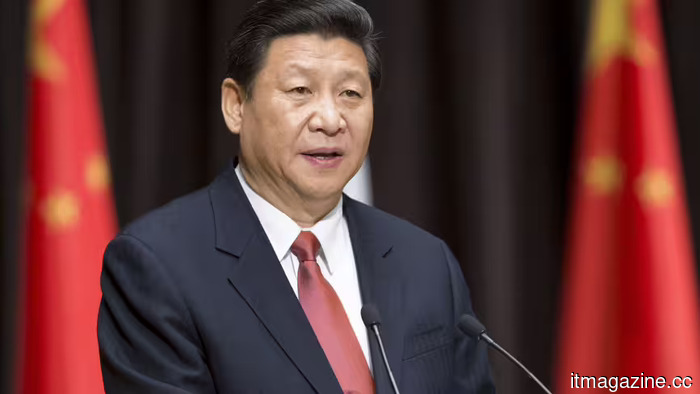 Beijing admonishes the EU following the inclusion of 27 Chinese companies in the 20th sanctions package against Russia and responds by taking action against European defense firms.
China criticized the EU's 20th sanctions package aimed at 27 Chinese entities and responded within a day by targeting seven EU defense companies. Europe's rearmament relies on the rare earth materials that Beijing oversees.
Beijing admonishes the EU following the inclusion of 27 Chinese companies in the 20th sanctions package against Russia and responds by taking action against European defense firms.
China criticized the EU's 20th sanctions package aimed at 27 Chinese entities and responded within a day by targeting seven EU defense companies. Europe's rearmament relies on the rare earth materials that Beijing oversees.
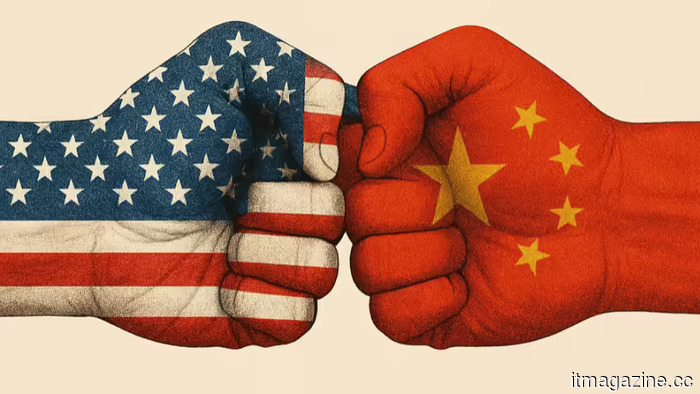 The US aims to restrict China's access to chip manufacturing equipment. In response, China warns that this will disrupt the supply chain for all involved.
China cautions that the MATCH Act could interfere with global semiconductor supply chains as the US Congress progresses with the most extensive export control markup in history.
Sequoia hands out 200 engraved Mac Minis at an AI event as OpenClaw establishes itself as the infrastructure layer that VCs cannot possess.
Alfred Lin distributed 200 engraved Mac Minis equipped with OpenClaw, the open-source AI agent framework that has outperformed Apple's inventory and exceeded React's popularity on GitHub. Sequoia is unable to invest in it. That’s the approach.
The US aims to restrict China's access to chip manufacturing equipment. In response, China warns that this will disrupt the supply chain for all involved.
China cautions that the MATCH Act could interfere with global semiconductor supply chains as the US Congress progresses with the most extensive export control markup in history.
Sequoia hands out 200 engraved Mac Minis at an AI event as OpenClaw establishes itself as the infrastructure layer that VCs cannot possess.
Alfred Lin distributed 200 engraved Mac Minis equipped with OpenClaw, the open-source AI agent framework that has outperformed Apple's inventory and exceeded React's popularity on GitHub. Sequoia is unable to invest in it. That’s the approach.
 I never expected AI to introduce typos – but it does seem to make sense.
A novel AI tool intentionally introduces typos into emails, indicating a trend where flawed writing is perceived as more human and dependable in an era dominated by AI-generated communication.
I never expected AI to introduce typos – but it does seem to make sense.
A novel AI tool intentionally introduces typos into emails, indicating a trend where flawed writing is perceived as more human and dependable in an era dominated by AI-generated communication.
 I'm still using the original Switch in 2026. It simply works since everything else has become too complicated.
The original Switch from Nintendo may be less powerful than current handheld devices, but by 2026, its straightforwardness seems less of a drawback and more like a key feature.
I'm still using the original Switch in 2026. It simply works since everything else has become too complicated.
The original Switch from Nintendo may be less powerful than current handheld devices, but by 2026, its straightforwardness seems less of a drawback and more like a key feature.
The trial between Musk and Altman starts, with $150 billion on the line due to OpenAI's shift from a nonprofit to a for-profit model.
Jury selection will begin on Monday for the Musk-Altman trial. In his 2017 diary, Brockman referred to OpenAI's nonprofit pledge as "a lie." The judge has determined there is "ample evidence" and will independently decide on the remedies.