
Sequoia hands out 200 engraved Mac Minis at an AI event as OpenClaw establishes itself as the infrastructure layer that VCs cannot possess.
**TL;DR** Alfred Lin, co-steward at Sequoia Capital, gave away 200 custom-engraved Mac Minis at the firm's “AI at the Frontier” event. Each Mac Mini, designed by Sequoia’s design principal and featuring unique easter eggs, serves as the unofficial hardware for OpenClaw, an open-source AI agent framework that has become immensely popular on GitHub and led to Apple hardware shortages. While Sequoia has not invested in OpenClaw, the giveaway situates the firm at the forefront of the emerging agentic AI infrastructure, where Lin envisions a new wave of venture-capital-backed companies will arise.
**The project** Peter Steinberger, a developer from Austria, created OpenClaw, initially called WhatsApp Relay, after stepping away from coding following the sale of his previous venture, PSPDFKit. OpenClaw is a free, open-source framework that integrates with various external language models and enables users to perform multi-step tasks via popular messaging platforms. By March 2026, it had gained significant traction with nearly 247,000 stars on GitHub. The Mac Minis were chosen as they utilize Apple’s unified memory architecture, ideal for local AI processing. High demand led to spontaneous hardware shortages, with base models selling out quickly and prices on platforms like eBay reaching up to $979.
**The ecosystem** In February, it was announced that Steinberger would join OpenAI to develop next-gen personal agents, leading OpenClaw toward an independent foundation sponsored by OpenAI. The commercial potential lies in the ecosystem that has arisen around OpenClaw, with numerous startups generating significant revenue based on the framework. Notable companies, including Tencent and Nvidia, have built platforms on OpenClaw, responding to both market demand and security challenges as various vulnerabilities surfaced.
**The thesis** Lin has argued that traditional software code is no longer a competitive advantage, which contextualizes the Mac Mini distribution as strategic rather than just promotional. As the value in AI shifts from models to the underlying infrastructure that connects these models to practical applications, Sequoia is positioning itself at the heart of this dynamic, despite not being able to directly invest in OpenClaw. Their recent $7 billion fund exemplifies their commitment to AI at all stages, underscoring the significance of fostering connections within this evolving market.
**The symbol** The engraved Mac Mini has become a status symbol in the AI domain, akin to the Patagonia vest in finance, representing membership in a community that values local inference and open-source tools. This reinforces Sequoia's brand identity as a knowledgeable player in the tech space. Unlike mere tokens of prestige, the Mac Mini offers functional value by being integral to running OpenClaw, embodying a deeper commitment by Sequoia to facilitate the development of an ecosystem around this burgeoning technology.
Other articles
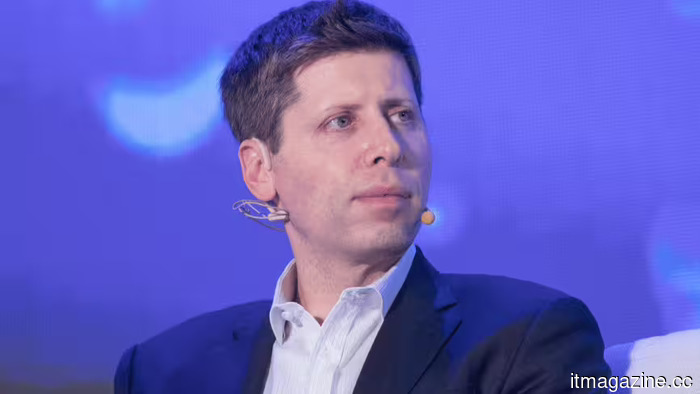 Sam Altman has issued an apology following OpenAI's decision not to report a ChatGPT user involved in the Tumbler Ridge school shooting.
OpenAI marked the ChatGPT account of the Tumbler Ridge shooter as suspicious eight months prior to the attack. Staff suggested notifying law enforcement, but their leadership decided against it. Altman's apology does not bridge the gap.
Sam Altman has issued an apology following OpenAI's decision not to report a ChatGPT user involved in the Tumbler Ridge school shooting.
OpenAI marked the ChatGPT account of the Tumbler Ridge shooter as suspicious eight months prior to the attack. Staff suggested notifying law enforcement, but their leadership decided against it. Altman's apology does not bridge the gap.
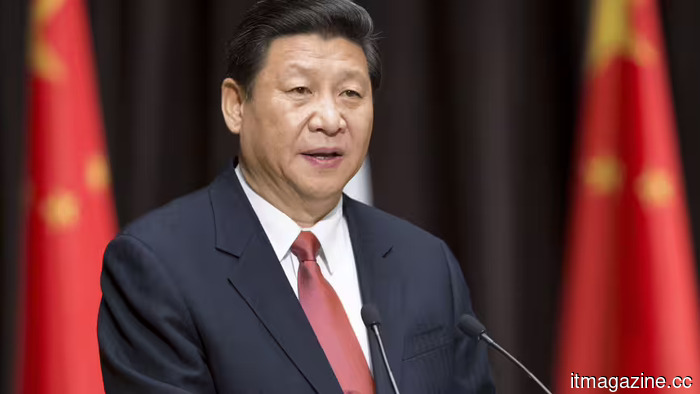 Beijing has issued a warning to the EU following the inclusion of 27 Chinese companies in the 20th sanctions package against Russia, and it has taken retaliatory measures against European defense firms.
China denounced the EU's 20th sanctions package aimed at 27 Chinese entities and responded within 24 hours by taking action against seven EU defense companies. Europe's rearmament is reliant on the rare earth materials controlled by Beijing.
Beijing has issued a warning to the EU following the inclusion of 27 Chinese companies in the 20th sanctions package against Russia, and it has taken retaliatory measures against European defense firms.
China denounced the EU's 20th sanctions package aimed at 27 Chinese entities and responded within 24 hours by taking action against seven EU defense companies. Europe's rearmament is reliant on the rare earth materials controlled by Beijing.
 Beijing admonishes the EU following the inclusion of 27 Chinese companies in the 20th sanctions package against Russia and responds by taking action against European defense firms.
China criticized the EU's 20th sanctions package aimed at 27 Chinese entities and responded within a day by targeting seven EU defense companies. Europe's rearmament relies on the rare earth materials that Beijing oversees.
Beijing admonishes the EU following the inclusion of 27 Chinese companies in the 20th sanctions package against Russia and responds by taking action against European defense firms.
China criticized the EU's 20th sanctions package aimed at 27 Chinese entities and responded within a day by targeting seven EU defense companies. Europe's rearmament relies on the rare earth materials that Beijing oversees.
 Beijing issues a warning to the EU following the inclusion of 27 Chinese companies in the 20th sanctions package against Russia and responds by taking action against European defense firms.
China criticized the European Union's 20th sanctions package, which affects 27 Chinese entities, and responded within a day by targeting seven EU defense companies. Europe's rearmament relies on the rare earth materials that Beijing possesses.
Foundation Future Industries secures $24 million in Pentagon contracts for humanoid robot soldiers, with support from Eric Trump and trials conducted in Ukraine.
Foundation Future Industries has obtained $24 million in contracts from the Pentagon for humanoid robots that have been tested in Ukraine. The company's CEO previously led a bankrupt fintech, and it has Eric Trump as an adviser. The firm is seeking $500 million at a valuation exceeding $3 billion.
Beijing issues a warning to the EU following the inclusion of 27 Chinese companies in the 20th sanctions package against Russia and responds by taking action against European defense firms.
China criticized the European Union's 20th sanctions package, which affects 27 Chinese entities, and responded within a day by targeting seven EU defense companies. Europe's rearmament relies on the rare earth materials that Beijing possesses.
Foundation Future Industries secures $24 million in Pentagon contracts for humanoid robot soldiers, with support from Eric Trump and trials conducted in Ukraine.
Foundation Future Industries has obtained $24 million in contracts from the Pentagon for humanoid robots that have been tested in Ukraine. The company's CEO previously led a bankrupt fintech, and it has Eric Trump as an adviser. The firm is seeking $500 million at a valuation exceeding $3 billion.
 The upcoming iPad may abandon conventional naming conventions as Apple reassesses its product lineup.
Apple might streamline its iPad naming convention by eliminating confusing generation labels. This change is part of a wider plan to enhance clarity in its product lineup and better align it with shifting product positioning.
The upcoming iPad may abandon conventional naming conventions as Apple reassesses its product lineup.
Apple might streamline its iPad naming convention by eliminating confusing generation labels. This change is part of a wider plan to enhance clarity in its product lineup and better align it with shifting product positioning.
Sequoia hands out 200 engraved Mac Minis at an AI event as OpenClaw establishes itself as the infrastructure layer that VCs cannot possess.
Alfred Lin distributed 200 engraved Mac Minis equipped with OpenClaw, the open-source AI agent framework that has outperformed Apple's inventory and exceeded React's popularity on GitHub. Sequoia is unable to invest in it. That’s the approach.