
The trial between Musk and Altman commences, with $150 billion involved regarding the transition of OpenAI from a nonprofit to a profit-driven model.
**TL;DR** Jury selection is set to start Monday in Musk v. Altman, the federal case examining whether OpenAI's transition from a nonprofit to a for-profit entity represents unjust enrichment and breach of charitable trust. Musk removed fraud claims on Friday to focus on the two remaining issues. The most incriminating evidence is a 2017 diary entry from Greg Brockman calling the nonprofit commitment "a lie." Judge Gonzalez Rogers found "ample evidence" supporting Musk's claims and dismissed nearly all attempts to throw the case out. An advisory jury will hear testimonies from Musk, Altman, Nadella, Murati, and Sutskever, with the judge alone determining remedies, which could include $150 billion in damages and reversing the conversion.
Jury selection is set to commence Monday in Oakland federal court for the trial to assess whether OpenAI’s shift from a nonprofit to a highly valuable company breached charitable trust. Elon Musk, who co-founded OpenAI in 2015 and contributed at least $38 million, is suing Sam Altman, Greg Brockman, and OpenAI on two claims: unjust enrichment and breach of charitable trust. He seeks up to $150 billion in damages for the nonprofit sector, the removal of Altman and Brockman from their positions, and a court ruling to reverse the for-profit transition. Musk dropped his fraud claims on Friday, condensing the case from 26 claims to two, but emphasizing the key question at the heart of the dispute: did OpenAI’s leaders promise a nonprofit only to create an $852 billion company instead?
**The Evidence**
The most damning piece of evidence in the case is not an email from Sam Altman, but a diary entry from Greg Brockman, OpenAI’s co-founder and president, written in 2017: “I cannot believe we committed to nonprofit if three months later we’re doing b-corp then it was a lie.” Judge Yvonne Gonzalez Rogers, who is overseeing the case and will make the final ruling on remedies if the jury finds liability, cited this entry directly in her January 15 ruling which sent the case to trial. She determined there was "ample evidence" to support Musk’s claims and rejected nearly all attempts by OpenAI and Microsoft to dismiss the lawsuit. This ruling indicated that the court finds the case serious enough for a jury to consider, marking a significant validation of the allegations.
Musk’s legal team has also presented a 2017 email in which Altman expressed he remained “enthusiastic about the nonprofit structure” following Musk’s threat to cut funding; Musk’s lawyers interpret this as a tactic to maintain donations while leadership secretly planned a different direction. Hundreds of pages of discovery documents released from depositions in the fall of 2025 feature emails, texts, and Slack messages which Musk’s team argues demonstrate that leadership “said one thing publicly and planned something completely different privately.” A February 2023 message from Altman to Musk, sent after Musk publicly criticized OpenAI, stated: “You’re my hero and that’s what it feels like when you attack OpenAI.” The witness list includes notable figures from Silicon Valley: Musk, Altman, Microsoft CEO Satya Nadella, former OpenAI CTO Mira Murati, co-founder Ilya Sutskever, and Shivon Zilis.
**The Defense**
OpenAI has labeled the lawsuit as “baseless” and characterized it as a “harassment campaign driven by ego, jealousy, and a desire to slow down a competitor.” The competitor in question is xAI, the AI firm Musk founded in 2023, which recently merged with SpaceX in an all-stock deal valuing the merged entity at $1.25 trillion. Musk’s own AI venture was incorporated into SpaceX for $1.25 trillion in stock, raising its own corporate governance issues, a fact that OpenAI's defense team will use to argue Musk's motivations are competitive rather than altruistic. OpenAI asserts that Musk left the board in February 2018, backed out on a larger planned donation, and lacks standing to control the organization’s structure years after his exit. Judge Gonzalez Rogers herself pointed out that “this country likes competition,” signaling potential self-interest in Musk’s claims.
The structural defense argues that OpenAI’s conversion was reviewed by attorneys general in both California and Delaware, that the nonprofit entity now operates as the OpenAI Foundation, which holds about 26% of the company's value (approximately $130 billion), and retains oversight of mission alignment and the ability to appoint members to the for-profit board. The $25 billion commitment announced by the Foundation upon OpenAI’s recapitalization positions it as one of the world's most well-funded philanthropic organizations. OpenAI asserts that this structure maintains the charitable mission while facilitating the level of investment needed for pursuing artificial general intelligence. Altman, Brockman, and Microsoft have all denied any wrongdoing.
**The Structure**
The structure of the trial is unconventional
Other articles
 NotebookLM now has the ability to automatically arrange your research sources.
Google has introduced automatic source labeling and categorization for NotebookLM. This feature activates automatically when you have five or more sources in a notebook.
NotebookLM now has the ability to automatically arrange your research sources.
Google has introduced automatic source labeling and categorization for NotebookLM. This feature activates automatically when you have five or more sources in a notebook.
 The upcoming iPad may abandon conventional naming conventions as Apple reassesses its product lineup.
Apple might streamline its iPad naming convention by eliminating confusing generation labels. This change is part of a wider plan to enhance clarity in its product lineup and better align it with shifting product positioning.
The upcoming iPad may abandon conventional naming conventions as Apple reassesses its product lineup.
Apple might streamline its iPad naming convention by eliminating confusing generation labels. This change is part of a wider plan to enhance clarity in its product lineup and better align it with shifting product positioning.
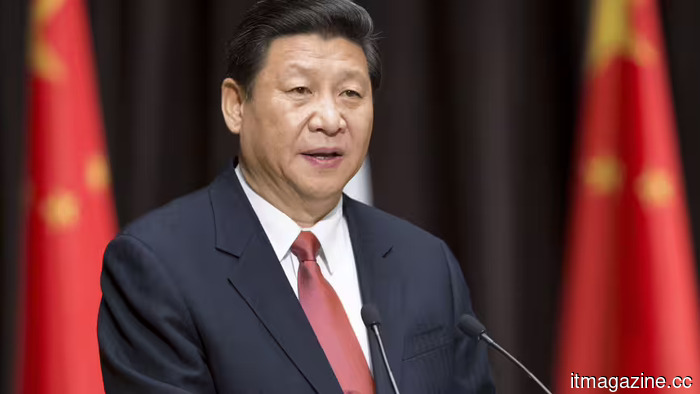 Beijing issues a warning to the EU following the inclusion of 27 Chinese companies in the 20th sanctions package against Russia and responds by taking action against European defense firms.
China criticized the European Union's 20th sanctions package, which affects 27 Chinese entities, and responded within a day by targeting seven EU defense companies. Europe's rearmament relies on the rare earth materials that Beijing possesses.
Beijing issues a warning to the EU following the inclusion of 27 Chinese companies in the 20th sanctions package against Russia and responds by taking action against European defense firms.
China criticized the European Union's 20th sanctions package, which affects 27 Chinese entities, and responded within a day by targeting seven EU defense companies. Europe's rearmament relies on the rare earth materials that Beijing possesses.
 I'm still enjoying the original Switch in 2026. It’s reliable since everything else has become more complicated.
Although Nintendo's original Switch is less powerful than current handhelds, in 2026, its simplicity appears to be less of a disadvantage and more like its main appeal.
Foundation Future Industries secures $24 million in Pentagon contracts for humanoid robotic soldiers, with support from Eric Trump and having undergone testing in Ukraine.
Foundation Future Industries has obtained $24 million in contracts from the Pentagon for humanoid robots that were tested in Ukraine. The company's CEO previously led a fintech that went bankrupt, and Eric Trump serves as an adviser. They are seeking $500 million at a valuation exceeding $3 billion.
The trial between Musk and Altman commences, with $150 billion on the line regarding OpenAI's shift from nonprofit to for-profit status.
Jury selection will begin on Monday for the Musk-Altman trial. In his 2017 diary, Brockman referred to OpenAI's commitment to being a nonprofit as "a lie." The judge has found "ample evidence" and will independently determine the remedies.
I'm still enjoying the original Switch in 2026. It’s reliable since everything else has become more complicated.
Although Nintendo's original Switch is less powerful than current handhelds, in 2026, its simplicity appears to be less of a disadvantage and more like its main appeal.
Foundation Future Industries secures $24 million in Pentagon contracts for humanoid robotic soldiers, with support from Eric Trump and having undergone testing in Ukraine.
Foundation Future Industries has obtained $24 million in contracts from the Pentagon for humanoid robots that were tested in Ukraine. The company's CEO previously led a fintech that went bankrupt, and Eric Trump serves as an adviser. They are seeking $500 million at a valuation exceeding $3 billion.
The trial between Musk and Altman commences, with $150 billion on the line regarding OpenAI's shift from nonprofit to for-profit status.
Jury selection will begin on Monday for the Musk-Altman trial. In his 2017 diary, Brockman referred to OpenAI's commitment to being a nonprofit as "a lie." The judge has found "ample evidence" and will independently determine the remedies.
The trial between Musk and Altman commences, with $150 billion involved regarding the transition of OpenAI from a nonprofit to a profit-driven model.
Jury selection for the Musk-Altman trial begins on Monday. Brockman's diary from 2017 referred to OpenAI's commitment to nonprofit status as "a lie." The judge has determined there is "ample evidence" and will independently decide on the remedies.