
The trial between Musk and Altman commences, with $150 billion on the line regarding OpenAI's shift from nonprofit to for-profit status.
TL;DR: Jury selection starts Monday in Musk v. Altman, a federal trial assessing whether OpenAI's shift from a nonprofit to a for-profit entity amounts to unjust enrichment and a breach of charitable trust. Musk dropped fraud claims on Friday to concentrate on the two remaining charges. A critical piece of evidence is a 2017 diary entry from Greg Brockman describing the nonprofit commitment as “a lie.” Judge Gonzalez Rogers found “ample evidence” and dismissed nearly all requests for case dismissal. The advisory jury will hear from Musk, Altman, Nadella, Murati, and Sutskever, but the judge has the final say on remedies, potentially totaling $150 billion in damages and reversing the conversion.
Jury selection will commence Monday in a federal court in Oakland, assessing whether OpenAI's transition from nonprofit status to one of the world's most valuable companies breached charitable trust. Elon Musk, who co-founded OpenAI in 2015 and donated over $38 million, is suing Sam Altman, Greg Brockman, and OpenAI based on two claims: unjust enrichment and breach of charitable trust. Musk aims to secure up to $150 billion in damages for the nonprofit arm, the removal of Altman and Brockman from their roles, and an order to reverse the for-profit conversion. Musk dropped charges of fraud and constructive fraud on Friday, narrowing the case from 26 to two claims and honing in on a central issue: did OpenAI’s leadership promise to remain a nonprofit while creating an $852 billion company?
The Evidence:
The most compelling evidence in this case is a diary entry from Greg Brockman, OpenAI’s co-founder and president, written in 2017: “I cannot believe that we committed to non-profit if three months later we’re doing b-corp then it was a lie.” Judge Yvonne Gonzalez Rogers, who is overseeing the case and determining remedies if the jury finds liability, referenced this entry in her January 15 ruling that allowed the case to proceed to trial. She found “ample evidence” to support Musk's claims and dismissed “nearly every attempt by OpenAI and Microsoft to make the lawsuit go away.” This ruling indicates that the court views the allegations as serious enough for a jury consideration.
Musk's legal team has also presented a 2017 email in which Altman expressed ongoing enthusiasm for the nonprofit structure after Musk threatened to withdraw funding, a statement Musk’s attorneys argue was a tactic to secure donations while leadership had alternate plans. Discovery materials, released from depositions in autumn 2025, contain hundreds of pages of emails, texts, and Slack messages that Musk’s team asserts show a discrepancy between public statements and private plans. A February 2023 text from Altman to Musk following Musk's public criticism of OpenAI read: “You’re my hero, and that’s what it feels like when you attack OpenAI.” The witness list resembles a Silicon Valley exposé, featuring prominent figures like Musk, Altman, Microsoft CEO Satya Nadella, former OpenAI CTO Mira Murati, co-founder Ilya Sutskever, and Shivon Zilis.
The Defence:
OpenAI has called the lawsuit “baseless” and characterized it as a “harassment campaign driven by ego, jealousy, and a desire to hinder a competitor.” That competitor is xAI, the AI firm Musk founded in 2023 and recently merged with SpaceX in a deal valued at $1.25 trillion. Musk’s own AI venture was integrated into SpaceX through this all-stock deal, which raised its own governance questions—a point that OpenAI’s defence will use to suggest Musk is motivated by competitive rather than charitable interests. OpenAI contends that Musk left the board in February 2018, backed out of a larger planned donation, and lacks standing to dictate the organization’s structure many years after his departure. Judge Gonzalez Rogers pointed out that “this country values competition,” hinting at possible self-interest in Musk’s claims.
The structural defence asserts that OpenAI’s transition had oversight from attorneys general in both California and Delaware, that the nonprofit entity now functions as the OpenAI Foundation holding about 26% of the company’s valuation (approximately $130 billion), and that the Foundation retains supervisory powers over mission alignment and board member appointments for the for-profit entity. The Foundation’s $25 billion commitment upon OpenAI's recapitalization establishes it as one of the world’s most well-funded philanthropic organizations. OpenAI argues this structure upholds the charitable mission while enabling required investment to pursue artificial general intelligence. Altman, Brockman, and Microsoft have all denied wrongdoing.
The Structure:
The structure of the trial is atypical. The nine-member jury’s verdict on liability will serve as an advisory opinion only; Judge Gonzalez Rogers will make the final decisions on both liability and remedies. Opening statements are anticipated on Tuesday, with the liability phase extending through mid-May. Should OpenAI be found liable, the remedies phase will commence on
Other articles
 AI stocks compared to the dot-com bubble: CAPE ratio at 38, concentration exceeds levels seen in 2000, but these companies are genuinely profitable.
The Shiller CAPE stands between 38 and 40, only surpassed by the dot-com peak of 44.19. The concentration in the top 10 exceeds levels seen in 2000. However, Nvidia generated $120 billion, and tech stocks are trading at 30 times earnings, not 50 times. Both perspectives hold validity.
Foundation Future Industries secures $24 million in Pentagon contracts for humanoid robot soldiers, with support from Eric Trump and trials conducted in Ukraine.
Foundation Future Industries has obtained $24 million in contracts from the Pentagon for humanoid robots that have been tested in Ukraine. The company's CEO previously led a bankrupt fintech, and it has Eric Trump as an adviser. The firm is seeking $500 million at a valuation exceeding $3 billion.
AI stocks compared to the dot-com bubble: CAPE ratio at 38, concentration exceeds levels seen in 2000, but these companies are genuinely profitable.
The Shiller CAPE stands between 38 and 40, only surpassed by the dot-com peak of 44.19. The concentration in the top 10 exceeds levels seen in 2000. However, Nvidia generated $120 billion, and tech stocks are trading at 30 times earnings, not 50 times. Both perspectives hold validity.
Foundation Future Industries secures $24 million in Pentagon contracts for humanoid robot soldiers, with support from Eric Trump and trials conducted in Ukraine.
Foundation Future Industries has obtained $24 million in contracts from the Pentagon for humanoid robots that have been tested in Ukraine. The company's CEO previously led a bankrupt fintech, and it has Eric Trump as an adviser. The firm is seeking $500 million at a valuation exceeding $3 billion.
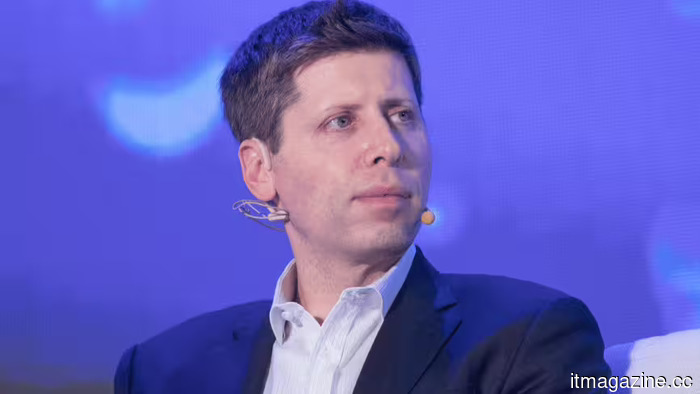 Sam Altman has issued an apology following OpenAI's decision not to report a ChatGPT user involved in the Tumbler Ridge school shooting.
OpenAI marked the ChatGPT account of the Tumbler Ridge shooter as suspicious eight months prior to the attack. Staff suggested notifying law enforcement, but their leadership decided against it. Altman's apology does not bridge the gap.
Sam Altman has issued an apology following OpenAI's decision not to report a ChatGPT user involved in the Tumbler Ridge school shooting.
OpenAI marked the ChatGPT account of the Tumbler Ridge shooter as suspicious eight months prior to the attack. Staff suggested notifying law enforcement, but their leadership decided against it. Altman's apology does not bridge the gap.
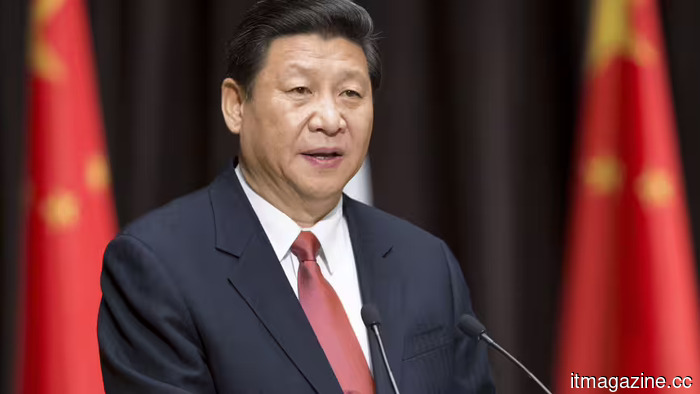 Beijing issues a warning to the EU following the inclusion of 27 Chinese companies in the 20th set of sanctions against Russia, taking action against European defense firms in response.
China criticized the EU's 20th sanctions package, which aimed at 27 Chinese entities, and swiftly responded within 24 hours by targeting seven EU defense companies. The rearmament efforts in Europe rely on the rare earths that Beijing oversees.
Beijing issues a warning to the EU following the inclusion of 27 Chinese companies in the 20th set of sanctions against Russia, taking action against European defense firms in response.
China criticized the EU's 20th sanctions package, which aimed at 27 Chinese entities, and swiftly responded within 24 hours by targeting seven EU defense companies. The rearmament efforts in Europe rely on the rare earths that Beijing oversees.
The trial between Musk and Altman commences, with $150 billion on the line regarding OpenAI's shift from nonprofit to for-profit status.
Jury selection will begin on Monday for the Musk-Altman trial. In his 2017 diary, Brockman referred to OpenAI's commitment to being a nonprofit as "a lie." The judge has found "ample evidence" and will independently determine the remedies.