
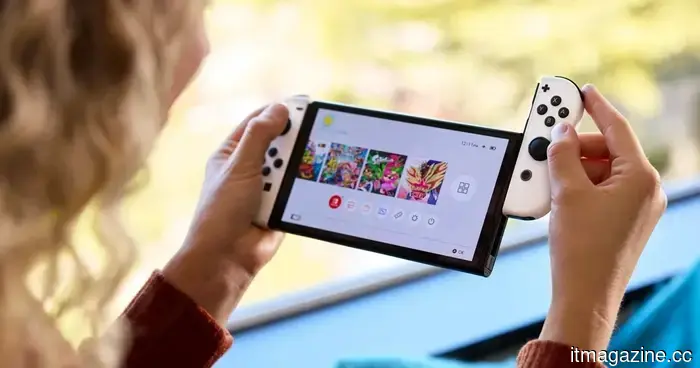
I'm still enjoying the original Switch in 2026. It’s reliable since everything else has become more complicated.
My original Switch should feel like it's been retired by now. It has thick bezels, an aging screen, diminished battery life, and the unmistakable aura of a device that has endured too many backpack trips. Compared to Switch 2 and the current surge of handheld PCs, Nintendo’s initial hybrid console seems clearly outclassed.
Yet, I continue to reach for it.
My expectations aren't overly ambitious here. I want to wake it up and start playing before my brain has a chance to check the battery level. In 2026, I still use the old console because it’s almost irritatingly straightforward.
That shouldn’t seem revolutionary, but somehow it does.
Simplicity is still a quality
It’s a low bar, sure. Portable gaming has done impressive work tripping over it. The Switch 2 is the evident upgrade, boasting stronger hardware. However, at $449.99, it’s not exactly an impulse buy when my old Switch already has all the games I've purchased.
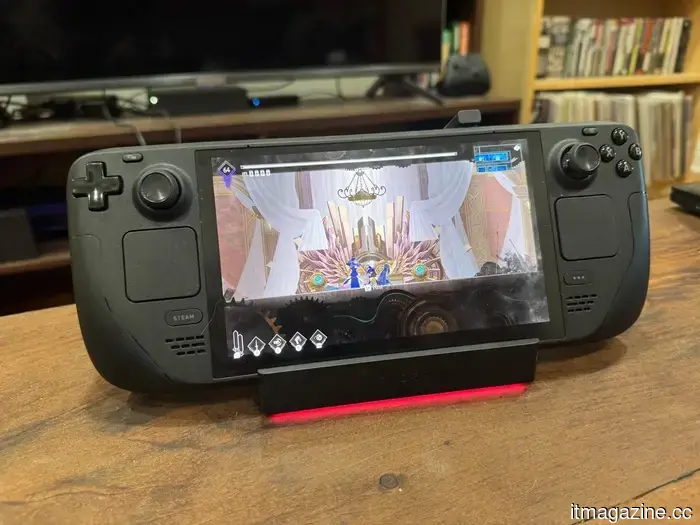
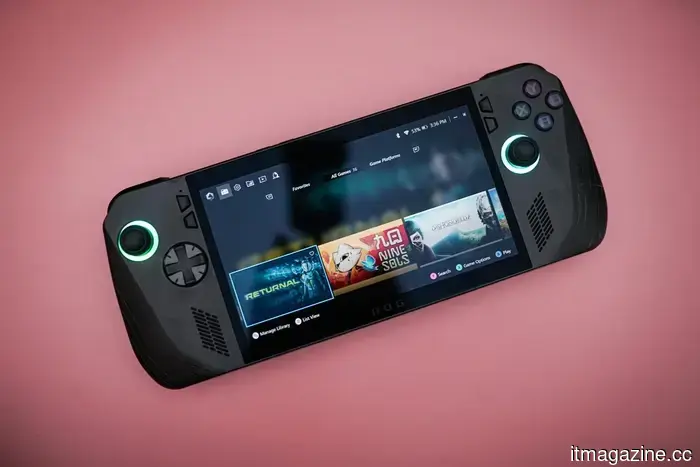
The PC alternatives make a compelling argument, particularly devices like the Steam Deck OLED and ROG Ally X. They are faster, sharper, and make my old Switch look like a lunchbox with buttons. On paper, they are a clear win.
But in my hands, the situation is less straightforward.
Increased power means increased tasks
Greater capabilities also translate to more management during play. A handheld PC can perform brilliantly, but it also comes with Windows, launcher apps, battery estimations, storage juggling, graphics settings, update alerts, and the nagging feeling that I should spend 20 minutes refining a game before truly enjoying it.
That’s great for those who appreciate control. Sometimes I do too. I’m not pretending my Switch could stand up to an ROG Ally X in a specs competition without losing face.
But therein lies the point. My Switch doesn't ask me to optimize anything. It just remains there, a bit dusty, waiting to be useful. And that’s coming from someone who genuinely enjoys fiddling with settings.
Sufficiency is undervalued
The real magic is that Nintendo’s original Switch has become helpful in a reliable, rugged way. It feels familiar. It’s portable enough. It has years of games to draw from, including Nintendo's first-party hits and indie titles that still work well on a small screen. Its greatest asset in 2026 isn't the Tegra chip, of course. It’s simply that I already know what to expect when I undock it.
Nintendo continues to add to that library in peculiar ways. Pokémon FireRed and LeafGreen were released on Switch in February as standalone offerings, bringing two Game Boy Advance titles from 2004 into the same eShop as the latest hardware. That’s quintessentially Nintendo, for better or worse. It also clarifies why my old Switch never feels entirely completed.
I don't miss 2017. I miss a device that already understands its purpose. My games are there. My saves are there. And so is that same satisfying click when I attach the Joy-Cons.
The original Switch may not be the top handheld in 2026, but it's winning by being the least demanding option in the room.
Other articles
 Beijing issues a warning to the EU following the inclusion of 27 Chinese companies in the 20th set of sanctions against Russia, taking action against European defense firms in response.
China criticized the EU's 20th sanctions package, which aimed at 27 Chinese entities, and swiftly responded within 24 hours by targeting seven EU defense companies. The rearmament efforts in Europe rely on the rare earths that Beijing oversees.
Beijing issues a warning to the EU following the inclusion of 27 Chinese companies in the 20th set of sanctions against Russia, taking action against European defense firms in response.
China criticized the EU's 20th sanctions package, which aimed at 27 Chinese entities, and swiftly responded within 24 hours by targeting seven EU defense companies. The rearmament efforts in Europe rely on the rare earths that Beijing oversees.
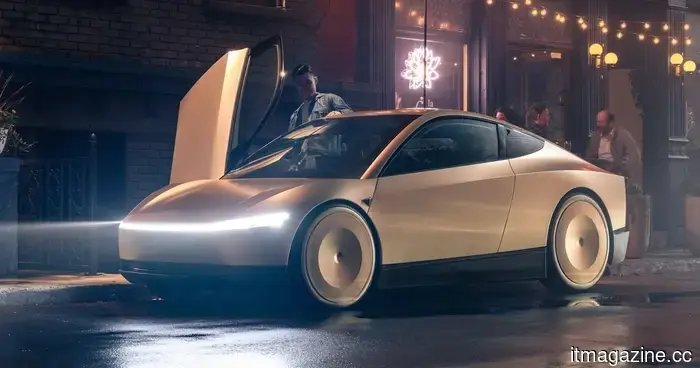 Tesla's Cybercab has begun production. Let's see if it can truly drive itself this time.
Tesla's Cybercab has begun mass production at Gigafactory Texas, yet the self-driving robotaxi still relies on FSD software, which malfunctions four times more frequently than human operators.
The trial between Musk and Altman commences with $150 billion on the line regarding OpenAI's transition from a nonprofit to a for-profit entity.
Jury selection for the Musk-Altman trial begins on Monday. Brockman's diary from 2017 referred to OpenAI's dedication as a nonprofit as "a lie." The judge identified "sufficient evidence" and will determine the remedies independently.
Tesla's Cybercab has begun production. Let's see if it can truly drive itself this time.
Tesla's Cybercab has begun mass production at Gigafactory Texas, yet the self-driving robotaxi still relies on FSD software, which malfunctions four times more frequently than human operators.
The trial between Musk and Altman commences with $150 billion on the line regarding OpenAI's transition from a nonprofit to a for-profit entity.
Jury selection for the Musk-Altman trial begins on Monday. Brockman's diary from 2017 referred to OpenAI's dedication as a nonprofit as "a lie." The judge identified "sufficient evidence" and will determine the remedies independently.
I'm still enjoying the original Switch in 2026. It’s reliable since everything else has become more complicated.
Although Nintendo's original Switch is less powerful than current handhelds, in 2026, its simplicity appears to be less of a disadvantage and more like its main appeal.