
Foundation Future Industries secures $24 million in Pentagon contracts for humanoid robot soldiers, supported by Eric Trump and trialed in Ukraine.
**TL;DR:** Foundation Future Industries, a San Francisco startup led by a CEO with a history of managing a failed fintech, has received $24 million in Pentagon research contracts to evaluate humanoid robots for penetrating enemy lines. Two Phantom MK-1 units were dispatched to Ukraine in February for logistics and reconnaissance purposes. The company has Eric Trump as its chief strategy adviser, prompting Senator Warren to label the contracts as “corruption in plain sight.” Foundation aims to raise $500 million at a valuation exceeding $3 billion, yet its production goal of 50,000 units by 2027 from an initial 40 demands a 250-fold increase based on approximately $21 million in funding.
Foundation Future Industries, established in April 2024 in San Francisco, has obtained $24 million in research contracts from the US Army, Navy, and Air Force to evaluate humanoid robots intended for breaching enemy defenses. The Phantom MK-1 is a 5-foot-9, 176-pound humanoid featuring 19 upper-body degrees of freedom, five-fingered hands, a camera-first vision system, and an LLM-driven autonomy stack enabling both independent operation and supervised teleoperation. Two units were sent to Ukraine in February for logistical and reconnaissance trials, marking their initial deployment in a combat zone. The startup is pursuing $500 million in funding, aiming for a valuation over $3 billion. Its chief strategy adviser is Eric Trump, son of the sitting president, which led Senator Elizabeth Warren to characterize the Pentagon contracts as “corruption in plain sight.” The CEO previously oversaw a fintech startup that went bankrupt, leaving millions in consumer deposits unaccounted for.
The Phantom MK-1 operates at a speed of 1.7 meters per second, has a payload capacity of 44 pounds, utilizes eight cameras with no bulky LiDAR, and employs proprietary cycloidal actuators that produce up to 160 newton-meters of torque. Its AI stack converts high-level task instructions into physical movement through an LLM pipeline, while operators maintain ultimate authority over lethal actions. Each unit costs around $150,000, with an annual leasing option of $100,000. The upcoming MK-2, anticipated this month, consolidates its electronics to mitigate short-circuit risks, adds waterproofing and larger batteries, increases payload capacity to 175 pounds, and incorporates cast-moulded bodywork to enhance manufacturing efficiency and reduce costs. Foundation aims to produce 40 units in 2025, 10,000 in 2026, and 50,000 by late 2027, requiring a 250-fold increase in production over two years based on about $21 million in total funding.
The company was co-founded by Sankaet Pathak, former CEO of Synapse, a banking-as-a-service platform that went bankrupt in 2024; Arjun Sethi, CEO of Tribe Capital, which headed Foundation’s $11 million pre-seed round; and Mike LeBlanc, a 14-year Marine Corps veteran and co-founder of Cobalt Robotics. LeBlanc lends military credibility to the company and has stated that there is a “moral imperative to deploy these robots in warfare instead of soldiers.” In June 2024, CNBC reported that Foundation had been fundraising with exaggerated claims regarding ties to General Motors, including assertions of a $300 million purchase order. GM denied these claims flatly. LeBlanc acknowledged the denial and expressed his embarrassment over the misleading marketing materials. For a company seeking Pentagon trust for its robots, maintaining credibility is essential.
The Pentagon's $24 million contracts include an SBIR Phase 3 designation, which qualifies Foundation as an approved military vendor, alongside specific agreements for testing humanoid robots in breach scenarios. Some of these contracts were obtained through the acquisition of Boardwalk, including a US Air Force SBIR award with an approximate value of $1.8 million. Eric Trump appeared on Fox Business to promote the contracts. Warren responded promptly, questioning, “Is the Pentagon a cash machine for Trump’s kids?” The political implications are undeniable. The role of a sitting president's son as chief strategy adviser for a firm receiving Defense Department contracts raises governance concerns, irrespective of the company's technical capacities. Although the contracts are legitimate, they are modest in size. For comparison, Shield AI recently raised $2 billion to expand its autonomous combat pilot, Hivemind, which flies aircraft autonomously and has been tested in combat conditions, while Anduril secured a significant $20 billion, ten-year contract with the US Army in March for its AI-enabled Lattice platform. Foundation’s $24 million represents just a research agreement, not a production order. The divide between a research contract and a fully deployed weapon system spans billions in funding and extensive testing periods.
The Ukraine deployment adds a different level of credibility. The two Phantom MK-1 units sent for logistics and reconnaissance in February provide real-world evaluation in an active conflict area, and Foundation is using battlefield
Other articles
 Tesla provides one year of complimentary Supercharging with the Model 3 Premium and Performance options.
Tesla is providing a year of complimentary Supercharging for the Model 3 Premium and Performance models, which helps to lower ownership expenses while enhancing its charging network benefits.
Tesla provides one year of complimentary Supercharging with the Model 3 Premium and Performance options.
Tesla is providing a year of complimentary Supercharging for the Model 3 Premium and Performance models, which helps to lower ownership expenses while enhancing its charging network benefits.
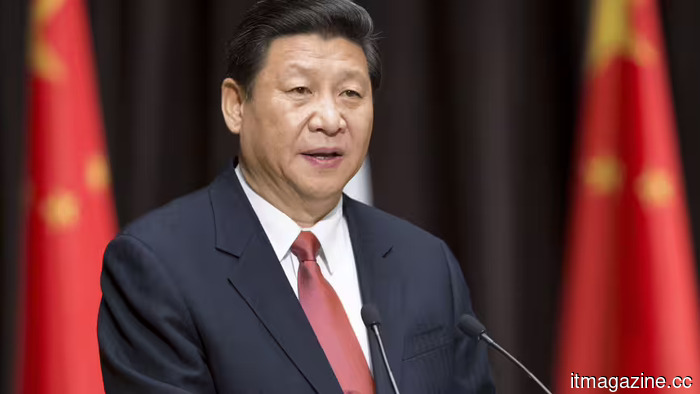 Beijing has issued a warning to the EU following the inclusion of 27 Chinese companies in the 20th sanctions package against Russia, and it has taken retaliatory measures against European defense firms.
China denounced the EU's 20th sanctions package aimed at 27 Chinese entities and responded within 24 hours by taking action against seven EU defense companies. Europe's rearmament is reliant on the rare earth materials controlled by Beijing.
Beijing has issued a warning to the EU following the inclusion of 27 Chinese companies in the 20th sanctions package against Russia, and it has taken retaliatory measures against European defense firms.
China denounced the EU's 20th sanctions package aimed at 27 Chinese entities and responded within 24 hours by taking action against seven EU defense companies. Europe's rearmament is reliant on the rare earth materials controlled by Beijing.
 AI stocks compared to the dot-com bubble: CAPE stands at 38, with concentration exceeding levels seen in 2000, yet the companies are genuinely profitable.
The Shiller CAPE stands at 38-40, which is only behind the dot-com peak of 44.19. The concentration of the top 10 companies surpasses levels seen in 2000. However, Nvidia made $120 billion, and tech stocks are trading at 30 times earnings, not 50 times. Both perspectives have validity.
AI stocks compared to the dot-com bubble: CAPE stands at 38, with concentration exceeding levels seen in 2000, yet the companies are genuinely profitable.
The Shiller CAPE stands at 38-40, which is only behind the dot-com peak of 44.19. The concentration of the top 10 companies surpasses levels seen in 2000. However, Nvidia made $120 billion, and tech stocks are trading at 30 times earnings, not 50 times. Both perspectives have validity.
 AI stocks compared to the dot-com bubble: CAPE ratio at 38, concentration exceeds levels seen in 2000, but these companies are genuinely profitable.
The Shiller CAPE stands between 38 and 40, only surpassed by the dot-com peak of 44.19. The concentration in the top 10 exceeds levels seen in 2000. However, Nvidia generated $120 billion, and tech stocks are trading at 30 times earnings, not 50 times. Both perspectives hold validity.
AI stocks compared to the dot-com bubble: CAPE ratio at 38, concentration exceeds levels seen in 2000, but these companies are genuinely profitable.
The Shiller CAPE stands between 38 and 40, only surpassed by the dot-com peak of 44.19. The concentration in the top 10 exceeds levels seen in 2000. However, Nvidia generated $120 billion, and tech stocks are trading at 30 times earnings, not 50 times. Both perspectives hold validity.
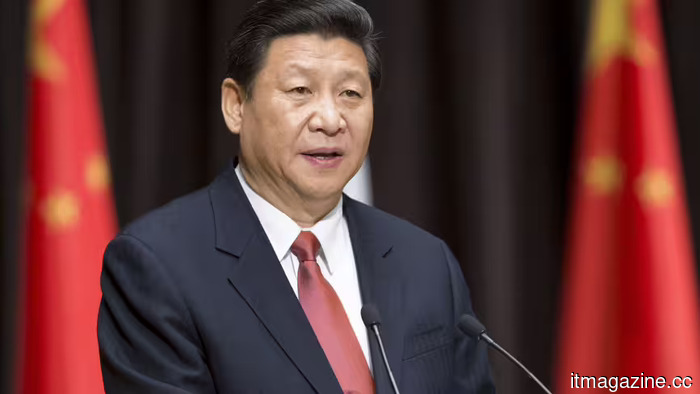 Beijing admonishes the EU following the inclusion of 27 Chinese companies in the 20th sanctions package against Russia and responds by taking action against European defense firms.
China criticized the EU's 20th sanctions package aimed at 27 Chinese entities and responded within a day by targeting seven EU defense companies. Europe's rearmament relies on the rare earth materials that Beijing oversees.
Beijing admonishes the EU following the inclusion of 27 Chinese companies in the 20th sanctions package against Russia and responds by taking action against European defense firms.
China criticized the EU's 20th sanctions package aimed at 27 Chinese entities and responded within a day by targeting seven EU defense companies. Europe's rearmament relies on the rare earth materials that Beijing oversees.
Foundation Future Industries secures $24 million in Pentagon contracts for humanoid robot soldiers, supported by Eric Trump and trialed in Ukraine.
Foundation Future Industries has obtained $24 million in contracts from the Pentagon for humanoid robots that have been tested in Ukraine. The company's CEO previously led a bankrupt fintech firm, an adviser to the company is Eric Trump, and it is seeking $500 million with a valuation exceeding $3 billion.