
Foundation Future Industries secures $24 million in Pentagon contracts for humanoid robot soldiers, with support from Eric Trump and trials conducted in Ukraine.
**Summary:** Foundation Future Industries, a startup from San Francisco led by a CEO who previously oversaw a bankrupt fintech, has acquired $24 million in research contracts from the Pentagon to evaluate the use of humanoid robots for breaching enemy lines. Two Phantom MK-1 units were dispatched to Ukraine in February for logistics and reconnaissance assessments, marking the first time humanoid robots have been deployed in a combat setting. The company, with Eric Trump as its chief strategy adviser, is seeking $500 million at a valuation surpassing $3 billion. However, its ambitious production goal of 50,000 units by 2027 from a starting point of 40 necessitates a 250-fold increase based on approximately $21 million in funding.
Foundation Future Industries, established in April 2024 in San Francisco, has secured $24 million in research contracts from the U.S. Army, Navy, and Air Force to assess humanoid robots designed for infiltrating enemy positions. The Phantom MK-1 is a 5-foot-9, 176-pound robot featuring 19 degrees of freedom in its upper body, five-fingered hands, a camera-first vision system, and an LLM-driven autonomous control system that integrates independent functioning with supervised teleoperation. Two units were deployed in February to Ukraine for frontline logistics and reconnaissance, representing the first field trial of humanoid robots in a combat environment. The company is pursuing $500 million in additional funding at a valuation of more than $3 billion. Eric Trump, son of the current president, serves as the chief strategy adviser, which has prompted Senator Elizabeth Warren to label the Pentagon contracts as “corruption in plain sight.” The CEO previously led a fintech venture that went bankrupt, leaving behind tens of millions in consumer deposits.
**The Robot:**
The Phantom MK-1 moves at a speed of 1.7 meters per second, can handle a 44-pound load, utilizes eight cameras while eliminating heavy LiDAR, and incorporates proprietary cycloidal actuators with up to 160 newton-metres of torque. Its AI framework converts high-level commands into movement via an LLM pipeline, with operators maintaining control over lethal actions. Each unit costs about $150,000, with a leasing option available at $100,000 annually. The anticipated MK-2, set to be released this month, aims to streamline electronics to minimize short-circuit risks, includes waterproofing, larger batteries, and can carry up to 175 pounds, with cast-moulded bodywork to expedite production and cut expenses. Foundation's production goals are 40 units in 2025, 10,000 in 2026, and 50,000 by the end of 2027, targeting a stable output of 30,000 units annually. Meeting these targets necessitates scaling production by 250 times over two years from a funding baseline of around $21 million.
The company was established by Sankaet Pathak, former CEO of Synapse, a banking-as-a-service startup that declared bankruptcy in 2024; Arjun Sethi, CEO of Tribe Capital, which led Foundation's $11 million pre-seed funding; and Mike LeBlanc, a 14-year Marine Corps veteran and co-founder of Cobalt Robotics. LeBlanc lends military credibility to the firm and has stated their belief that it is a “moral imperative” to deploy these robots in warfare instead of risking soldiers. In June 2024, CNBC noted that Foundation had been raising funds with exaggerated claims about connections with General Motors, including assertions that GM had pledged investment and placed a $300 million order. GM denied these claims. LeBlanc acknowledged the denial and expressed embarrassment over the misleading marketing materials. For a company asking the Pentagon to trust its robots in warfare, this credibility issue is significant.
The $24 million in Pentagon contracts features an SBIR Phase 3 designation, confirming Foundation as an authorized military vendor, along with specific agreements for testing humanoid robots in breach scenarios. Some of these contracts were transferred following the acquisition of a company named Boardwalk, including a U.S. Air Force SBIR award valued at about $1.8 million. Eric Trump promoted these contracts on Fox Business. Warren quickly responded, asking: “Is the Pentagon a cash machine for Trump’s kids?” The political implications are undeniable. A sitting president's son serving as chief strategy adviser to a company that receives Defense Department contracts raises governance concerns, irrespective of the firm's technical capabilities. While the contracts are legitimate, they are relatively modest. Shield AI recently raised $2 billion to enhance its autonomous combat pilot AI, Hivemind, which autonomously operates aircraft and has undergone combat testing. Anduril secured a historic $20 billion, ten-year U.S. Army contract in March for its AI-enabled Lattice platform. Foundation’s $24 million is limited to research, not a production contract. The chasm between a research contract and a functioning weapons system is measured in billions
Other articles
 Tesla provides one year of complimentary Supercharging with the Model 3 Premium and Performance options.
Tesla is providing a year of complimentary Supercharging for the Model 3 Premium and Performance models, which helps to lower ownership expenses while enhancing its charging network benefits.
Tesla provides one year of complimentary Supercharging with the Model 3 Premium and Performance options.
Tesla is providing a year of complimentary Supercharging for the Model 3 Premium and Performance models, which helps to lower ownership expenses while enhancing its charging network benefits.
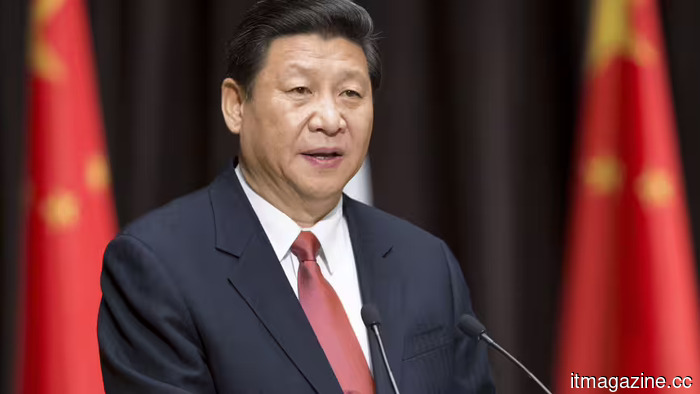 Beijing issues a warning to the EU following the inclusion of 27 Chinese companies in the 20th set of sanctions against Russia, taking action against European defense firms in response.
China criticized the EU's 20th sanctions package, which aimed at 27 Chinese entities, and swiftly responded within 24 hours by targeting seven EU defense companies. The rearmament efforts in Europe rely on the rare earths that Beijing oversees.
Foundation Future Industries secures $24 million contracts from the Pentagon for humanoid robot soldiers, with support from Eric Trump and trialed in Ukraine.
Foundation Future Industries has obtained $24 million in Pentagon contracts for humanoid robots that were tested in Ukraine. The company's CEO previously led a bankrupt fintech, an adviser to the firm is Eric Trump, and it is seeking $500 million at a valuation exceeding $3 billion.
Beijing issues a warning to the EU following the inclusion of 27 Chinese companies in the 20th set of sanctions against Russia, taking action against European defense firms in response.
China criticized the EU's 20th sanctions package, which aimed at 27 Chinese entities, and swiftly responded within 24 hours by targeting seven EU defense companies. The rearmament efforts in Europe rely on the rare earths that Beijing oversees.
Foundation Future Industries secures $24 million contracts from the Pentagon for humanoid robot soldiers, with support from Eric Trump and trialed in Ukraine.
Foundation Future Industries has obtained $24 million in Pentagon contracts for humanoid robots that were tested in Ukraine. The company's CEO previously led a bankrupt fintech, an adviser to the firm is Eric Trump, and it is seeking $500 million at a valuation exceeding $3 billion.
 China establishes protections for gig workers, covering 200 million platform workers, with a focus on algorithm transparency and a deadline set for 2027.
China’s top governing authorities have established regulations for over 200 million gig workers, including minimum wage, maximum working hours, and transparency of algorithms. Apps are required to halt order dispatch when drivers reach their time limits. Compliance is expected by 2027.
China establishes protections for gig workers, covering 200 million platform workers, with a focus on algorithm transparency and a deadline set for 2027.
China’s top governing authorities have established regulations for over 200 million gig workers, including minimum wage, maximum working hours, and transparency of algorithms. Apps are required to halt order dispatch when drivers reach their time limits. Compliance is expected by 2027.
 Sam Altman has issued an apology following OpenAI's decision not to report a ChatGPT user involved in the Tumbler Ridge school shooting.
OpenAI marked the ChatGPT account of the Tumbler Ridge shooter as suspicious eight months prior to the attack. Staff suggested notifying law enforcement, but their leadership decided against it. Altman's apology does not bridge the gap.
Sam Altman has issued an apology following OpenAI's decision not to report a ChatGPT user involved in the Tumbler Ridge school shooting.
OpenAI marked the ChatGPT account of the Tumbler Ridge shooter as suspicious eight months prior to the attack. Staff suggested notifying law enforcement, but their leadership decided against it. Altman's apology does not bridge the gap.
Foundation Future Industries secures $24 million in Pentagon contracts for humanoid robot soldiers, with support from Eric Trump and trials conducted in Ukraine.
Foundation Future Industries has obtained $24 million in contracts from the Pentagon for humanoid robots that have been tested in Ukraine. The company's CEO previously led a bankrupt fintech, and it has Eric Trump as an adviser. The firm is seeking $500 million at a valuation exceeding $3 billion.