
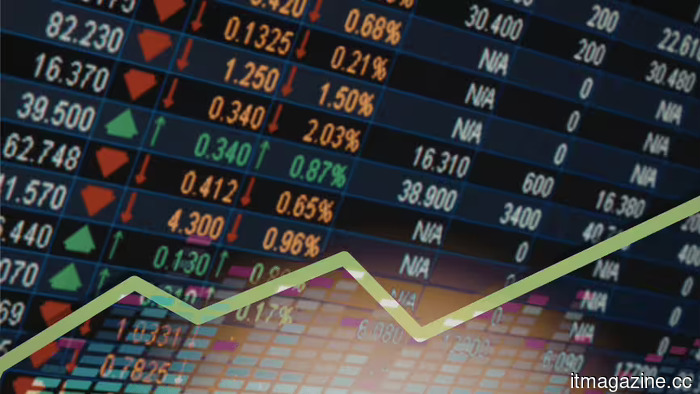
AI stocks compared to the dot-com bubble: CAPE ratio at 38, concentration exceeds levels seen in 2000, but these companies are genuinely profitable.
**TL;DR**
The Shiller CAPE ratio is currently between 38 and 40, marking the second-highest level recorded in 155 years, just shy of the dot-com peak of 44.19. Additionally, the S&P 500's top 10 companies now represent almost 50% more in concentration than during the dot-com era. However, AI-focused firms are significantly more profitable than those in the dot-com period; for instance, Nvidia has netted $120 billion. Currently, the tech sector is trading at a forward earnings ratio of 30, compared to 50 at the height of the tech bubble in 2000. Whether the annual hyperscaler capital expenditure of $660-690 billion yields adequate returns to justify the investment remains to be seen, as results from the infrastructure cycle are still pending.
The Shiller cyclically adjusted price-to-earnings (CAPE) ratio for the S&P 500 is around 38 to 40, depending on the date. Throughout 155 years of data, it has only surpassed this level once, in March 2000, reaching 44.19 just before a decline that would see the Nasdaq lose 78% of its value over two and a half years. Currently, the largest 10 companies within the S&P 500 account for 36% to 40% of its entire market capitalization, which is nearly a 50% increase from the dot-com era's concentration of 27%. A recent Deutsche Bank survey indicates that 57% of institutional investors view a potential AI valuation crash as the biggest risk to the markets. Jeremy Grantham, co-founder of GMO and known for predicting past economic bubbles, has stated there is "slim to none" chance that the current AI surge won't culminate in a bust—pointing to figures that make parallels to the year 2000 seem unavoidable, though these numbers alone do not provide the full picture.
**The case for alarm**
The similarities between the current AI equity surge and the dot-com bubble extend beyond surface-level observations; they are foundational. Market concentration has surpassed dot-com levels significantly. The Nasdaq-100's performance is largely influenced by a small number of companies, whose valuations are reliant on AI revenue growth that has yet to fully materialize at the expected scale. The capital spending by hyperscalers, such as Microsoft, Google, Amazon, and Meta, is on track to reach between $660 billion and $690 billion by 2026, making it one of the largest corporate investment initiatives in history outside wartime. This spending is partly supported by converting human jobs into AI infrastructure, with Meta and Microsoft laying off up to 23,000 workers while simultaneously pledging record capital expenditures—a shift from salaries to data center investments.
Bank of America’s Savita Subramanian has projected a year-end target of 7,100 for the S&P 500, with a bearish scenario of 5,500, predicting multiple compression as earnings growth is expected to slow in the second half of 2026. The Motley Fool has highlighted four indicators of bubble conditions: enthusiasm among retail investors, concentration of speculative capital, a detachment of valuations from fundamentals, and a narrative so compelling that doubt feels unwarranted. All four symptoms are evident today. OpenAI's valuation of $852 billion positions it at nearly double Coca-Cola’s market cap, a company that has consistently generated profits since the 1890s. Accel’s $5 billion AI-centric fund, the largest in venture capital history, exemplifies the influx of capital into AI at the private market level. The public and private markets are interlinked: venture-backed AI firms attain high valuations, leading public AI companies to drastically increase spending to remain competitive, which escalates both valuations and capital expenditures.
**The case for calm**
The key distinction between 2000 and 2026 is profitability. During the dot-com zenith, tech companies collectively lost capital, with Cisco trading at 200 times its earnings and Pets.com showing no earnings at all. The entire narrative relied on anticipated revenue from an internet economy still years away from generating actual profits. In contrast, by 2026, the leading companies in the AI rally are among the most profitable in history. Nvidia reported a net income of over $120 billion for fiscal 2026, with a forward price-to-earnings ratio of about 41—high, but not comparable to Cisco's 200. The technology sector's aggregated forward P/E is around 30, in contrast to 50 at the peak of the dot-com bubble. Major firms like Apple, Microsoft, Alphabet, Amazon, and Meta collectively produced $350 billion in free cash flow in their latest fiscal periods, distinguishing them as cash-generating enterprises rather than speculative ventures reliant on venture capital.
Capital Economics analyst John Higgins provides a nuanced assessment, differentiating between a "stock bubble" and a "fundamental bubble." According to him
Other articles
 China establishes protections for gig workers, impacting 200 million platform employees, with an emphasis on algorithm transparency and a deadline set for 2027.
China's top governing authorities have required minimum wage, maximum working hours, and transparency in algorithms for over 200 million gig workers. Applications are prohibited from dispatching orders once drivers reach their time limits. Compliance is expected by 2027.
China establishes protections for gig workers, impacting 200 million platform employees, with an emphasis on algorithm transparency and a deadline set for 2027.
China's top governing authorities have required minimum wage, maximum working hours, and transparency in algorithms for over 200 million gig workers. Applications are prohibited from dispatching orders once drivers reach their time limits. Compliance is expected by 2027.
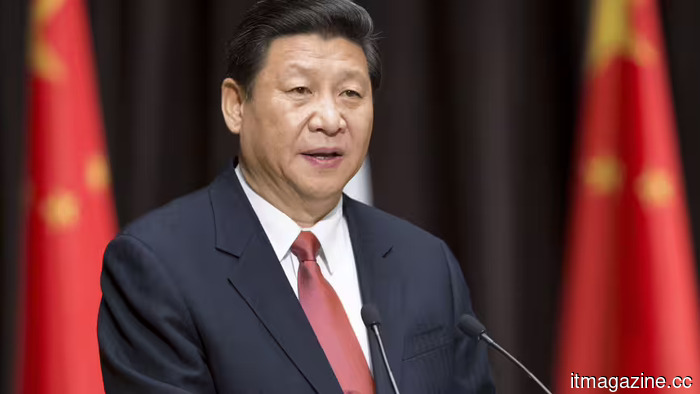 Beijing issues a warning to the EU following the inclusion of 27 Chinese companies in the 20th sanctions package against Russia and responds by taking action against European defense firms.
China criticized the European Union's 20th sanctions package, which affects 27 Chinese entities, and responded within a day by targeting seven EU defense companies. Europe's rearmament relies on the rare earth materials that Beijing possesses.
Beijing issues a warning to the EU following the inclusion of 27 Chinese companies in the 20th sanctions package against Russia and responds by taking action against European defense firms.
China criticized the European Union's 20th sanctions package, which affects 27 Chinese entities, and responded within a day by targeting seven EU defense companies. Europe's rearmament relies on the rare earth materials that Beijing possesses.
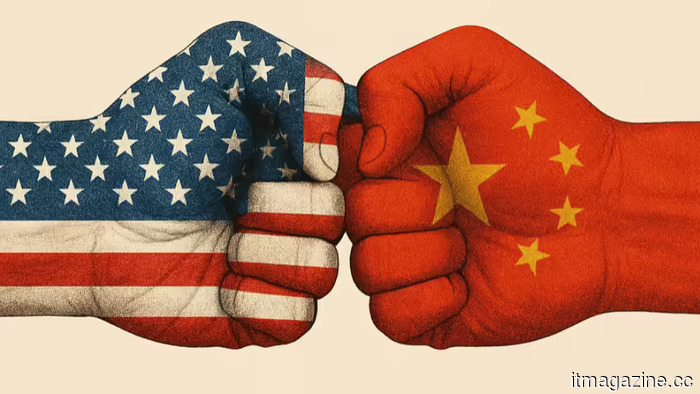 The US aims to restrict China's access to chip manufacturing equipment. In response, China warns that this will disrupt the supply chain for all involved.
China cautions that the MATCH Act could interfere with global semiconductor supply chains as the US Congress progresses with the most extensive export control markup in history.
Sequoia hands out 200 engraved Mac Minis at an AI event as OpenClaw emerges as the infrastructure layer that VCs cannot possess.
Alfred Lin donated 200 engraved Mac Minis operating on OpenClaw, the open-source AI agent framework that has outpaced Apple's stock and exceeded React on GitHub. Sequoia is unable to invest in it. That's the tactic.
Foundation Future Industries secures $24 million in Pentagon contracts for humanoid robot soldiers, supported by Eric Trump and trialed in Ukraine.
Foundation Future Industries has obtained $24 million in contracts from the Pentagon for humanoid robots that have been tested in Ukraine. The company's CEO previously led a bankrupt fintech firm, an adviser to the company is Eric Trump, and it is seeking $500 million with a valuation exceeding $3 billion.
The US aims to restrict China's access to chip manufacturing equipment. In response, China warns that this will disrupt the supply chain for all involved.
China cautions that the MATCH Act could interfere with global semiconductor supply chains as the US Congress progresses with the most extensive export control markup in history.
Sequoia hands out 200 engraved Mac Minis at an AI event as OpenClaw emerges as the infrastructure layer that VCs cannot possess.
Alfred Lin donated 200 engraved Mac Minis operating on OpenClaw, the open-source AI agent framework that has outpaced Apple's stock and exceeded React on GitHub. Sequoia is unable to invest in it. That's the tactic.
Foundation Future Industries secures $24 million in Pentagon contracts for humanoid robot soldiers, supported by Eric Trump and trialed in Ukraine.
Foundation Future Industries has obtained $24 million in contracts from the Pentagon for humanoid robots that have been tested in Ukraine. The company's CEO previously led a bankrupt fintech firm, an adviser to the company is Eric Trump, and it is seeking $500 million with a valuation exceeding $3 billion.
AI stocks compared to the dot-com bubble: CAPE ratio at 38, concentration exceeds levels seen in 2000, but these companies are genuinely profitable.
The Shiller CAPE stands between 38 and 40, only surpassed by the dot-com peak of 44.19. The concentration in the top 10 exceeds levels seen in 2000. However, Nvidia generated $120 billion, and tech stocks are trading at 30 times earnings, not 50 times. Both perspectives hold validity.